
Title
The Extended Phenotype: The Gene As the Unit of Selection,Used
Sold by Ergodebooks, an authorized reseller.
Returns accepted within 30 days | support@ergodebooks.com
Shipping Information
- Free Standard Shipping — United States only
- Processing Time: 3–5 business days
- Estimated Delivery: 6–10 business days after dispatch
- Double-boxed, fully insured & discreetly packaged
- Tracking number sent via email once dispatched
Returns & Refund
Returns accepted within 30 days of delivery.
Damaged or Defective Item
Free return shipping + replacement or full refund
Wrong Item Received
Free return shipping + replacement or full refund
Change of Mind
Return shipping at customer's expense · 25% restocking fee applies
Payment Option

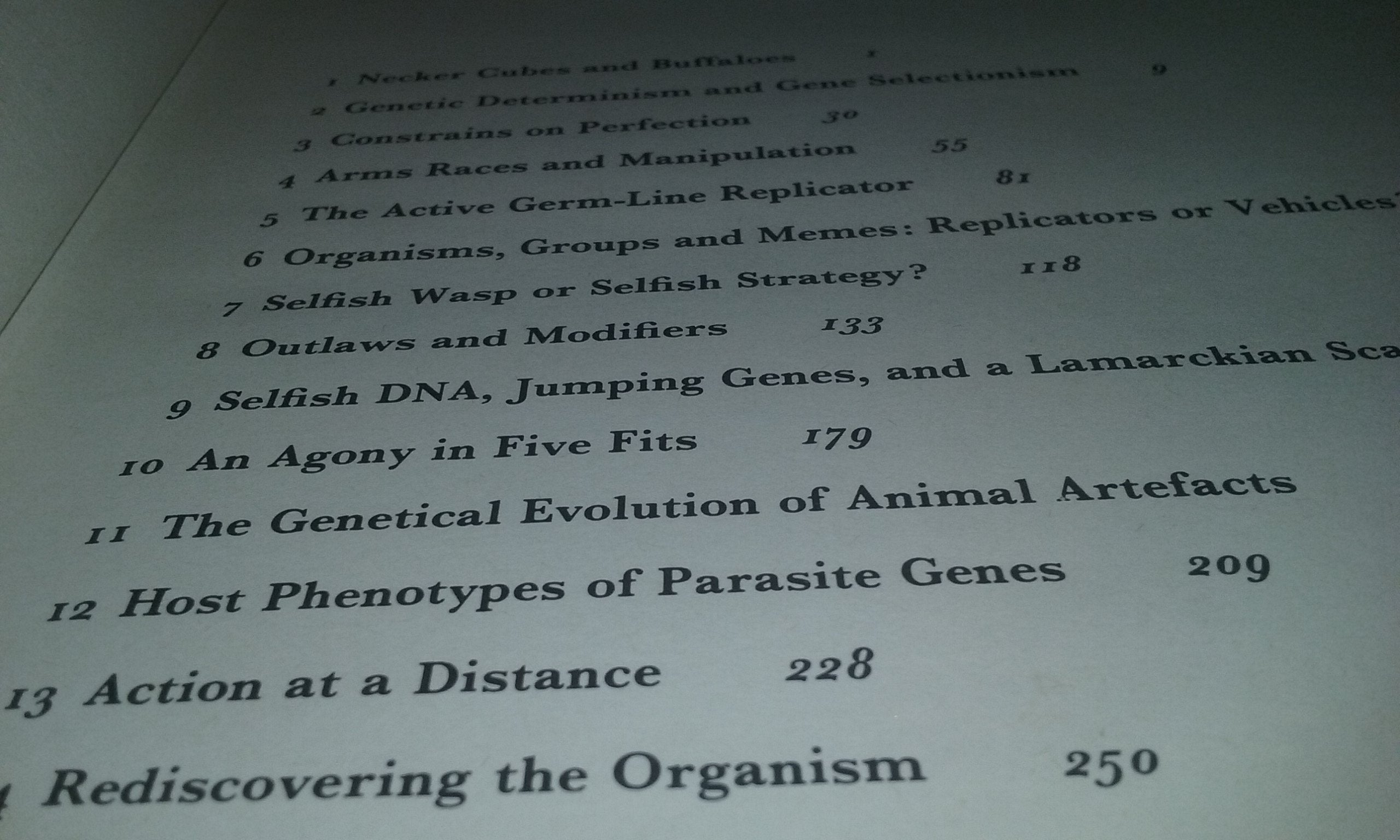
People commonly view evolution as a process of competition between individualsknown as 'survival of the fittest'with the individual representing the 'unit of selection.' Richard Dawkins offers a controversial reinterpretation of that idea in The Extended Phenotype, now being reissued to coincide with the publication of the second edition of his highlyacclaimed The Selfish Gene. He proposes that we look at evolution as a battle between genes instead of between whole organisms. We can then view Nanges in phenotypesthe end products of genes, like eye color or leaf shape, which are usually considered to increase the fitness of an individualas serving the evolutionary interests of genes. Dawkins makes a convincing case that considering one's body, personality, and environment as a field of combat in a kind of 'arms race' between genes fighting to express themselves on a strand of DNA can clarify and extend the idea of survival of the fittest. This influential
⚠️ WARNING (California Proposition 65):
This product may contain chemicals known to the State of California to cause cancer, birth defects, or other reproductive harm.
For more information, please visit www.P65Warnings.ca.gov.
- Q: What is the main theme of 'The Extended Phenotype'? A: 'The Extended Phenotype' explores the idea that evolution should be viewed as a competition between genes rather than between individuals. Richard Dawkins argues that phenotypes, the observable traits influenced by genes, serve the interests of those genes in the evolutionary process.
- Q: Who is the author of 'The Extended Phenotype'? A: The author of 'The Extended Phenotype' is Richard Dawkins, a prominent evolutionary biologist and author known for his work on the gene-centered view of evolution.
- Q: When was 'The Extended Phenotype' first published? A: 'The Extended Phenotype' was first published on January 1, 1981. This first edition has been reissued to coincide with the release of the second edition of 'The Selfish Gene'.
- Q: What is the binding type of this book? A: 'The Extended Phenotype' is available in hardcover binding, which is known for its durability and quality.
- Q: How many pages does 'The Extended Phenotype' have? A: 'The Extended Phenotype' contains a total of 307 pages, offering an in-depth exploration of its themes.
- Q: In what category does 'The Extended Phenotype' fall? A: 'The Extended Phenotype' is categorized under Biology, making it suitable for those interested in evolutionary biology and genetics.
- Q: What condition is the book in? A: The book is listed as being in 'Good' condition, indicating that it has been used but is still in acceptable shape for reading.
- Q: What is the significance of the term 'extended phenotype'? A: The term 'extended phenotype' refers to the idea that the effects of genes extend beyond the physical body of an organism, influencing the environment and other organisms, which is a central concept in Dawkins' argument.
- Q: Is there a specific audience for 'The Extended Phenotype'? A: 'The Extended Phenotype' is aimed at readers interested in evolution, biology, and philosophy of science, including students, educators, and general readers seeking to understand evolutionary theory.
- Q: What are some key concepts discussed in the book? A: Key concepts in 'The Extended Phenotype' include gene-centered evolution, the role of phenotypes in natural selection, and the metaphor of evolution as an arms race between genes.