
Title
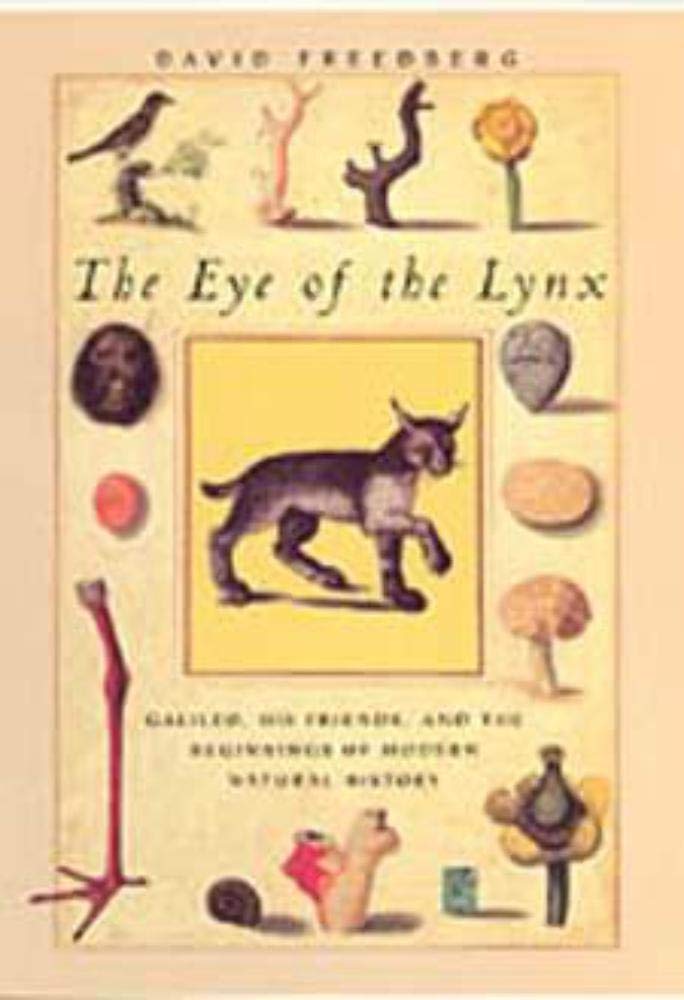
The Eye of the Lynx: Galileo, His Friends, and the Beginnings of Modern Natural History,Used
Sold by Ergodebooks, an authorized reseller.
Returns accepted within 30 days | support@ergodebooks.com
Shipping Information
- Free Standard Shipping — United States only
- Processing Time: 3–5 business days
- Estimated Delivery: 6–10 business days after dispatch
- Double-boxed, fully insured & discreetly packaged
- Tracking number sent via email once dispatched
Returns & Refund
Returns accepted within 30 days of delivery.
Damaged or Defective Item
Free return shipping + replacement or full refund
Wrong Item Received
Free return shipping + replacement or full refund
Change of Mind
Return shipping at customer's expense · 25% restocking fee applies
Payment Option

Some years ago, David Freedberg opened a dusty cupboard at Windsor Castle and discovered hundreds of vividly colored, masterfully precise drawings of all sorts of plants and animals from the Old and New Worlds. Coming upon thousands more drawings like them across Europe, Freedberg finally traced them all back to a littleknown scientific organization from seventeenthcentury Italy called the Academy of Linceans (or Lynxes).Founded by Prince Federico Cesi in 1603, the Linceans took as their task nothing less than the documentation and classification of all of nature in pictorial form. In this first booklength study of the Linceans to appear in English, Freedberg focuses especially on their unprecedented use of drawings based on microscopic observation and other new techniques of visualization. Where previous thinkers had classified objects based mainly on similarities of external appearance, the Linceans instead turned increasingly to sectioning, dissection, and observation of internal structures. They applied their new research techniques to an incredible variety of subjects, from the objects in the heavens studied by their most famous (and infamous) member Galileo Galileiwhom they supported at the most critical moments of his careerto the flora and fauna of Mexico, bees, fossils, and the reproduction of plants and fungi. But by demonstrating the inadequacy of surface structures for ordering the world, the Linceans unwittingly planted the seeds for the demise of their own favorite methodvisual descriptionas a mode of scientific classification.Profusely illustrated and engagingly written, Eye of the Lynx uncovers a crucial episode in the development of visual representation and natural history. And perhaps as important, it offers readers a dazzling array of early modern drawings, from magnificently depicted birds and flowers to frogs in amber, monstrously misshapen citrus fruits, and more.
⚠️ WARNING (California Proposition 65):
This product may contain chemicals known to the State of California to cause cancer, birth defects, or other reproductive harm.
For more information, please visit www.P65Warnings.ca.gov.
- Q: What is 'The Eye of the Lynx' about? A: 'The Eye of the Lynx' explores the work of the Academy of Linceans, a scientific organization founded in 1603 that documented and classified the natural world through detailed illustrations and new observational techniques.
- Q: Who is the author of this book? A: The book is authored by David Freedberg, who focuses on the historical significance of the Linceans and their contributions to natural history.
- Q: What is the genre of this book? A: 'The Eye of the Lynx' falls under the category of Illustration, blending art with scientific inquiry in the study of natural history.
- Q: How many pages does 'The Eye of the Lynx' have? A: The book contains a total of 528 pages, providing an in-depth exploration of its subject matter.
- Q: What type of binding does this book have? A: 'The Eye of the Lynx' is published in paperback binding, making it accessible and suitable for casual reading or study.
- Q: Is this book suitable for academic purposes? A: Yes, 'The Eye of the Lynx' can be suitable for academic purposes, particularly for those studying art history, natural history, or the development of scientific illustration.
- Q: When was 'The Eye of the Lynx' published? A: 'The Eye of the Lynx' was published on September 1, 2003.
- Q: What makes 'The Eye of the Lynx' unique? A: The book is unique for its detailed examination of the Linceans' methods of visual representation and its rich collection of early modern illustrations, revealing the evolution of scientific classification.
- Q: What themes are explored in this book? A: The book explores themes of observation, classification, and the historical impact of visual representation in the study of natural history.
- Q: Can I expect illustrations in this book? A: Yes, 'The Eye of the Lynx' is profusely illustrated, showcasing a variety of drawings that highlight the Linceans' work and their impact on the understanding of nature.