
Title
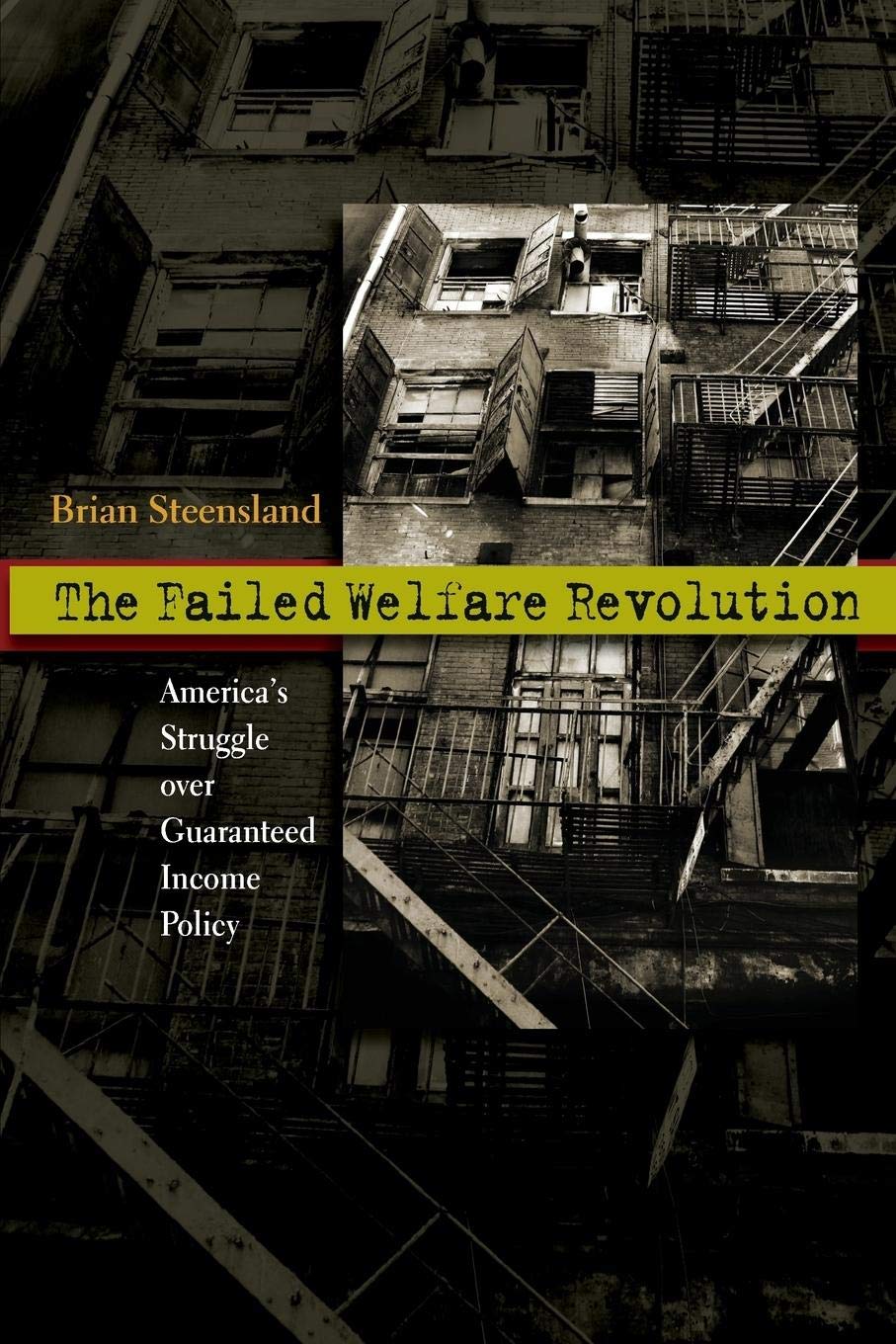
The Failed Welfare Revolution: America'S Struggle Over Guaranteed Income Policy,Used
Sold by Ergodebooks, an authorized reseller.
Returns accepted within 30 days | support@ergodebooks.com
Shipping Information
- Free Standard Shipping — United States only
- Processing Time: 3–5 business days
- Estimated Delivery: 6–10 business days after dispatch
- Double-boxed, fully insured & discreetly packaged
- Tracking number sent via email once dispatched
Returns & Refund
Returns accepted within 30 days of delivery.
Damaged or Defective Item
Free return shipping + replacement or full refund
Wrong Item Received
Free return shipping + replacement or full refund
Change of Mind
Return shipping at customer's expense · 25% restocking fee applies
Payment Option

Today the United States has one of the highest poverty rates among the world's rich industrial democracies. The Failed Welfare Revolution shows us that things might have turned out differently. During the 1960s and 1970s, policymakers in three presidential administrations tried to replace the nation's existing welfare system with a revolutionary program to guarantee Americans basic economic security. Surprisingly from today's vantage point, guaranteed income plans received broad bipartisan support in the 1960s. One proposal, President Nixon's Family Assistance Plan, nearly passed into law in the 1970s, and President Carter advanced a similar bill a few years later. The failure of these proposals marked the federal government's last direct effort to alleviate poverty among the least advantaged and, ironically, sowed the seeds of conservative welfare reform strategies under President Reagan and beyond.This episode has largely vanished from America's collective memory. Here, Brian Steensland tells the whole story for the first timefrom why such an unlikely policy idea first developed to the factors that sealed its fate. His account, based on extensive original research in presidential archives, draws on mainstream social science perspectives that emphasize the influence of powerful stakeholder groups and policymaking institutions. But Steensland also shows that some of the most potent obstacles to guaranteed income plans were cultural. Most centrally, by challenging Americans' longstanding distinction between the 'deserving' and 'undeserving' poor, the plans threatened the nation's cultural, political, and economic status quo.
⚠️ WARNING (California Proposition 65):
This product may contain chemicals known to the State of California to cause cancer, birth defects, or other reproductive harm.
For more information, please visit www.P65Warnings.ca.gov.