
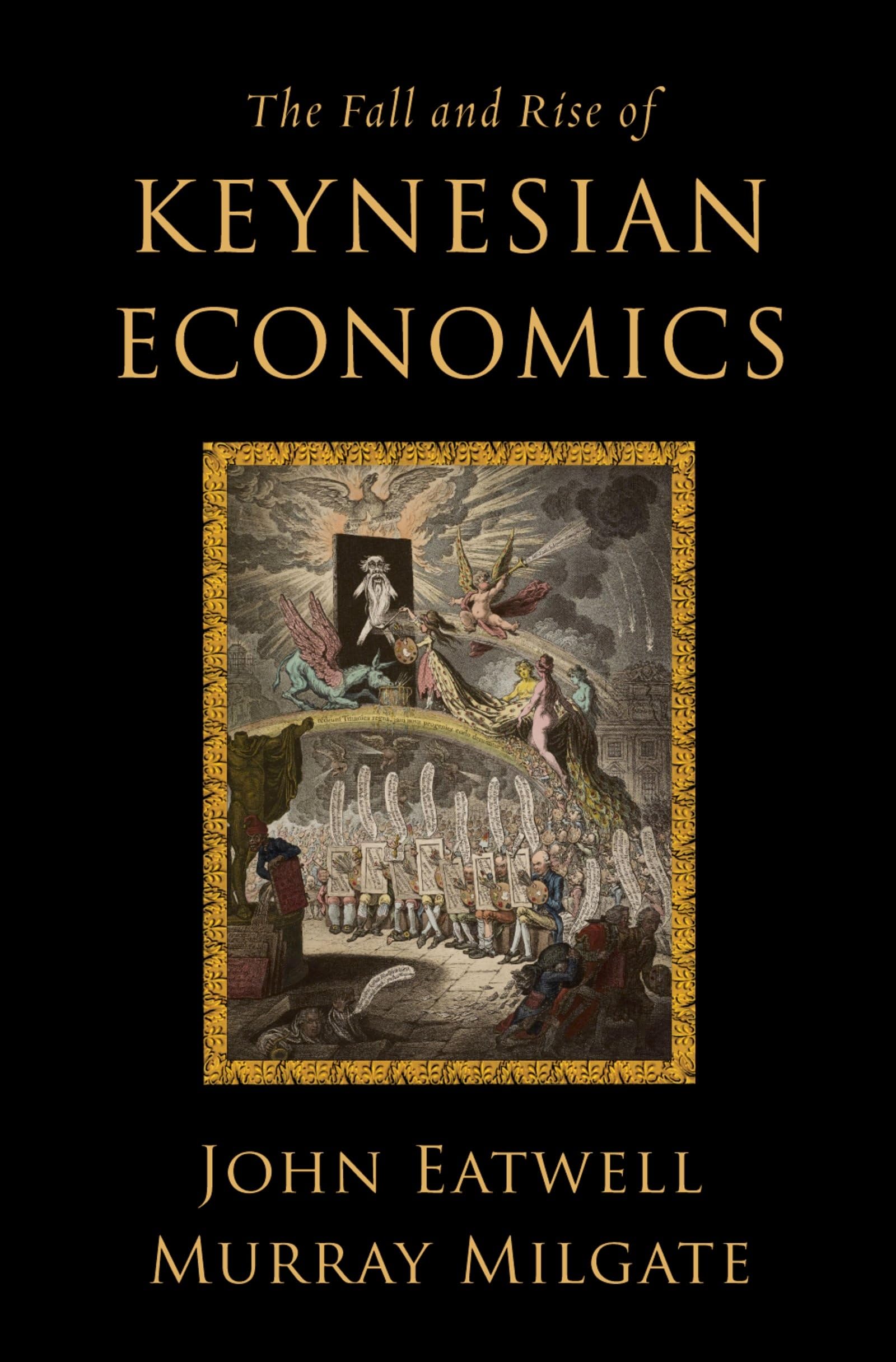
Title
The Fall And Rise Of Keynesian Economics
Sold by Ergodebooks, an authorized reseller.
Returns accepted within 30 days | support@ergodebooks.com
Shipping Information
- Free Standard Shipping — United States only
- Processing Time: 3–5 business days
- Estimated Delivery: 6–10 business days after dispatch
- Double-boxed, fully insured & discreetly packaged
- Tracking number sent via email once dispatched
Returns & Refund
Returns accepted within 30 days of delivery.
Damaged or Defective Item
Free return shipping + replacement or full refund
Wrong Item Received
Free return shipping + replacement or full refund
Change of Mind
Return shipping at customer's expense · 25% restocking fee applies
Payment Option

During the 1970s, monetarism and the new classical macroeconomics ushered in an era of neoliberal economic policymaking. Keynesian economics was pushed aside. It was almost forgotten that when Keynesian thinking had dominated economic policymaking in the middle decades of the twentieth century, it had coincided with postwar economic reconstruction in both Europe and Japan, and the unprecedented prosperity and stable growth of the 1950s and 1960s. The global financial crisis of 20072009 and the recession that followed changed all that. Influential voices in both academic economics and amongst policymakers and commentators began to remind us how useful Keynesian ways of thinking could be, especially in coming to terms with our current economic predicaments. When politicians across the globe were confronted with economic crisis, they introduced pragmatic and workable measures that bore all the hallmarks of Keynesianism. This book is about the fall and rise of Keynesian economics.Eatwell and Milgate range widely across the landscape that defines their subject matter. They consider how powerful Keynesian ideas can be when applied to past and present economic problems. They show how helpful these ideas are in explaining why we came to find ourselves in the disorder we are in. They examine where and how the analytical and methodological foundations of conventional macroeconomic wisdom went wrong. They set out a blueprint for an alternative that provides a clearer, more consistent, and more applicable approach to understanding how markets work. They also highlight the interpretive shortcomings that have come to characterize Keynes scholarship itself. They do all of this within the context of a provocative reconsideration of some of the most pressing economic problems that confront financial markets and the global economy today. They conclude that Keynesian ideas are not just for crises, but for constructive economic policy making at all times.
⚠️ WARNING (California Proposition 65):
This product may contain chemicals known to the State of California to cause cancer, birth defects, or other reproductive harm.
For more information, please visit www.P65Warnings.ca.gov.