
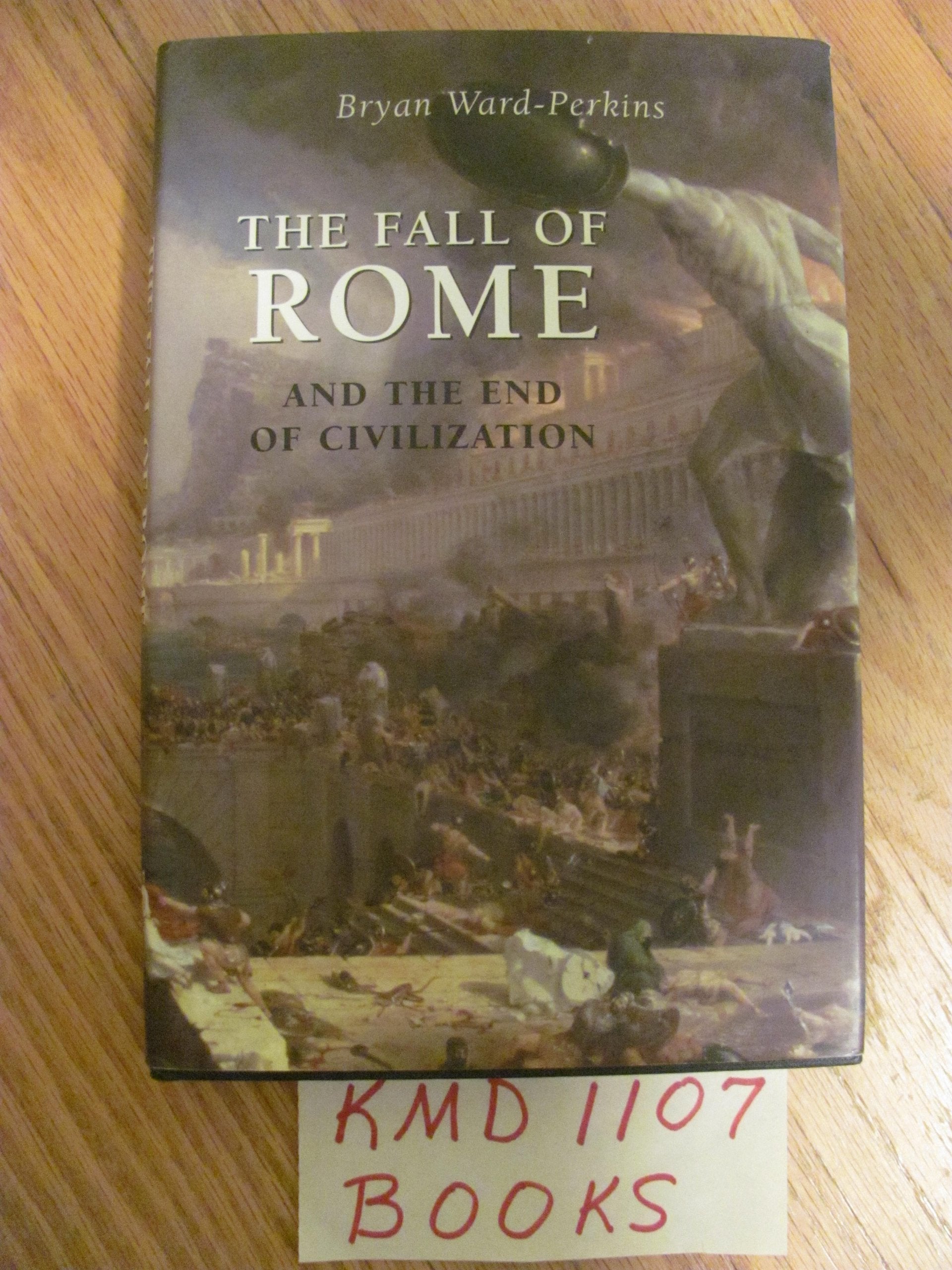
Title
The Fall of Rome: And the End of Civilization,Used
Sold by Ergodebooks, an authorized reseller.
Returns accepted within 30 days | support@ergodebooks.com
Shipping Information
- Free Standard Shipping — United States only
- Processing Time: 3–5 business days
- Estimated Delivery: 6–10 business days after dispatch
- Double-boxed, fully insured & discreetly packaged
- Tracking number sent via email once dispatched
Returns & Refund
Returns accepted within 30 days of delivery.
Damaged or Defective Item
Free return shipping + replacement or full refund
Wrong Item Received
Free return shipping + replacement or full refund
Change of Mind
Return shipping at customer's expense · 25% restocking fee applies
Payment Option

Was the fall of Rome a great catastrophe that cast the West into darkness for centuries to come? Or, as scholars argue today, was there no crisis at all, but simply a peaceful blending of barbarians into Roman culture, an essentially positive transformation?In The Fall of Rome, eminent historian Bryan WardPerkins argues that the 'peaceful' theory of Rome's 'transformation' is badly in error. Indeed, he sees the fall of Rome as a time of horror and dislocation that destroyed a great civilization, throwing the inhabitants of the West back to a standard of living typical of prehistoric times. Attacking contemporary theories with relish and making use of modern archaeological evidence, he looks at both the wider explanations for the disintegration of the Roman world and also the consequences for the lives of everyday Romans, who were caught in a world of economic collapse, marauding barbarians, and the rise of a new religious orthodoxy. The book recaptures the drama and violence of the last days of the Roman world, and reminds us of the very real terrors of barbarian occupation. Equally important, WardPerkins contends that a key problem with the new way of looking at the end of the ancient world is that all difficulty and awkwardness is smoothed out into a steady and positive transformation of society. Nothing ever goes badly wrong in this vision of the past. The evidence shows otherwise.Up to date and brilliantly written, combining a lively narrative with the latest research and thirty illustrations, this superb volume reclaims the drama, the violence, and the tragedy of the fall of Rome.
⚠️ WARNING (California Proposition 65):
This product may contain chemicals known to the State of California to cause cancer, birth defects, or other reproductive harm.
For more information, please visit www.P65Warnings.ca.gov.
- Q: What is the main argument of 'The Fall of Rome: And the End of Civilization'? A: The main argument of the book is that the fall of Rome was not a peaceful transformation but a catastrophic event that led to significant dislocation and a decline in living standards, contrary to contemporary theories of gradual change.
- Q: Who is the author of the book and what is his background? A: The author is Bryan Ward-Perkins, an eminent historian known for his expertise in Roman history and archaeology.
- Q: How many pages does the book contain? A: The book contains 247 pages.
- Q: What type of binding does the book have? A: The book is bound in hardcover.
- Q: When was 'The Fall of Rome' published? A: The book was published on September 1, 2005.
- Q: What are some key themes explored in the book? A: Key themes include the violence and drama of Rome's decline, the economic collapse, and the impact of barbarian invasions on everyday Romans.
- Q: Is there any visual content included in the book? A: Yes, the book includes thirty illustrations that complement the narrative and research.
- Q: What is the condition of the book listed for sale? A: The item is in 'Very Good' condition.
- Q: What historical perspective does Ward-Perkins challenge in his book? A: Ward-Perkins challenges the perspective that the fall of Rome was a simple, positive transformation, arguing instead for its catastrophic nature.
- Q: Can this book be useful for someone studying Roman history? A: Yes, it provides valuable insights and modern archaeological evidence that are beneficial for anyone studying the decline of the Roman Empire.