
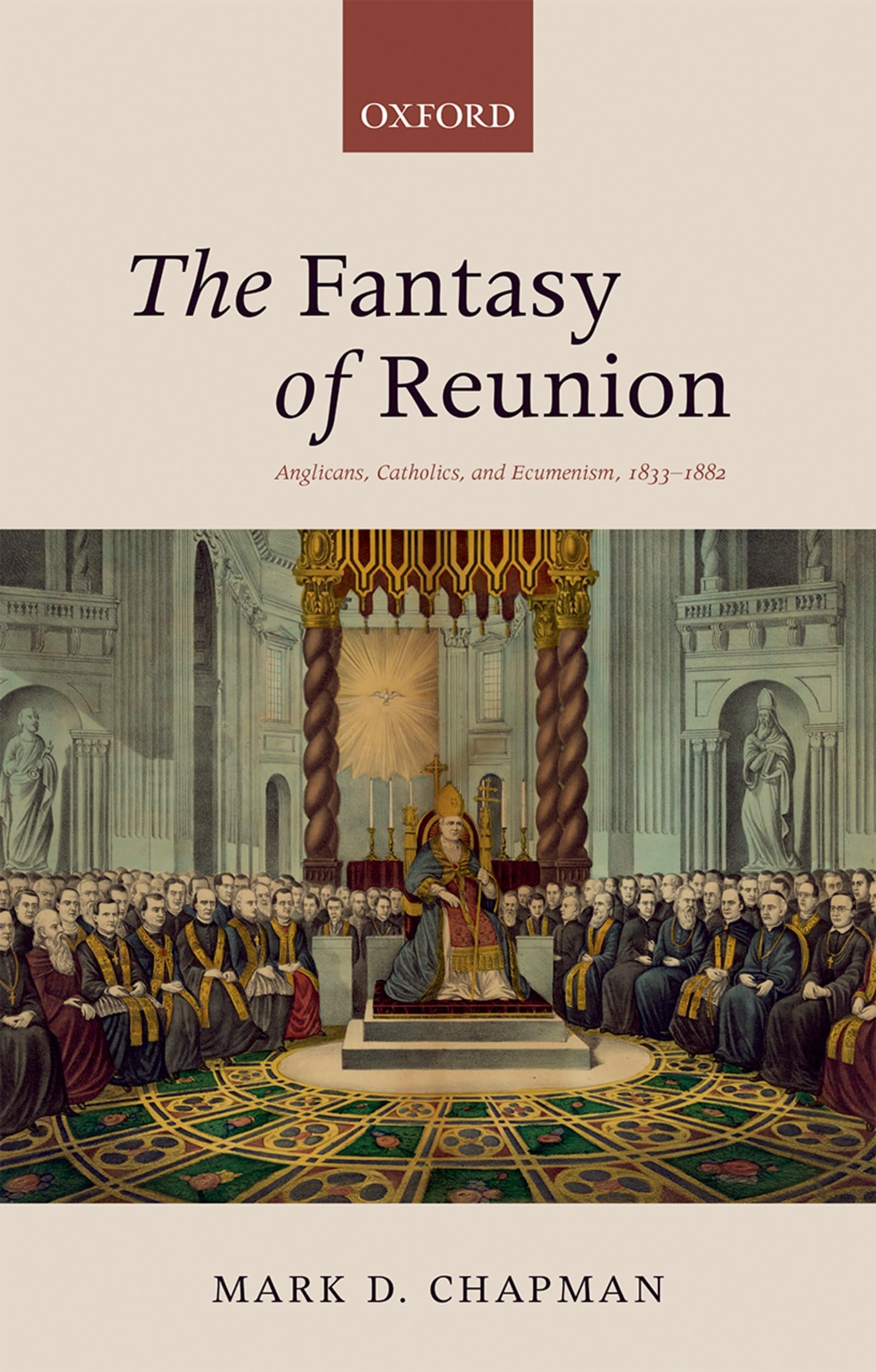
Title
The Fantasy of Reunion: Anglicans, Catholics, and Ecumenism, 18331882,Used
Sold by Ergodebooks, an authorized reseller.
Returns accepted within 30 days | support@ergodebooks.com
Shipping Information
- Free Standard Shipping — United States only
- Processing Time: 3–5 business days
- Estimated Delivery: 6–10 business days after dispatch
- Double-boxed, fully insured & discreetly packaged
- Tracking number sent via email once dispatched
Returns & Refund
Returns accepted within 30 days of delivery.
Damaged or Defective Item
Free return shipping + replacement or full refund
Wrong Item Received
Free return shipping + replacement or full refund
Change of Mind
Return shipping at customer's expense · 25% restocking fee applies
Payment Option

This book discusses the different understandings of "catholicity" that emerged in the interactions between the Church of England and other churchesparticularly the Roman Catholic Church and later the Old Catholic Churchesfrom the early 1830s to the early 1880s. It presents a prehistory of ecumenism, which isolates some of the most distinctive features of the ecclesiological positions of the different churches as these developed through the turmoil of the nineteenth century. It explores the historical imagination of a range of churchmen and theologians, who sought to reconstruct their churches through an encounter with the past whose relevance for the construction of identity in the present went unquestioned. The past was no foreign country but instead provided solutions to the perceived dangers facing the church of the present. Key protagonists are John Henry Newman and Edward Bouverie Pusey, the leaders of the Oxford Movement, as well as a number of other less wellknown figures who made their distinctive mark on the relations between the churches. The key event in reshaping the terms of the debates between the churches was the Vatican Council of 1870, which put an end to serious dialogue for a very long period, but which opened up new avenues for the Church of England and other nonRoman European churches including the Orthodox. In the end, however, ecumenism was halted in the 1880s by an increasingly complex European situation and an energetic expansion of the British Empire, which saw the rise of PanAnglicanism at the expense of ecumenism.
⚠️ WARNING (California Proposition 65):
This product may contain chemicals known to the State of California to cause cancer, birth defects, or other reproductive harm.
For more information, please visit www.P65Warnings.ca.gov.