If you have any questions, you are always welcome to contact us. We'll get back to you as soon as possible, withing 24 hours on weekdays.
Customer service
All questions about your order, return and delivery must be sent to our customer service team by e-mail at yourstore@yourdomain.com
Sale & Press
If you are interested in selling our products, need more information about our brand or wish to make a collaboration, please contact us at press@yourdomain.com
Help
If you have any questions, you are always welcome to contact us. We'll get back to you as soon as possible, withing 24 hours on weekdays.
Customer service
All questions about your order, return and delivery must be sent to our customer service team by e-mail at yourstore@yourdomain.com
Sale & Press
If you are interested in selling our products, need more information about our brand or wish to make a collaboration, please contact us at press@yourdomain.com
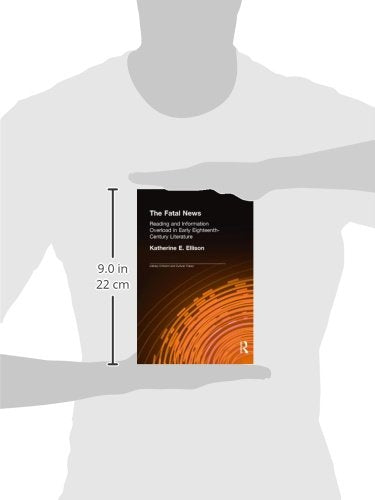
What was information in the early eighteenth century, and what influence did the emergence of information, as potential physical and psychological threat, have on readers of the period? Recent scholarship in eighteenthcentury print culture and in twentyfirstcentury media studies and theory offers a unique opportunity to reconsider how and why information is figuratively imagined during the eighteenth century as an abstract yet bodily entity that can flood, suffocate, and incapacitate readers. Focusing on 1678 to 1722 a period that experienced impressive innovations in communication this study reveals that the term information undergoes a significant transformation with social, cultural, and literary consequences. By investigating discussions of information and media that are evident in works by literary authors, the author finds that writers like John Bunyan, Aphra Behn, Jonathan Swift, and Daniel Defoe confront the idea of information overload and provide case studies in literacy reform that operate on institutional, generic, and consumer levels. For example, while in Defoe's Journal of the Plague Year information is infectious and citizens depend upon comets and phantoms to construct readercontrolled, decentralized media, in Swift's Tale of a Tub commonplace books and collections demonstrate a new type of organizational, or secretarial, impulse in society.
⚠️ WARNING (California Proposition 65):
This product may contain chemicals known to the State of California to cause cancer,
birth defects, or other reproductive harm.
For MAP (Minimum Advertised Price) violations and Intellectual Property (IP) or Trademark concerns, please contact:
support@ergodebooks.com
⚠️ California Proposition 65 Warning: Some products sold on this website may expose you to chemicals known to the State of California to cause cancer, birth defects, or other reproductive harm. For more information, visit www.P65Warnings.ca.gov.