
Title
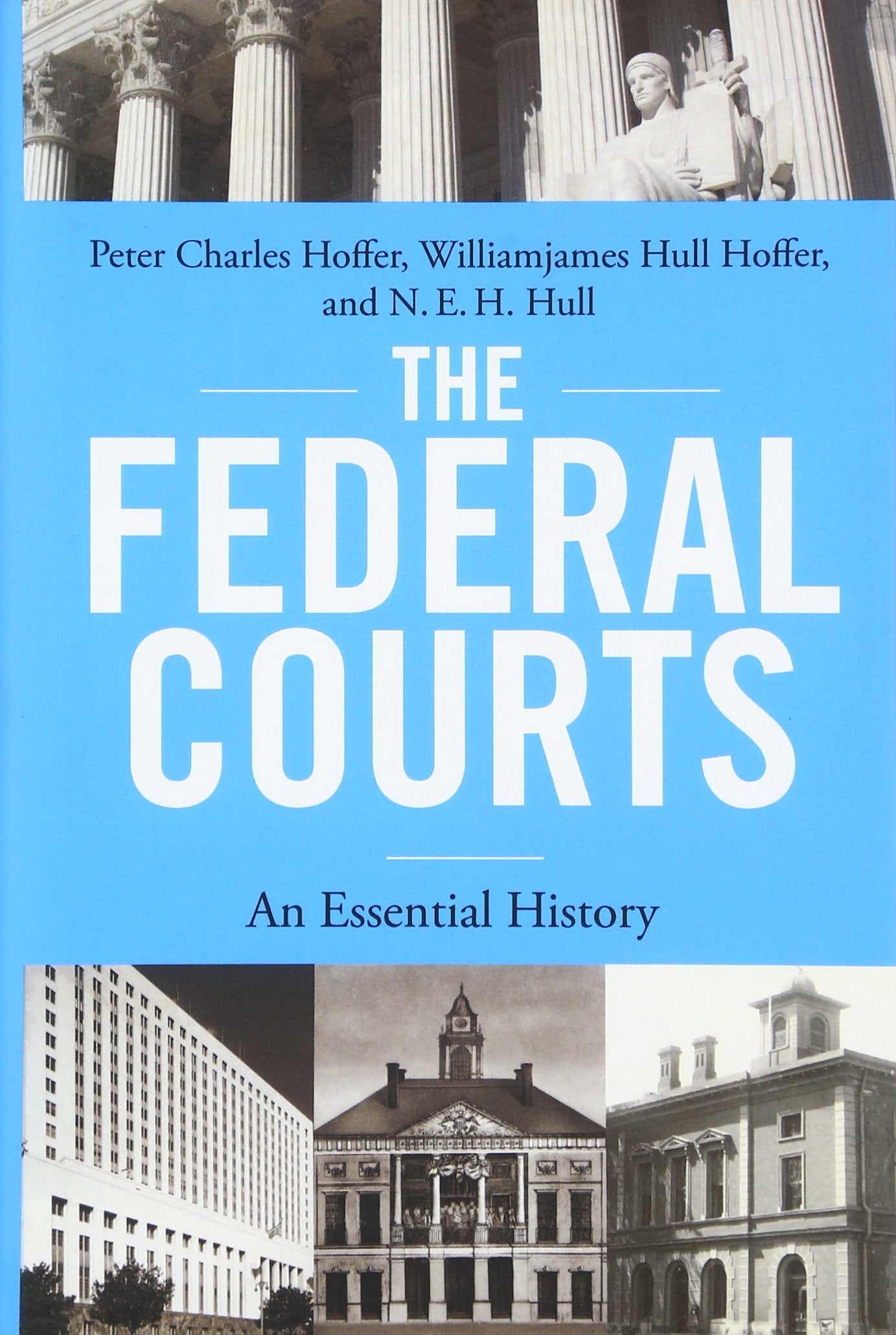
The Federal Courts: An Essential History,New
Sold by Ergodebooks, an authorized reseller.
Returns accepted within 30 days | support@ergodebooks.com
Shipping Information
- Free Standard Shipping — United States only
- Processing Time: 3–5 business days
- Estimated Delivery: 6–10 business days after dispatch
- Double-boxed, fully insured & discreetly packaged
- Tracking number sent via email once dispatched
Returns & Refund
Returns accepted within 30 days of delivery.
Damaged or Defective Item
Free return shipping + replacement or full refund
Wrong Item Received
Free return shipping + replacement or full refund
Change of Mind
Return shipping at customer's expense · 25% restocking fee applies
Payment Option

There are moments in American history when all eyes are focused on a federal court: when its bench speaks for millions of Americans, and when its decision changes the course of history. More often, the story of the federal judiciary is simply a tale of hard work: of finding order in the chaotic system of state and federal law, local custom, and contentious lawyering. The Federal Courts is a story of all of these courts and the judges and justices who served on them, of the case law they made, and of the acts of Congress and the administrative organs that shaped the courts. But, even more importantly, this is a story of the courts' development and their vital part in America's history.Peter Charles Hoffer, Williamjames Hull Hoffer, and N. E. H. Hull's retelling of that history is framed the three key features that shape the federal courts' narrative: the separation of powers; the federal system, in which both the national and state governments are sovereign; and the widest circle: the democraticrepublican framework of American selfgovernment. The federal judiciary is not elective and its principal judges serve during good behavior rather than at the pleasure of Congress, the President, or the electorate. But the independence that lifetime tenure theoretically confers did not and does not isolate the judiciary from political currents, partisan quarrels, and public opinion. Many vital political issues came to the federal courts, and the courts' decisions in turn shaped American politics.The federal courts, while the least democratic branch in theory, have proved in some ways and at various times to be the most democratic: open to ordinary people seeking redress, for example. Litigation in the federal courts reflects the changing aspirations and values of America's many peoples. The Federal Courts is an essential account of the branch that provides what Massachusetts Supreme Judicial Court Judge Oliver Wendell Homes Jr. called 'a magic mirror, wherein we see reflected our own lives.'
⚠️ WARNING (California Proposition 65):
This product may contain chemicals known to the State of California to cause cancer, birth defects, or other reproductive harm.
For more information, please visit www.P65Warnings.ca.gov.