If you have any questions, you are always welcome to contact us. We'll get back to you as soon as possible, withing 24 hours on weekdays.
Customer service
All questions about your order, return and delivery must be sent to our customer service team by e-mail at yourstore@yourdomain.com
Sale & Press
If you are interested in selling our products, need more information about our brand or wish to make a collaboration, please contact us at press@yourdomain.com
Help
If you have any questions, you are always welcome to contact us. We'll get back to you as soon as possible, withing 24 hours on weekdays.
Customer service
All questions about your order, return and delivery must be sent to our customer service team by e-mail at yourstore@yourdomain.com
Sale & Press
If you are interested in selling our products, need more information about our brand or wish to make a collaboration, please contact us at press@yourdomain.com
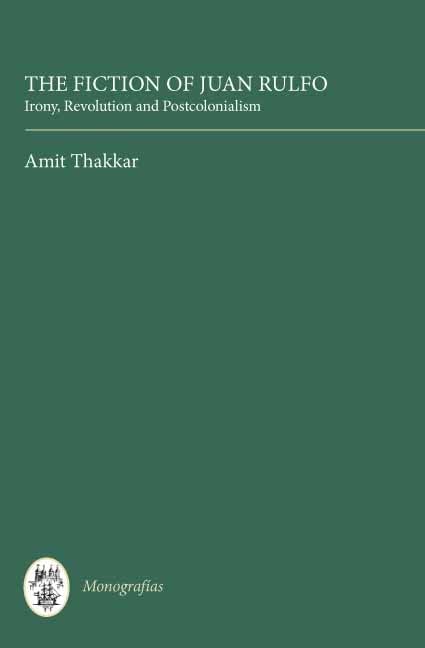
This is the first extended, Englishlanguage study to focus exclusively on the fiction of Juan Rulfo in over twenty years, analyzing a selection of short stories from Rulfo's collection and also two of the main characters of hismasterpiece, Pedro Pramo.This is the first extended, Englishlanguage study to focus exclusively on the fiction of Juan Rulfo in over twenty years. It contains innovative analyses of a selection of short stories from Rulfo's collection, El llano en llamas (1953). It also examines in great depth two of the main characters of Pedro Pramo (1955), Rulfo's masterpiece and only novel.The book shows how Rulfo's works can be read as exercises in irony directed againstthe rhetoric of postRevolutionary Mexican governments. It also demonstrates the relevance of certain legacies of colony in Rulfo's use of irony. Successive Mexican governments promoted a vision of postRevolutionary society founded on specific notions of ethnicity, family, nation, education, religion and rural politics. The author combines examination of the speeches, images and newspaper articles which disseminated this vision with incisive literary analyses of Rulfo's work. These analyses are informed both by his original theory of irony, based on 'internal' and 'external' referents, and by existing postcolonial theories, particularly those of Homi K. Bhabha.Amit Thakkar is a Lecturer in Hispanic Studies at Lancaster University.
⚠️ WARNING (California Proposition 65):
This product may contain chemicals known to the State of California to cause cancer,
birth defects, or other reproductive harm.
For MAP (Minimum Advertised Price) violations and Intellectual Property (IP) or Trademark concerns, please contact:
support@ergodebooks.com
⚠️ California Proposition 65 Warning: Some products sold on this website may expose you to chemicals known to the State of California to cause cancer, birth defects, or other reproductive harm. For more information, visit www.P65Warnings.ca.gov.