If you have any questions, you are always welcome to contact us. We'll get back to you as soon as possible, withing 24 hours on weekdays.
Customer service
All questions about your order, return and delivery must be sent to our customer service team by e-mail at yourstore@yourdomain.com
Sale & Press
If you are interested in selling our products, need more information about our brand or wish to make a collaboration, please contact us at press@yourdomain.com
Help
If you have any questions, you are always welcome to contact us. We'll get back to you as soon as possible, withing 24 hours on weekdays.
Customer service
All questions about your order, return and delivery must be sent to our customer service team by e-mail at yourstore@yourdomain.com
Sale & Press
If you are interested in selling our products, need more information about our brand or wish to make a collaboration, please contact us at press@yourdomain.com
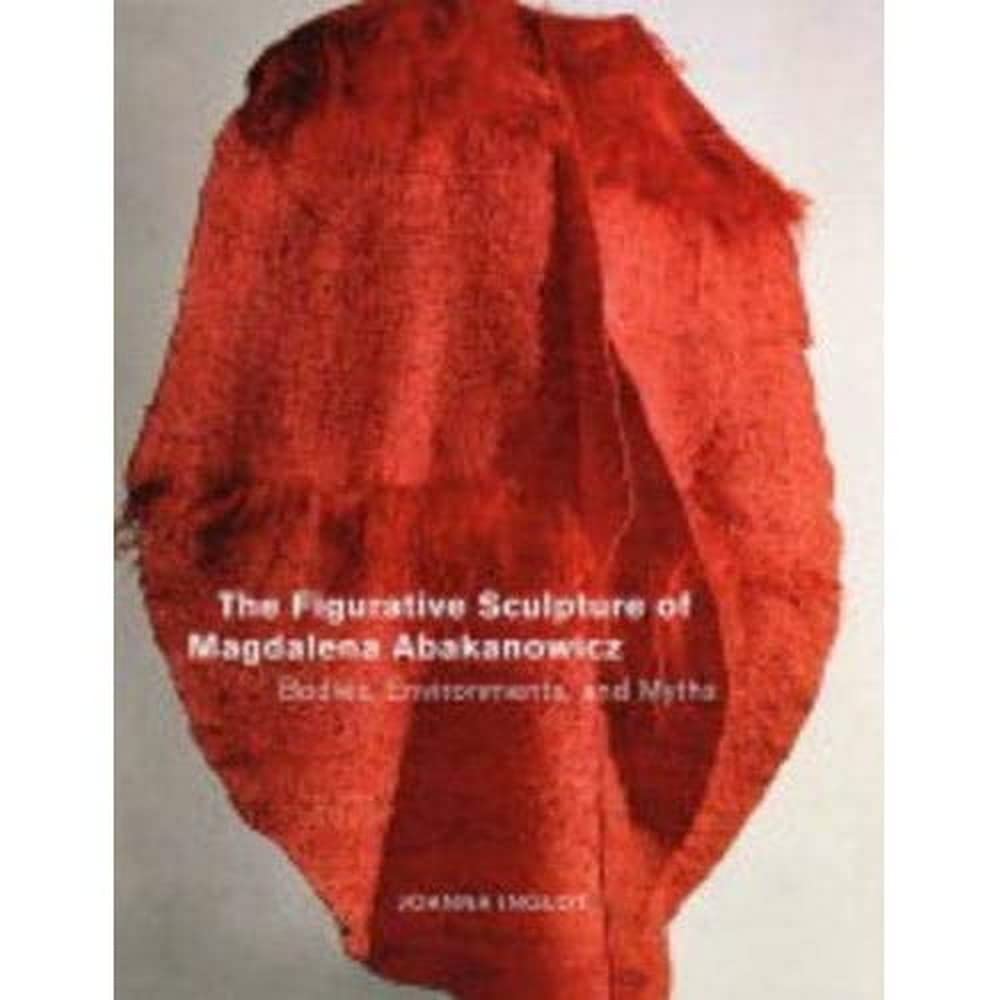
Since the early 1980s, the Polish artist Magdalena Abakanowicz (b. 1930) has gained worldwide acclaim for her role in the revival of figuration in latetwentiethcentury sculpture. Her cycles of headless, hollow, and crude burlap crowds of the mid1970s and the 1980s, exhibited in major museums across America, Europe, and Asia, are roundly praised for their expressive power and innovative form. In this first scholarly art historical analysis of Abakanowicz's figurative sculpture, Joanna Inglot penetrates the myth of isolation that surrounds and obscures this internationally celebrated artist to disclose the artistic, sociopolitical, and cultural context in which Abakanowicz has lived and worked.Examining Abakanowicz's representations of the human body from the fiber works of the 1960s known as Abakans through her War Games and outdoor environments of the 1980s and early 1990s, Inglot shows how these works engage the international art scene and the figurative sculpture of postwar Poland, and how they reflect a particular generation's experience of war and communism. With reference to Abakanowicz's use of national symbols and ceremonies drawn from the public and political discourse of the 1970s and 1980s, Inglot explains the complexity of the artist's attitudes toward contemporary politics and the troubled history of her native country. Inglot clearly locates Abakanowicz as a major contemporary sculptor whose works have embodied innovations in style and media and reflected important sociopolitical issues.
⚠️ WARNING (California Proposition 65):
This product may contain chemicals known to the State of California to cause cancer,
birth defects, or other reproductive harm.
For MAP (Minimum Advertised Price) violations and Intellectual Property (IP) or Trademark concerns, please contact:
support@ergodebooks.com
⚠️ California Proposition 65 Warning: Some products sold on this website may expose you to chemicals known to the State of California to cause cancer, birth defects, or other reproductive harm. For more information, visit www.P65Warnings.ca.gov.