If you have any questions, you are always welcome to contact us. We'll get back to you as soon as possible, withing 24 hours on weekdays.
Customer service
All questions about your order, return and delivery must be sent to our customer service team by e-mail at yourstore@yourdomain.com
Sale & Press
If you are interested in selling our products, need more information about our brand or wish to make a collaboration, please contact us at press@yourdomain.com
Help
If you have any questions, you are always welcome to contact us. We'll get back to you as soon as possible, withing 24 hours on weekdays.
Customer service
All questions about your order, return and delivery must be sent to our customer service team by e-mail at yourstore@yourdomain.com
Sale & Press
If you are interested in selling our products, need more information about our brand or wish to make a collaboration, please contact us at press@yourdomain.com
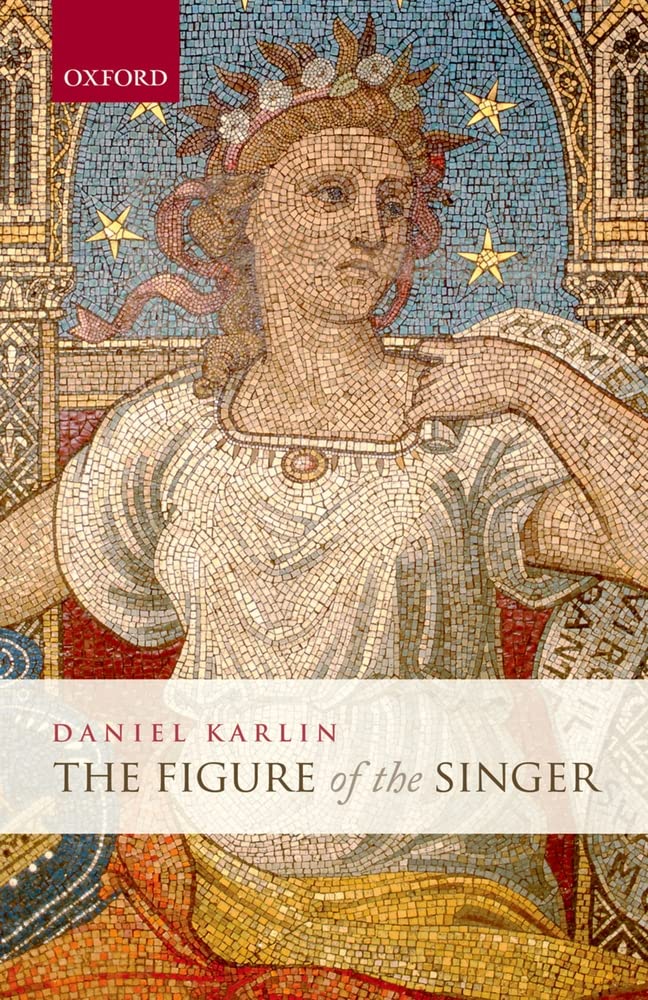
Why did poets continue to call themselves singers, and their poems songs, long after the formal link between poetry and music had been severed? Daniel Karlin explores the origin and meaning of the "figure of the singer," tracing its roots in classical mythology and in the Bible, and following its rise from the 'adventurous song' of Milton's Paradise Lost to its apotheosis in the nineteenth centuryby which time it had also become an oppressive cliche. Poets might embrace, or resist, this dominant figure of their art, but could not ignore it. Shadowing the metaphor is another figure, that of the literal singer, a source of fascination, and rivalry, to poets who are confined to words on the page.The book opens with an emblematic figure of the greatest of all "singers": Homer, playing his lyre, at the center of the frieze of poets on the Albert Memorial in London. Chapters on the tragicomic rise and fall of "the bard," on the link between female song and suffering, and on the metaphor of poetry as birdsong, are followed by detailed readings of poems by Tennyson, Robert Browning, Elizabeth Barrett Browning, Walt Whitman, and Thomas Hardy. The final chapter, on the songs of Bob Dylan, suggests that recording technology has given fresh impetus to the quarrel (which is also a loveaffair) between poetic language and song.The Figure of the Singer offers a profound and stimulating analysis of the idea of poetry as song and of the complex, troubled relations between voice and text
⚠️ WARNING (California Proposition 65):
This product may contain chemicals known to the State of California to cause cancer,
birth defects, or other reproductive harm.
For MAP (Minimum Advertised Price) violations and Intellectual Property (IP) or Trademark concerns, please contact:
support@ergodebooks.com
⚠️ California Proposition 65 Warning: Some products sold on this website may expose you to chemicals known to the State of California to cause cancer, birth defects, or other reproductive harm. For more information, visit www.P65Warnings.ca.gov.