
Title
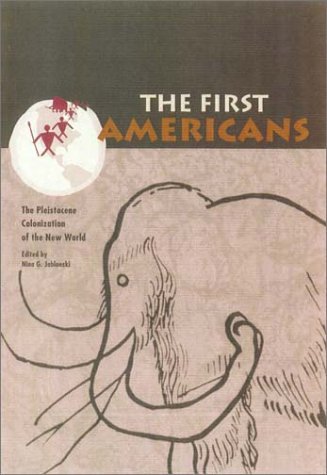
The First Americans: The Pleistocene Colonization Of The New World (Wattis Symposium Series In Anthropology),Used
Sold by Ergodebooks, an authorized reseller.
Returns accepted within 30 days | support@ergodebooks.com
Shipping Information
- Free Standard Shipping — United States only
- Processing Time: 3–5 business days
- Estimated Delivery: 6–10 business days after dispatch
- Double-boxed, fully insured & discreetly packaged
- Tracking number sent via email once dispatched
Returns & Refund
Returns accepted within 30 days of delivery.
Damaged or Defective Item
Free return shipping + replacement or full refund
Wrong Item Received
Free return shipping + replacement or full refund
Change of Mind
Return shipping at customer's expense · 25% restocking fee applies
Payment Option

As Modern Humans Spread Around The Globe, The Americas Represented The Final Continental Frontier. These First Colonists Were Modern In Appearance And Technology, But Who Were They And When Did They Arrive? Traditional Answers To These Questions Have Come Under Increasing Scrutiny In The Face Of New Findings From Artifacts, Skeletal Remains, Genes, And Languages. The Peopling Of The Americas Has Become One Of Archaeology'S Most Compelling And Contentious Subjects, As These New Lines Of Evidence Reveal A More Complex Solution. In This Volume, Distinguished Scientists From The Fields Of Archaeology, Physical Anthropology, Paleoecology, Genetics, And Linguistics Assess The Latest Evidence From Siberia To Chile And Offer Provocative Ideas For How, When, And Where Humans Entered The Americas.Contributors: Bruce Bradley, Linda Brown, Scott A. Elias, Tom D. Dillehay, John Douglas, Jon M. Erlandson, Nina G. Jablonski, David J. Meltzer, D. Andrew Merriwether, Johanna Nichols, Joseph F. Powell, Anna C. Roosevelt, Jack Rossen, Dennis Stanford, D. Gentry Steele, Christy G. Turner Iidistributed For The California Academy Of Sciences
⚠️ WARNING (California Proposition 65):
This product may contain chemicals known to the State of California to cause cancer, birth defects, or other reproductive harm.
For more information, please visit www.P65Warnings.ca.gov.
- Q: How many pages does the book have? A: The book has three hundred forty-three pages. This length provides an in-depth exploration of the Pleistocene colonization of the Americas.
- Q: What is the binding type of this book? A: The book is paperback bound. This makes it lightweight and easy to handle, ideal for reading on the go.
- Q: What are the dimensions of the book? A: The book measures six point eight nine inches in length, zero point six three inches in width, and nine point eight eight inches in height. These dimensions make it a convenient size for storage and reading.
- Q: Who is the author of this book? A: The author is Nina G. Jablonski. She is a renowned scholar in the field of anthropology, contributing significant insights to the study of human origins.
- Q: What topics does this book cover? A: The book covers the peopling of the Americas, including archaeological, genetic, and linguistic evidence. It presents various theories on how and when humans first entered the continent.
- Q: Is this book suitable for academic use? A: Yes, this book is suitable for academic use. It features contributions from distinguished scientists in various fields of study, making it a valuable resource for research.
- Q: How should I care for this book? A: To care for this book, keep it in a cool, dry place and avoid exposing it to direct sunlight. This will help preserve its condition over time.
- Q: Is the book appropriate for all ages? A: Yes, the book is appropriate for all ages. However, it is recommended for readers with an interest in anthropology and history.
- Q: Can this book be used as a reference for school projects? A: Yes, this book can be used as a reference for school projects. Its comprehensive coverage of the subject matter makes it a reliable source.
- Q: What if the book arrives damaged? A: If the book arrives damaged, you should contact the seller for a return or exchange. Most sellers have policies in place to handle such issues.
- Q: Are there any illustrations in the book? A: Yes, the book includes illustrations and maps that complement the text. These visuals help to clarify complex information and enhance understanding.
- Q: What makes this book different from others on the same topic? A: This book stands out due to its multidisciplinary approach, featuring contributions from experts in archaeology, genetics, and linguistics. This diverse perspective adds depth to the discussion.
- Q: Is there a glossary or index in the book? A: Yes, the book includes an index to help readers locate specific topics easily. This feature enhances the book's usability as a reference.
- Q: Does the book include references or citations? A: Yes, the book includes references and citations for further reading. This allows readers to explore the sources of information used in the text.
- Q: What is the publication year of this book? A: The book was published in 2015. This recent publication ensures that the information reflects current research and findings in the field.