
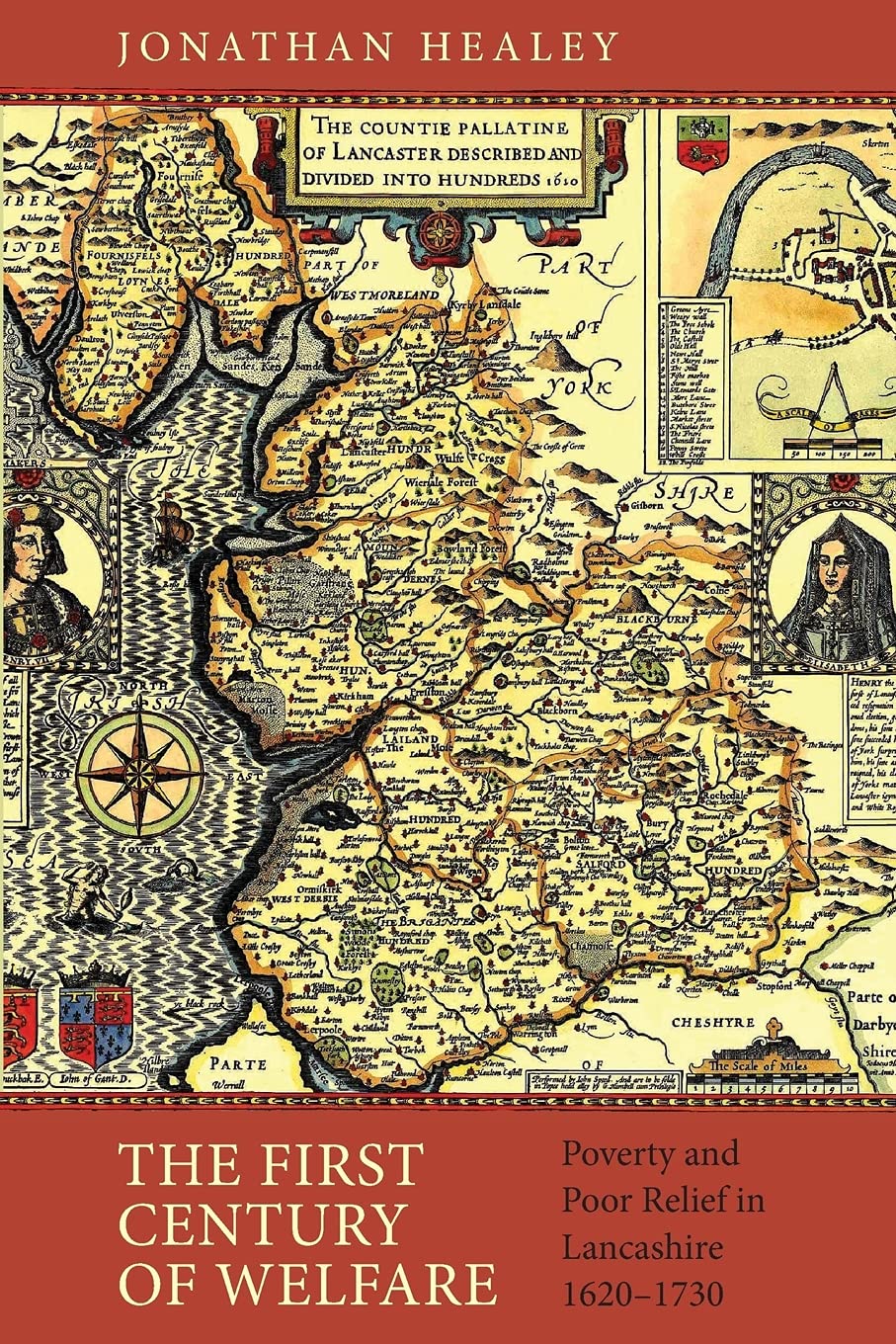
Title
The First Century of Welfare: Poverty and Poor Relief in Lancashire, 16201730 (People, Markets, Goods: Economies and Societies ,Used
Sold by Ergodebooks, an authorized reseller.
Returns accepted within 30 days | support@ergodebooks.com
Shipping Information
- Free Standard Shipping — United States only
- Processing Time: 3–5 business days
- Estimated Delivery: 6–10 business days after dispatch
- Double-boxed, fully insured & discreetly packaged
- Tracking number sent via email once dispatched
Returns & Refund
Returns accepted within 30 days of delivery.
Damaged or Defective Item
Free return shipping + replacement or full refund
Wrong Item Received
Free return shipping + replacement or full refund
Change of Mind
Return shipping at customer's expense · 25% restocking fee applies
Payment Option

The first major regional study of poverty and its relief in the seventeenth century: the first century of welfare.The English 'Old Poor Law' was the first national system of taxfunded social welfare in the world. It provided a safety net for hundreds of thousands of paupers at a time of very limited national wealth and productivity. The First Century of Welfare, which focusses on the poor, but developing, county of Lancashire, provides the first major regional study of poverty and its relief in the seventeenth century. Drawing on thousands of individual petitions for poor relief, presented by paupers themselves to magistrates, it peers into the social and economic world of England's marginal people. Taken together, these records present a vivid and sobering picture of the daily lives and struggles of the poor. We can see how their family life, their relations with their kin and their neighbours, and the dictates of contemporary gender norms conditioned their lives. We can also see how they experienced illness and physical and mental disability; and the ways in which real people's lives could be devastated by dearth, trade depression, and the destruction of the Civil Wars. But the picture is not just one of poor folk tossed by the tidesof fortune. It is also one of agency: about the strategies of economic survival the poor adopted, particularly in the context of a developing industrial economy, of the support they gained from their relatives and neighbours, andof their willingness to engage with England's developing system of social welfare to ensure that they and their families did not go hungry. In this book, an intensely human picture surfaces of what it was like to experience poverty at a time when the seeds of state social welfare were being planted.JONATHAN HEALEY is University Lecturer in English Local and Social History and Fellow of Kellogg College, University of Oxford.
⚠️ WARNING (California Proposition 65):
This product may contain chemicals known to the State of California to cause cancer, birth defects, or other reproductive harm.
For more information, please visit www.P65Warnings.ca.gov.