
Title
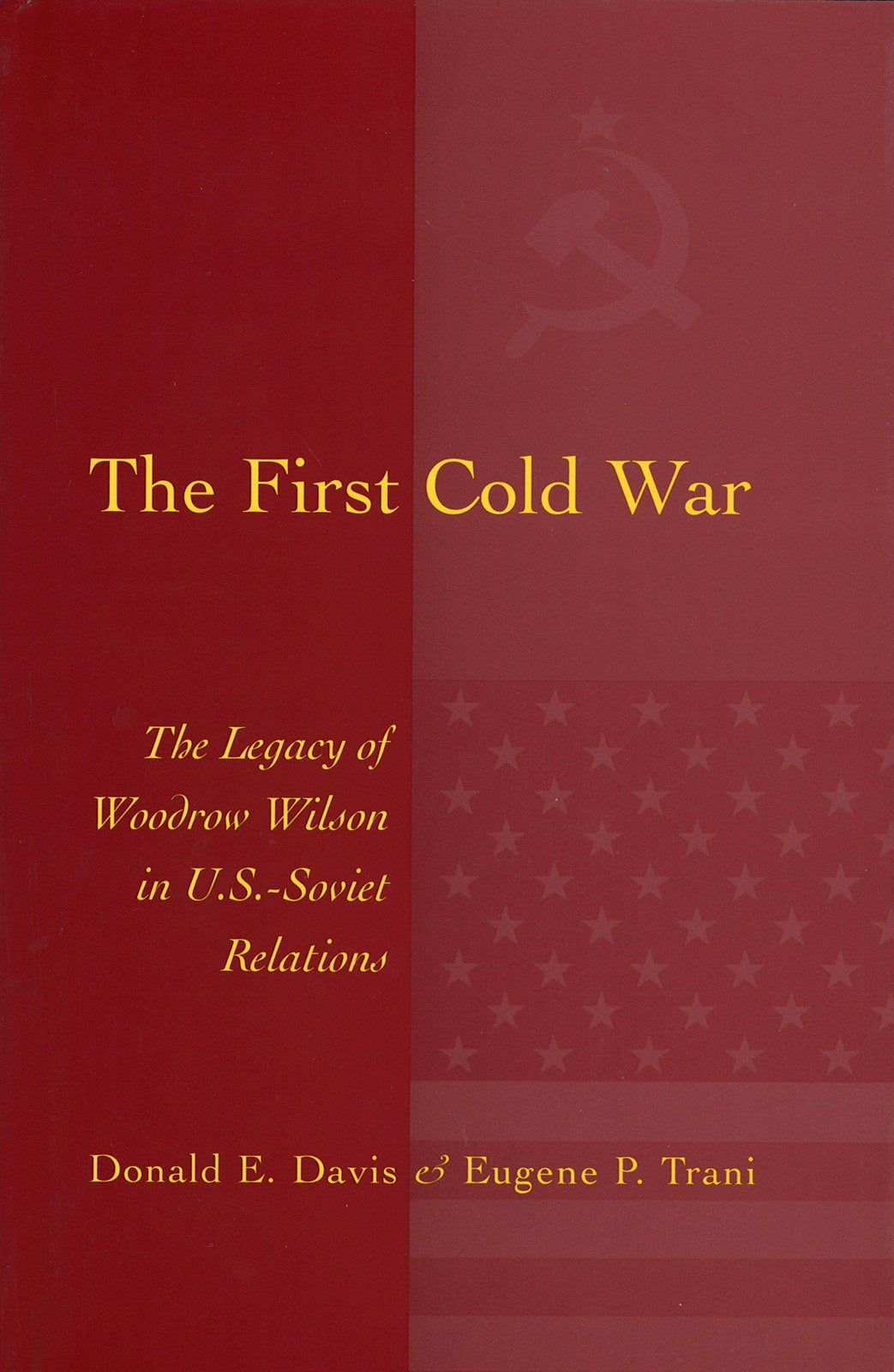
The First Cold War: The Legacy of Woodrow Wilson in U.S. Soviet Relations,Used
Sold by Ergodebooks, an authorized reseller.
Returns accepted within 30 days | support@ergodebooks.com
Shipping Information
- Free Standard Shipping — United States only
- Processing Time: 3–5 business days
- Estimated Delivery: 6–10 business days after dispatch
- Double-boxed, fully insured & discreetly packaged
- Tracking number sent via email once dispatched
Returns & Refund
Returns accepted within 30 days of delivery.
Damaged or Defective Item
Free return shipping + replacement or full refund
Wrong Item Received
Free return shipping + replacement or full refund
Change of Mind
Return shipping at customer's expense · 25% restocking fee applies
Payment Option

In The First Cold War, Donald E. Davis and Eugene P. Trani review the Wilson administrations attitudes toward Russia before, during, and after the Bolshevik seizure of power. They argue that before the Russian Revolution, Woodrow Wilson had little understanding of Russia and made poor appointments that cost the United States Russian goodwill. Wilson later reversed those negative impressions by being the first to recognize Russias Provisional Government, resulting in positive U.S.Russian relations until Lenin gained power in 1917.Wilson at first seemed unsure whether to recognize or repudiate Lenin and the Bolsheviks. His vacillation finally ended in a firm repudiation when he opted for a diplomatic quarantine having almost all of the ingredients of the later Cold War. Davis and Trani argue that Wilson deserves mild criticism for his early indecision and inability to form a coherent policy toward what would become the Soviet Union. But they believe Wilson rightly came to the conclusion that until the regime became more moderate, it was useless for America to engage it diplomatically.The authors see in Wilsons approach the foundations for the first Cold Warmeaning not simply a refusal to recognize the Soviet Union, but a strong belief that its influence was harmful and would spread if not contained or quarantined. Wilsons Soviet policy in essence lasted until Roosevelt extended diplomatic recognition in the 1930s. But The First Cold War suggests that Wilsons impact extended beyond Roosevelt to Truman, showing that the policies of Wilson and Truman closely resemble each other with the exception of an arms race. Wilsons intellectual reputation lent credibility to U.S. Cold War policy from Truman to Reagan, and the reader can draw a direct connection from Wilson to the collapse of the USSR. Wilsonians were the first Cold War warriors, and in the era of President Woodrow Wilson, the first Cold War began.
⚠️ WARNING (California Proposition 65):
This product may contain chemicals known to the State of California to cause cancer, birth defects, or other reproductive harm.
For more information, please visit www.P65Warnings.ca.gov.