
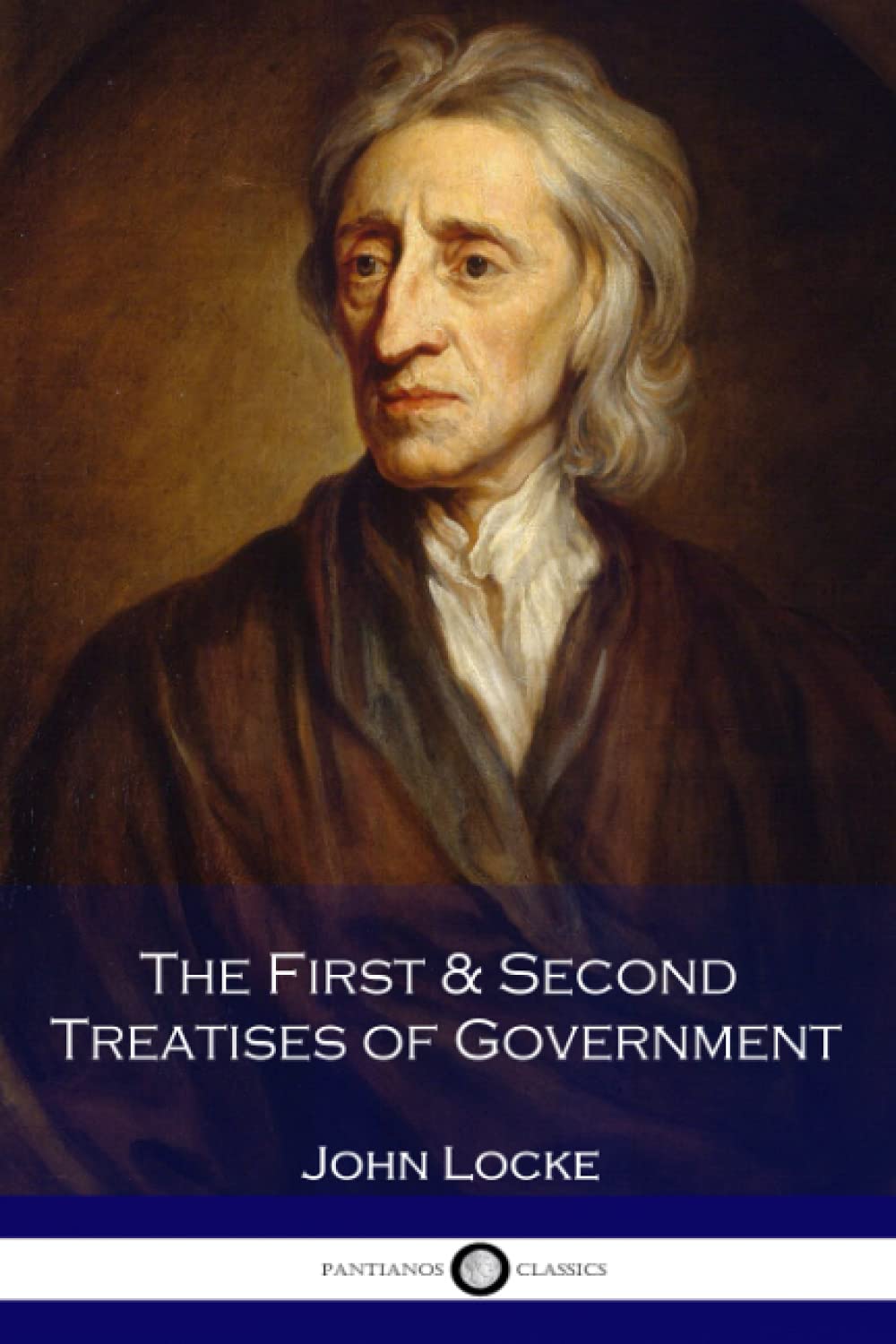
Title
The First & Second Treatises Of Government
Sold by Ergodebooks, an authorized reseller.
Returns accepted within 30 days | support@ergodebooks.com
Shipping Information
- Free Standard Shipping — United States only
- Processing Time: 3–5 business days
- Estimated Delivery: 6–10 business days after dispatch
- Double-boxed, fully insured & discreetly packaged
- Tracking number sent via email once dispatched
Returns & Refund
Returns accepted within 30 days of delivery.
Damaged or Defective Item
Free return shipping + replacement or full refund
Wrong Item Received
Free return shipping + replacement or full refund
Change of Mind
Return shipping at customer's expense · 25% restocking fee applies
Payment Option

Locke'S Two Groundbreaking Treatises Regarding Good Governance Are Present Here In This Complete Edition.At The Time These Treatises Were Written, English Politics Had Undergone Decades Of Upheaval In The Wake Of The English Civil War. When Dutch Monarch William Of Orange Ascended To The English Throne In The Glorious Revolution Of 1688, Burning Questions Over The Best Form Of Governance For England Were Prominent In The Intelligentsia Of The Era. It Was A Time When England Grappled With Its Incremental Transition From Monarchy To Early Forms Of Democracy And Right To Vote, Where Dynastic Monarchy And Religious Theory Still Held Considerable Power Over The Formation Of The State.In The First Treatise Locke Proceeds To Attack And Dissect His Prominent Contemporary Robert Filmer, Who Was Broadly In Favour Of Absolute Monarchy Under The Principle Of Divine Right. The Allusions To The Biblical Adam, Wherein The Monarch Can Be Intimated As A Continuation Of The First Man Ever Created, Are Debunked By Locke Who Asserts That God Never Asserted That One Man Had Province To Rule Over All Other Human Beings. Supporting His Argument With Known History, Locke Concludes That No King Over The Centuries Had Asserted To Be The Heir Of Adam And Thereby The Rightful Ruler Of A Country.In The Second Treatise Locke Turns To A Different Topic That Of The State Of Nature. He Discusses How Humanity May Have Behaved Prior To The Establishment Of Formal Societies, And Concludes That Humanity Even Without An Established Government In Place Had Never Been Truly Lawless Even When Freedom Was At Its Farthest Extent. In Arguing Against The Tyranny Of Absolute Monarchy, While Acknowledging The Advantages Of Humanity'S Freedom In Its Natural Ungoverned State, Locke Arrives At His Conclusion: A Democratically Elected Government, Whereby Humans Are Accorded Freedoms But Must Conform To The Rule Of Law, Is The Most Advantageous Type Of Government To Which Humans Can Aspire.Lauded As A Classic Of Political Philosophy, The Treatises By Locke Are A Common Requirement In Various Educational Courses Concerning Political Science And Philosophy To This Day. While Steeped In The Historical Realities Of The Late 17Th Century, The Arguments Locke Composes For Governance Favourable To The People And Their Country'S Development Were Immensely Influential On Political Theory During And After The Enlightenment Era.
⚠️ WARNING (California Proposition 65):
This product may contain chemicals known to the State of California to cause cancer, birth defects, or other reproductive harm.
For more information, please visit www.P65Warnings.ca.gov.
- Q: What is the size of 'The First & Second Treatises of Government'? A: The book measures six inches in length, zero point four seven inches in width, and nine point zero two inches in height.
- Q: How many pages does this book have? A: This book contains two hundred pages, making it a comprehensive read on political philosophy.
- Q: What type of binding does this book have? A: This book is available in paperback binding, ensuring it's lightweight and portable.
- Q: Who is the author of this book? A: The author of 'The First & Second Treatises of Government' is John Locke, a renowned philosopher in political theory.
- Q: What genre does this book belong to? A: This book falls under the Political genre, focusing on governance and political philosophy.
- Q: Is this book suitable for beginners in political philosophy? A: Yes, this book is suitable for beginners, as it covers foundational theories of governance in an accessible manner.
- Q: What is the reading level for this book? A: The reading level is appropriate for high school students and above, given its philosophical content and historical context.
- Q: How do I approach reading this book effectively? A: To read this book effectively, take notes on key arguments and historical context to enhance understanding of Locke's theories.
- Q: Can this book be used in academic courses? A: Yes, it is commonly required in various educational courses related to political science and philosophy.
- Q: How should I store this book to maintain its condition? A: Store this book in a cool, dry place away from direct sunlight to prevent damage to its pages and binding.
- Q: Is there any special care required for this paperback book? A: No special care is required, but avoid exposing it to moisture or extreme temperatures to preserve its quality.
- Q: What if the book arrives damaged? A: If the book arrives damaged, you should contact the seller for a return or exchange policy to resolve the issue.
- Q: How can I ensure I am getting the correct edition of this book? A: To ensure you are getting the correct edition, verify the publisher, which is CreateSpace Independent Publishing Platform.
- Q: Is this book recommended for advanced political theory students? A: Yes, it is recommended for advanced students as it provides critical insights into governance and individual rights.
- Q: What should I do if I have questions while reading? A: If you have questions while reading, consider joining a discussion group or looking for online forums focused on political philosophy.