
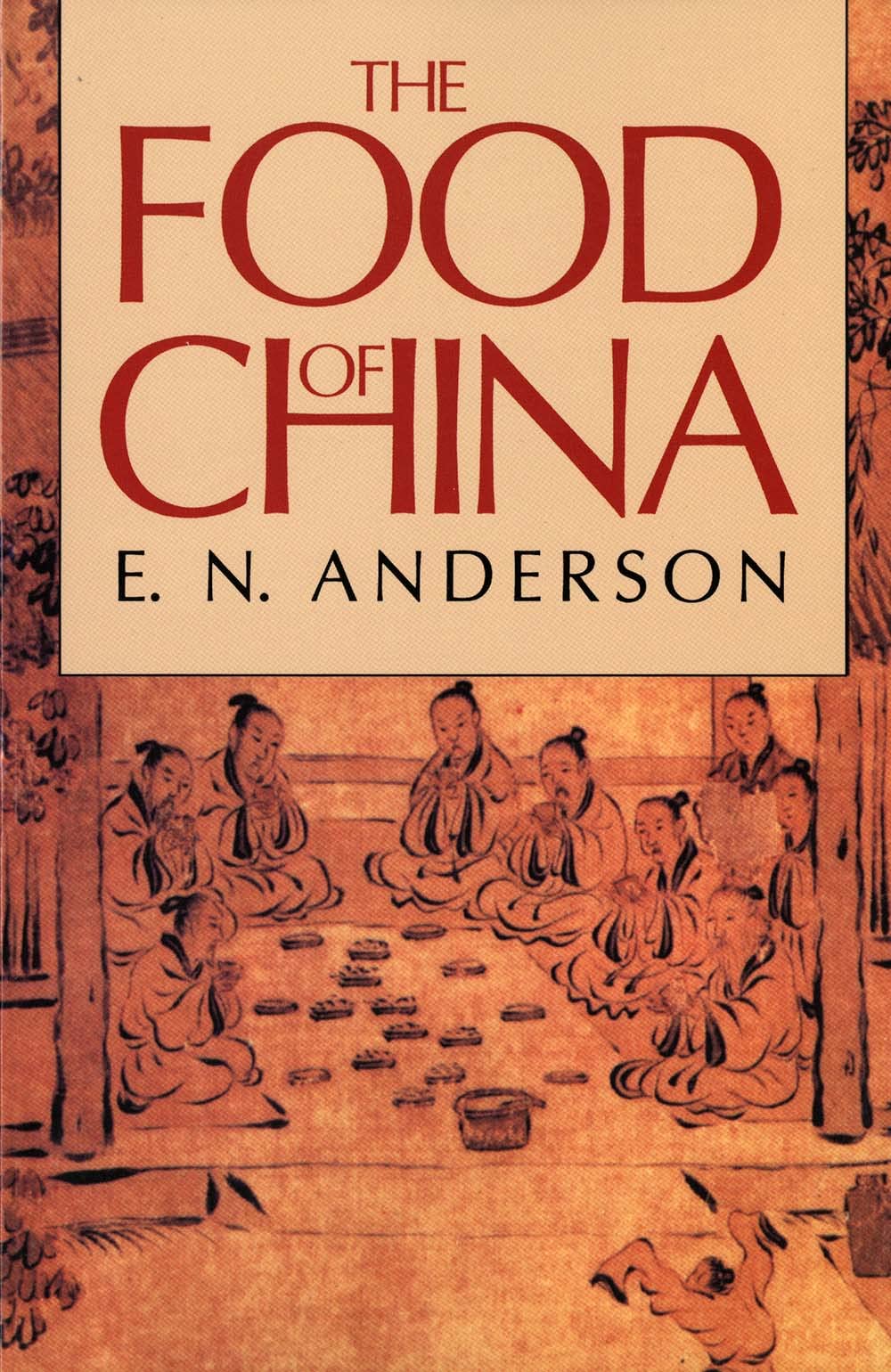
Title

The Food of China,New
Sold by Ergodebooks, an authorized reseller.
Returns accepted within 30 days | support@ergodebooks.com
Shipping Information
- Free Standard Shipping — United States only
- Processing Time: 3–5 business days
- Estimated Delivery: 6–10 business days after dispatch
- Double-boxed, fully insured & discreetly packaged
- Tracking number sent via email once dispatched
Returns & Refund
Returns accepted within 30 days of delivery.
Damaged or Defective Item
Free return shipping + replacement or full refund
Wrong Item Received
Free return shipping + replacement or full refund
Change of Mind
Return shipping at customer's expense · 25% restocking fee applies
Payment Option

To feed a quarter of the worlds population on only seven percent of the worlds cultivated land and at the same time to have developed a renowned cuisine is perhaps the most exemplary achievement of the Chinese people. What accounts for their success? And what can be learned from it?'Lively and engaging. . . . Food is placed in its contexts, which range from questions of land tenure to those of ritual. It is a book that can be read with pleasure both by amateurs of Chinese cooking and by persons interested in issues of agriculture and nutrition.'Ann Waltner, Annals of the American Academy of Political & Social ScienceE.N. Andersons comprehensive, entertaining historical and ethnographic account of Chinese food from the Bronze Age to the twentieth century shows how food has been central to Chinese governmental policies, religious rituals, and health practices from earliest times. The historical survey of agricultural and culinary customs, in the first half of the book, offers a wealth of fact and interpretation on such topics as the effect of government policy on agricultural innovation; the relation of medical beliefs to appetizing cuisine; the recycling of waste products on the farm; the traditional absence of food taboos (including the practicality of eating ones pests, or feeding them to pigs and chickens, instead of poisoning them and the environment); and the key factors in the gourmet quality of Chinese food from the simplest to the most elaborate dishes. Without glossing over the occurrences of famine Chinas history, Anderson concludes that the full story is one of remarkable success in feeding maximum populations over the millennia. Underpinning this accomplishment, he cites Chinas traditional stress on food as the basis of the state and as fundamental not only to individual wellbeing but to the enjoyment of life.Anderson turns to presentday China in the latter half of the book, describing in rich and enticing detail the regional varieties in Chinese diet, food preparation, and rituals of eating and drinking. These lively, readable chapters as well as those in the first half of The Food of China make it a prime source for anyonegeneral readers and scholars alikewith an interest in Chinese history or food.
⚠️ WARNING (California Proposition 65):
This product may contain chemicals known to the State of California to cause cancer, birth defects, or other reproductive harm.
For more information, please visit www.P65Warnings.ca.gov.
- Q: How many pages does 'The Food of China' have? A: This book has three hundred thirty pages. It's a comprehensive exploration of Chinese food history and culture.
- Q: What is the binding type of this book? A: The binding type is paperback. This makes it lightweight and easy to handle for reading.
- Q: What are the dimensions of 'The Food of China'? A: The dimensions are nine point twenty-three inches in length, six point fifteen inches in width, and one inch in height. This size is convenient for both reading and storage.
- Q: Who is the author of 'The Food of China'? A: The author is E. N. Anderson. He provides a thorough understanding of Chinese cuisine and its historical significance.
- Q: What genre does 'The Food of China' belong to? A: This book belongs to the genre of historical and ethnographic literature. It combines food studies with cultural history.
- Q: What is the main focus of 'The Food of China'? A: The main focus is on the historical and cultural aspects of Chinese food. It explores how food has shaped Chinese society and governance.
- Q: How can I use 'The Food of China' as a resource? A: You can use this book for both casual reading and scholarly research. It offers insights into Chinese culinary practices and agricultural history.
- Q: Is 'The Food of China' suitable for beginners in Chinese cooking? A: Yes, it is suitable for beginners. The book provides accessible insights into Chinese cooking alongside its historical context.
- Q: What age group is 'The Food of China' appropriate for? A: This book is appropriate for adults and older teens. It covers complex topics related to culture and history.
- Q: How should I store 'The Food of China' to keep it in good condition? A: Store it in a cool, dry place away from direct sunlight. This will help preserve the quality of the paperback binding.
- Q: Can 'The Food of China' be cleaned if it gets dirty? A: Yes, you can gently wipe the cover with a soft, damp cloth. Avoid using harsh chemicals to prevent damage.
- Q: What should I do if 'The Food of China' arrives damaged? A: If it arrives damaged, contact the seller for a return or replacement. Most sellers have policies for such situations.
- Q: Is there a warranty for 'The Food of China'? A: No, this book typically does not come with a warranty. However, return policies may apply depending on the seller.
- Q: How does 'The Food of China' compare to other food history books? A: This book is unique due to its in-depth focus on Chinese cuisine. It offers a blend of food history and cultural analysis that is hard to find elsewhere.
- Q: Does 'The Food of China' include recipes? A: No, it does not include recipes. The book focuses more on the history and cultural significance of food rather than cooking instructions.