
Title
The Formation Of Latin American Nations: From Late Antiquity To Early Modernity,Used
Sold by Ergodebooks, an authorized reseller.
Returns accepted within 30 days | support@ergodebooks.com
Shipping Information
- Free Standard Shipping — United States only
- Processing Time: 3–5 business days
- Estimated Delivery: 6–10 business days after dispatch
- Double-boxed, fully insured & discreetly packaged
- Tracking number sent via email once dispatched
Returns & Refund
Returns accepted within 30 days of delivery.
Damaged or Defective Item
Free return shipping + replacement or full refund
Wrong Item Received
Free return shipping + replacement or full refund
Change of Mind
Return shipping at customer's expense · 25% restocking fee applies
Payment Option

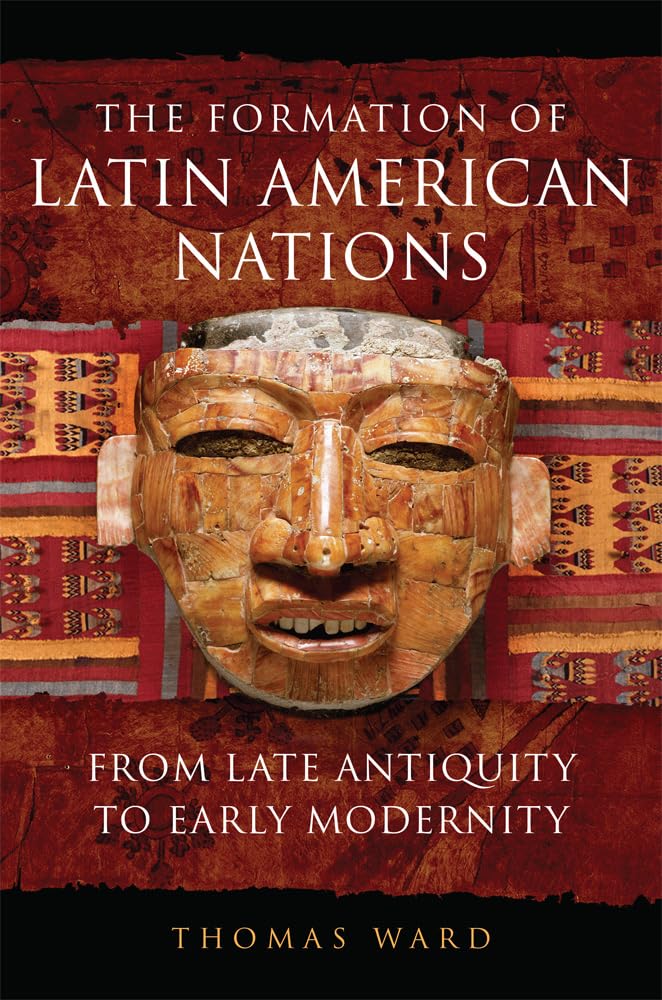
This pioneering work brings the preColumbian and colonial history of Latin America home: rather than starting out in Spain and following Columbus and the conquistadores as they discover New World peoples, The Formation of Latin American Nations begins with the Mesoamerican and South American nations as they were before the advent of European colonialismand only then moves on to the sixteenthcentury Spanish arrival and its impact.To form a clearer picture of precolonial Latin America, Thomas Ward reads between the lines in the Chronicles of the Indies, filling in the blanks with information derived from archaeology, anthropology, genetics, and commonsense logic. Although he finds fascinating points of comparison among the Kiche Maya in Central America, the polities (seoros) of Colombia, and the Chim of the northern Peruvian coast, Ward focuses on two of the bestknown peoples: the Nahua (Aztec) of Central Mexico and the Inka of the Andes. His study privileges indigenousidentified authors such as Diego Muoz Camargo, Fernando de Alva Ixtlilxchitl, Inca Garcilaso de la Vega, and Felipe Guaman Poma de Ayala while it also consults Spanish chroniclers like Hernn Corts, Bernal Diaz del Castillo, Pedro Cieza de Len, and Bartolom de las Casas.The nationforming processes that Ward theorizes feature two forms of cultural appropriation: the horizontal, in which nations appropriate people and customs from adjacent cultures, and the vertical, in which nations dig into their own past to fortify their concept of exceptionality. In defining these processes, Ward eschews the most common measure, race, instead opting for the Nahua altepetl, the Inka panaka, and the Kiche amaq. His work thus approaches the nation both as the indigenous people conceptualized it and with terminology that would have been familiar to them before and after contact with the Spanish. The result is a truly decolonial account of the formation and organization of Latin American nations, one that puts the indigenous perspective at its center.
⚠️ WARNING (California Proposition 65):
This product may contain chemicals known to the State of California to cause cancer, birth defects, or other reproductive harm.
For more information, please visit www.P65Warnings.ca.gov.