
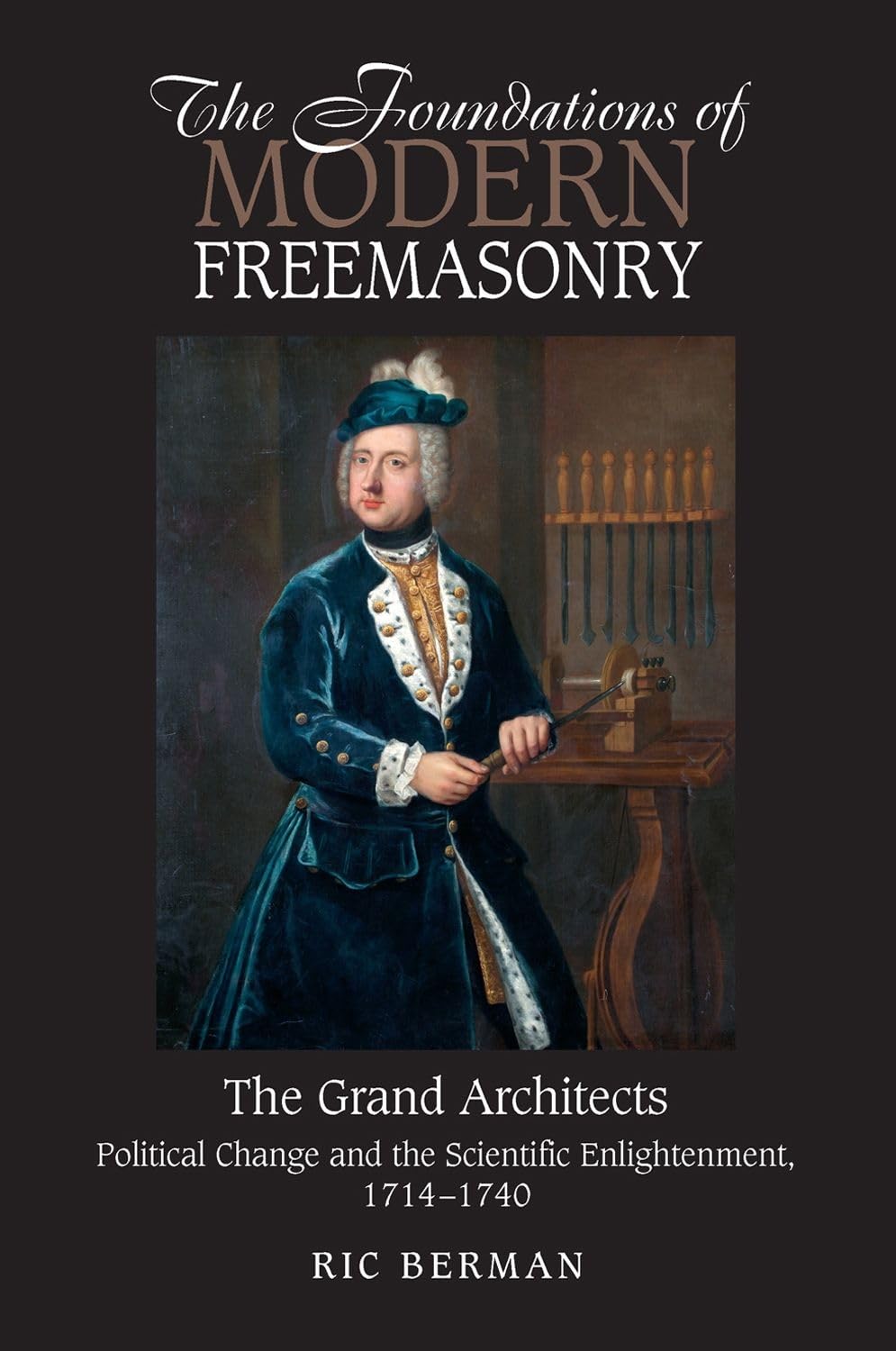
Title
The Foundations Of Modern Freemasonry: The Grand Architects: Political Change And The Scientific Enlightenment, 17141740
Sold by Ergodebooks, an authorized reseller.
Returns accepted within 30 days | support@ergodebooks.com
Shipping Information
- Free Standard Shipping — United States only
- Processing Time: 3–5 business days
- Estimated Delivery: 6–10 business days after dispatch
- Double-boxed, fully insured & discreetly packaged
- Tracking number sent via email once dispatched
Returns & Refund
Returns accepted within 30 days of delivery.
Damaged or Defective Item
Free return shipping + replacement or full refund
Wrong Item Received
Free return shipping + replacement or full refund
Change of Mind
Return shipping at customer's expense · 25% restocking fee applies
Payment Option

Following The Appointment Of Its First Aristocratic Grand Masters In The 1720S And In The Wake Of Its Connections To The Enlightenment, Free And Accepted Masonry Rapidly Became Part Of Britain'S National Profile And The Largest And Most Influential Of Its Extensive Range Of Clubs And Societies. The New Organization Did Not Evolve Naturally From The Mediaeval Guilds And Religious Orders That Predated It But Was Reconfigured Radically By A Largely Selfappointed Inner Core. It Became A Vehicle For The Expression And Transmission Of Their Political And Religious Views, And For The Enlightenment Concepts They Championed. Through An Examination Of New And Previously Unexplored Primary Documentation, Berman Contributes To An Understanding Of The Contemporary Political And Social Culture And Explores How Freemasonry Became A Mechanism That Promoted The Interests Of The Hanoverian Establishment, Connecting Elite Metropolitan And Provincial Figures. A Range Of Networks Centered On The Aristocracy, Parliament, Professional Societies And The Magistracy Are Examined, As Are The Key Individuals Instrumental In Spreading The Masonic Message. The Book Concludes That Freemasonry Should Be Recognized Not Only As The Most Prominent Of The Many 18Thcentury Fraternal Organizations But Also As A Significant Cultural Vector And A Component Of The Social, Economic, Scientific And Political Transformation Then In Progress. Berman'S Analysis Throws A New And Original Light On The Formation And Development Of What Rapidly Became A National And International Phenomenon. ...A Valuable Work For Serious Masonic Historians. Choice, October 2012, Vol. 50 No. 02. Now In Its Second Edition.
⚠️ WARNING (California Proposition 65):
This product may contain chemicals known to the State of California to cause cancer, birth defects, or other reproductive harm.
For more information, please visit www.P65Warnings.ca.gov.
- Q: What are the dimensions of the book? A: The book measures six point fourteen inches in length, nine point twenty-one inches in height, and zero point seventy-nine inches in width.
- Q: How many pages does this book have? A: The book contains three hundred twenty pages, providing an in-depth exploration of modern freemasonry.
- Q: What type of binding does this book have? A: This book is bound in hardcover, ensuring durability for repeated use.
- Q: Who is the author of this book? A: The book is authored by Ric Berman MA, a recognized expert on the subject of freemasonry.
- Q: What is the genre of this book? A: This book falls under the historical non-fiction genre, focusing on the political and social aspects of freemasonry.
- Q: How do I read this book? A: You can read this book in any comfortable setting, as it is suitable for both casual reading and academic study.
- Q: Is this book appropriate for beginners in freemasonry? A: Yes, this book is appropriate for beginners, as it provides foundational knowledge of modern freemasonry.
- Q: What themes are explored in this book? A: The book explores themes of political change, the Enlightenment, and the social influence of freemasonry in Great Britain.
- Q: How should I store this book? A: Store this book in a cool, dry place, standing upright to maintain its shape and condition.
- Q: Can I clean the book cover? A: Yes, you can gently wipe the hardcover with a soft, dry cloth to remove dust or fingerprints.
- Q: What if the book arrives damaged? A: If the book arrives damaged, you should contact the seller for return instructions and possible replacement.
- Q: Is there a warranty for this book? A: Typically, books do not come with a warranty, but check with the seller for their specific return policy.
- Q: How does this book compare to other works on freemasonry? A: This book offers a unique perspective by focusing on the political implications and historical context of freemasonry.
- Q: Is this book suitable for academic research? A: Yes, this book is suitable for academic research as it includes new primary documentation and thorough analysis.
- Q: What is the target audience for this book? A: The target audience includes historians, Masonic scholars, and anyone interested in the social history of Great Britain.