
Title
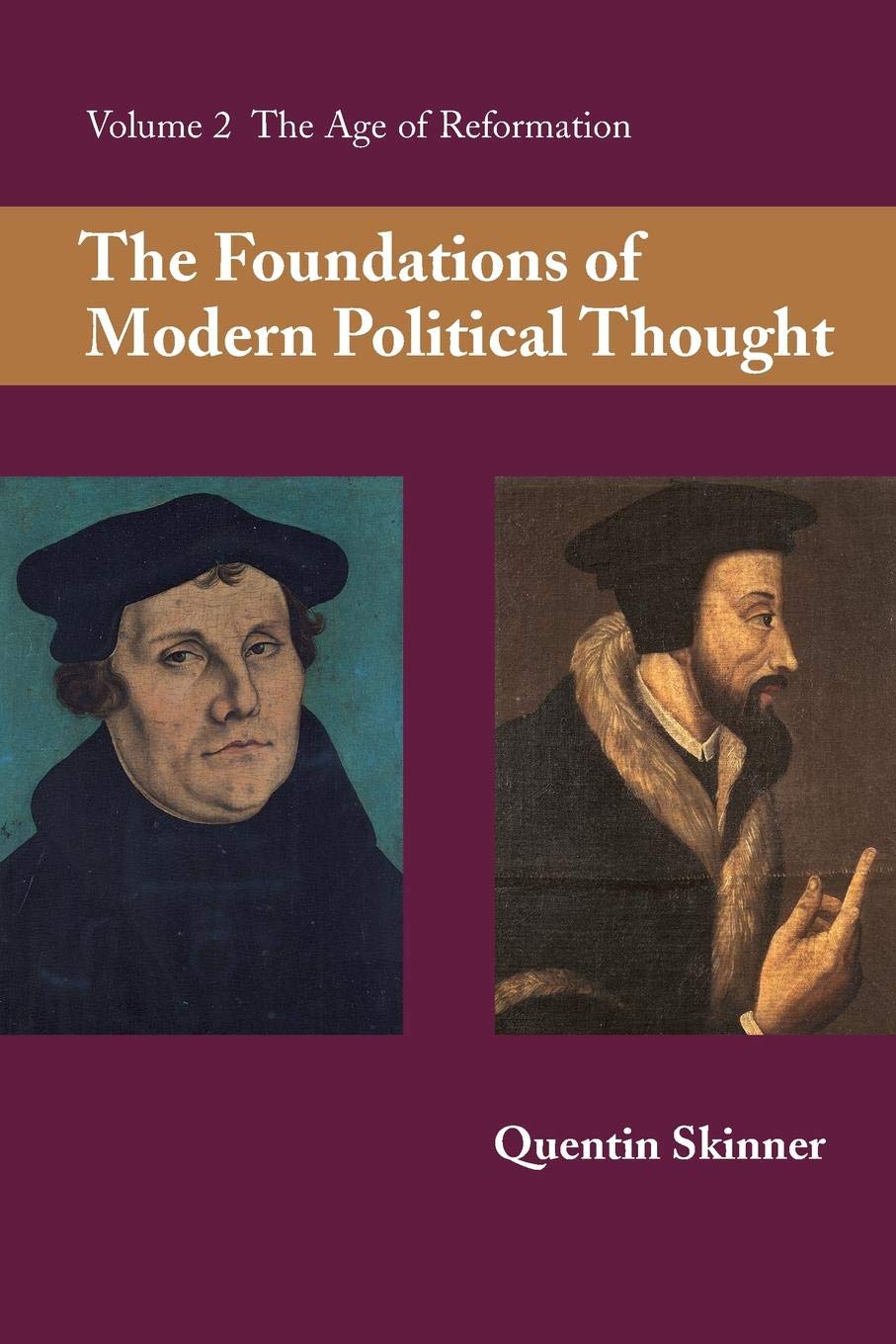
The Foundations of Modern Political Thought, Vol. 2: The Age of Reformation,Used
Sold by Ergodebooks, an authorized reseller.
Returns accepted within 30 days | support@ergodebooks.com
Shipping Information
- Free Standard Shipping — United States only
- Processing Time: 3–5 business days
- Estimated Delivery: 6–10 business days after dispatch
- Double-boxed, fully insured & discreetly packaged
- Tracking number sent via email once dispatched
Returns & Refund
Returns accepted within 30 days of delivery.
Damaged or Defective Item
Free return shipping + replacement or full refund
Wrong Item Received
Free return shipping + replacement or full refund
Change of Mind
Return shipping at customer's expense · 25% restocking fee applies
Payment Option

A twovolume study of political thought from the late thirteenth to the end of the sixteenth century, the decisive period of transition from medieval to modern political theory. The work is intended to be both an introduction to the period for students, and a presentation and justification of a particular approach to the interpretation of historical texts. Quentin Skinner gives an outline account of all the principal texts of the period, discussing in turn the chief political writings of Dante, Marsiglio, Bartolus, Machiavelli, Erasmus and more, Luther and Calvin, Bodin and the Calvinist revolutionaries. But he also examines a very large number of lesser writers in order to explain the general social and intellectual context in which these leading theorists worked. He thus presents the history not as a procession of 'classic texts' but are more readily intelligible. He traces by this means the gradual emergence of the vocabulary of modern political thought, and in particular the crucial concept of the State. We are given an insight into the actual processes of the formation of ideologies and into some of the linkages between political theory and practice. Professor Skinner has been awarded the Balzan Prize Life Time Achievement Award for Political Thought, History and Theory. Full details of this award can be found at http://www.balzan.it/News_eng.aspx?ID=2474
⚠️ WARNING (California Proposition 65):
This product may contain chemicals known to the State of California to cause cancer, birth defects, or other reproductive harm.
For more information, please visit www.P65Warnings.ca.gov.
- Q: What is 'The Foundations of Modern Political Thought, Vol. 2: The Age of Reformation' about? A: This book is a two-volume study that explores political thought from the late thirteenth century to the end of the sixteenth century, focusing on the transition from medieval to modern political theory.
- Q: Who is the author of the book? A: The author is Quentin Skinner, a renowned political theorist who has received the Balzan Prize for his work in political thought, history, and theory.
- Q: What are the key subjects covered in this volume? A: The volume discusses major political writings from figures such as Dante, Machiavelli, Erasmus, Luther, and Calvin, while also examining lesser-known writers to provide context.
- Q: What is the condition of this book? A: The book is listed as 'New', indicating it is in pristine condition and has not been previously used.
- Q: How many pages does the book contain? A: The book contains a total of 414 pages.
- Q: What type of binding does this book have? A: This edition is a paperback, making it lightweight and portable.
- Q: When was 'The Foundations of Modern Political Thought, Vol. 2' published? A: The book was published on November 30, 1978.
- Q: Is this book suitable for students? A: Yes, the work is intended as an introduction to the period for students and provides a comprehensive overview of key political texts.
- Q: What is the significance of the Balzan Prize mentioned in the description? A: The Balzan Prize is awarded for lifetime achievements in various fields, and Quentin Skinner received it for his contributions to political thought and theory.
- Q: Does this book include analysis of the social context of political thought? A: Yes, Skinner examines the social and intellectual context in which the leading theorists developed their ideas, providing deeper insights into the formation of modern political vocabulary.