
Title
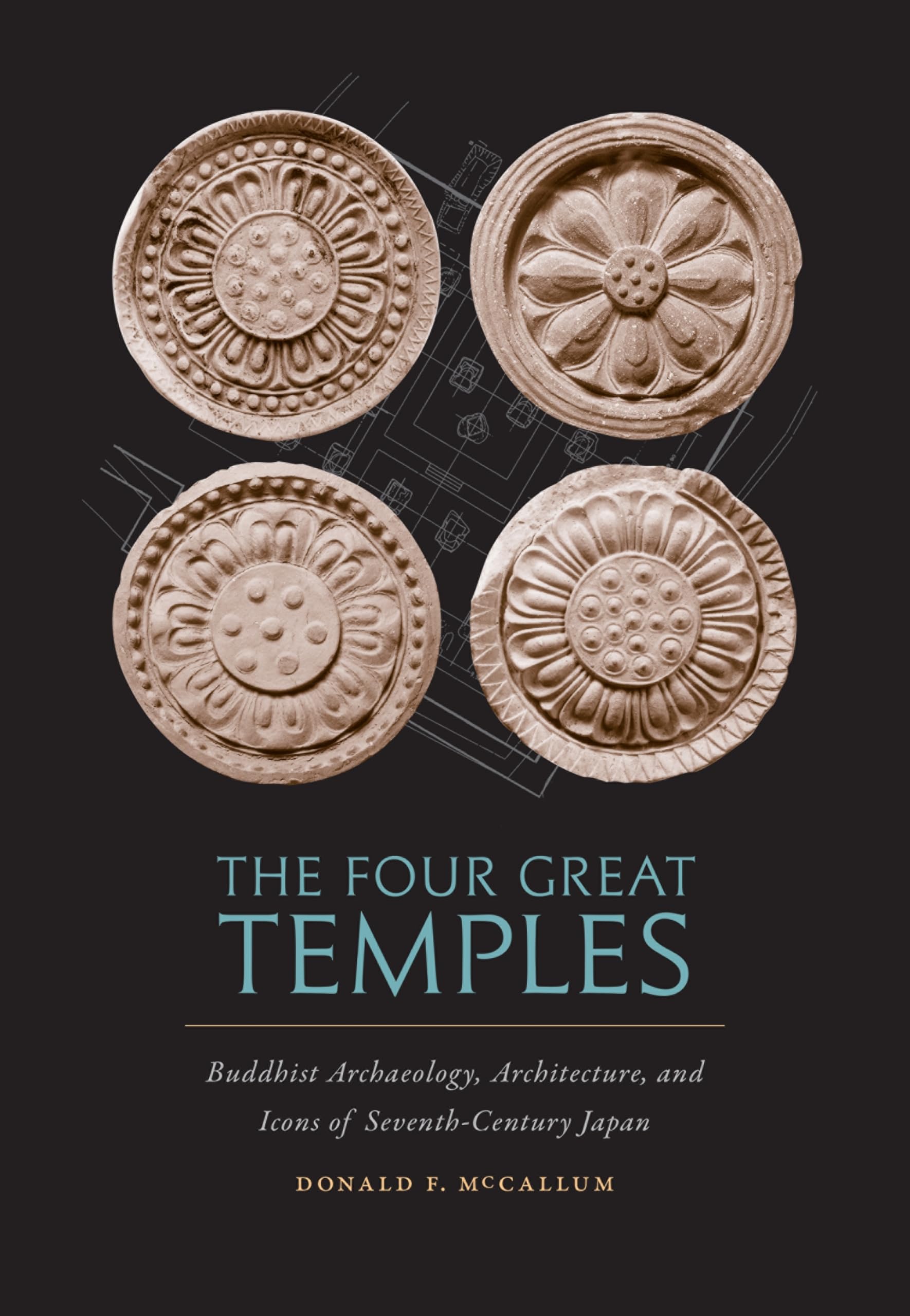
The Four Great Temples: Buddhist Archaeology, Architecture, and Icons of SeventhCentury Japan,New
Sold by Ergodebooks, an authorized reseller.
Returns accepted within 30 days | support@ergodebooks.com
Shipping Information
- Free Standard Shipping — United States only
- Processing Time: 3–5 business days
- Estimated Delivery: 6–10 business days after dispatch
- Double-boxed, fully insured & discreetly packaged
- Tracking number sent via email once dispatched
Returns & Refund
Returns accepted within 30 days of delivery.
Damaged or Defective Item
Free return shipping + replacement or full refund
Wrong Item Received
Free return shipping + replacement or full refund
Change of Mind
Return shipping at customer's expense · 25% restocking fee applies
Payment Option

Few periods in Japanese history are more fascinating than the seventh century. This was the period when Buddhism experienced its initial flowering in the country and the time when Asukadera, Kudara Odera, Kawaradera, and Yakushiji (the 'Four Great Temples' as they were called in ancient texts) were built. Despite their enormous historical importance, these structures have received only limited attention in Western literature, primarily because they are now ruins. Focus has been placed instead on Horyuji, a beautifully preserved structure, but not a key temple of the period. Donald McCallum seeks in this volume to restore the four great temples to their proper place in the history of Japanese Buddhism and Buddhist architecture.Extraordinary archaeological discoveries in the past few decades in the AsukaFujiwara area provide the basis for the monumental task McCallum has set for himself. Three of the temples have been studied archaeologically, but one, Kudara Odera (the first royal temple in Japan), has until recently been known only through textual referencesprimarily those mentioning its ninestory pagoda, a format closely linked to the grandiose royal temples of China and Korea. A series of digs carried out between 1997 and 2001 at Kibi Pond yielded what are thought to be the remains of Kudara Odera. A platform, the appropriate size for a large pagoda, has been uncovered at the site, indicating the reliability of the textual sources. These results have necessitated a rethinking of early Buddhist architecture in Japan. The Four Great Temples gives the first detailed account in the English language of these excavations.In his detailed analyses of each of the four temples, McCallum considers historiographical issues, settings and layouts, foundations, tiles, relics, and icons and allows readers to follow their chronological evolution. A key feature is the interweaving of archaeological and documentary data to clarify numerous historical problems that have until now resisted plausible solutions. Although the focus is on temples, the book looks at broader political and religious developments that serve as a context for the study. It further makes an effort to unify data on great royal temples in China, Korea, and other parts of Japan, thereby providing crosscultural insights into a matter that has frequently been discussed only in terms of a single region.The Four Temples is a masterful, multifaceted study that will fundamentally alter and enrich current understanding of Japans ancient Buddhist temples. It is sure to generate considerable discussion among scholars in the fields of Japanese and Asian history, art history, and Buddhist studies.
⚠️ WARNING (California Proposition 65):
This product may contain chemicals known to the State of California to cause cancer, birth defects, or other reproductive harm.
For more information, please visit www.P65Warnings.ca.gov.
- Q: What is the main focus of 'The Four Great Temples'? A: The book focuses on the archaeological and architectural significance of the Four Great Temples built in seventh-century Japan, exploring their historical context and impact on Japanese Buddhism.
- Q: Who is the author of 'The Four Great Temples'? A: The author of 'The Four Great Temples' is Donald F. McCallum, who provides a detailed analysis of the temples and their archaeological findings.
- Q: What can I expect to learn from this book? A: Readers can expect to learn about the historical importance of the Four Great Temples, significant archaeological discoveries, and how these sites relate to broader political and religious developments in Japan.
- Q: Is this book suitable for scholars of Japanese history? A: Yes, 'The Four Great Temples' is designed for scholars and students interested in Japanese history, art history, and Buddhist studies, providing in-depth research and analysis.
- Q: How many pages does 'The Four Great Temples' have? A: The book contains 348 pages, offering a comprehensive exploration of its subject matter.
- Q: What type of binding does this book have? A: This edition of 'The Four Great Temples' is a hardcover binding, which is known for its durability and professional appearance.
- Q: When was 'The Four Great Temples' published? A: The book was published on November 30, 2008.
- Q: Are there any illustrations or photographs in the book? A: The book includes illustrations and photographs that complement the text and provide visual context for the archaeological findings discussed.
- Q: What condition is the book in? A: The book is in new condition, ensuring that readers receive a pristine copy.
- Q: Does the book discuss the architectural styles of the temples? A: Yes, the book includes detailed discussions on the architectural styles, layouts, and construction techniques of the Four Great Temples.