
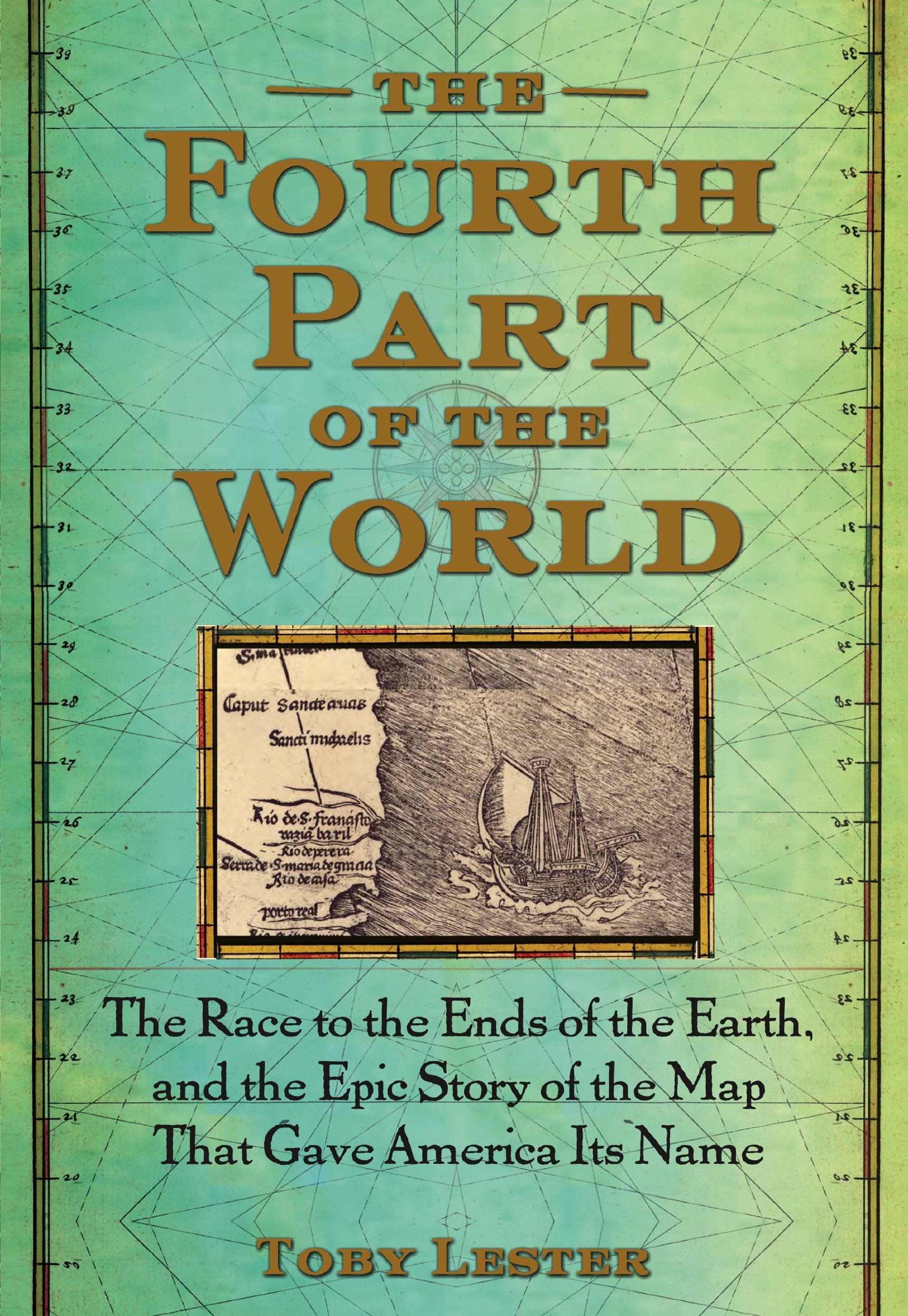
Title
The Fourth Part of the World: The Race to the Ends of the Earth, and the Epic Story of the Map That Gave America Its Name,New
Sold by Ergodebooks, an authorized reseller.
Returns accepted within 30 days | support@ergodebooks.com
Shipping Information
- Free Standard Shipping — United States only
- Processing Time: 3–5 business days
- Estimated Delivery: 6–10 business days after dispatch
- Double-boxed, fully insured & discreetly packaged
- Tracking number sent via email once dispatched
Returns & Refund
Returns accepted within 30 days of delivery.
Damaged or Defective Item
Free return shipping + replacement or full refund
Wrong Item Received
Free return shipping + replacement or full refund
Change of Mind
Return shipping at customer's expense · 25% restocking fee applies
Payment Option

Old maps lead you to strange and unexpected places, and none does so more ineluctably than the subject of this book: the giant, beguiling Waldseemller world map of 1507.' So begins this remarkable story of the map that gave America its name.For millennia Europeans believed that the world consisted of three parts: Europe, Africa, and Asia. They drew the three continents in countless shapes and sizes on their maps, but occasionally they hinted at the existence of a 'fourth part of the world,' a mysterious, inaccessible place, separated from the rest by a vast expanse of ocean. It was a land of mythuntil 1507, that is, when Martin Waldseemller and Matthias Ringmann, two obscure scholars working in the mountains of eastern France, made it real. Columbus had died the year before convinced that he had sailed to Asia, but Waldseemller and Ringmann, after reading about the Atlantic discoveries of Columbuss contemporary Amerigo Vespucci, came to a startling conclusion: Vespucci had reached the fourth part of the world. To celebrate his achievement, Waldseemller and Ringmann printed a huge map, for the first time showing the New World surrounded by water and distinct from Asia, and in Vespuccis honor they gave this New World a name: America.The Fourth Part of the World is the story behind that map, a thrilling saga of geographical and intellectual exploration, full of outsize thinkers and voyages. Taking a kaleidoscopic approach, Toby Lester traces the origins of our modern worldview. His narrative sweeps across continents and centuries, zeroing in on different portions of the map to reveal strands of ancient legend, Biblical prophecy, classical learning, medieval exploration, imperial ambitions, and more. In Lesters telling the map comes alive: Marco Polo and the early Christian missionaries trek across Central Asia and China; Europes early humanists travel to monastic libraries to recover ancient texts; Portuguese merchants round up the first West African slaves; Christopher Columbus and Amerigo Vespucci make their epic voyages of discovery; and finally, vitally, Nicholas Copernicus makes an appearance, deducing from the new geography shown on the Waldseemller map that the earth could not lie at the center of the cosmos. The map literally altered humanitys worldview.One thousand copies of the map were printed, yet only one remains. Discovered accidentally in 1901 in the library of a German castle it was bought in 2003 for the unprecedented sum of $10 million by the Library of Congress, where it is now on permanent public display. Lavishly illustrated with rare maps and diagrams, The Fourth Part of the World is the story of that map: the dazzling story of the geographical and intellectual journeys that have helped us decipher our world.
⚠️ WARNING (California Proposition 65):
This product may contain chemicals known to the State of California to cause cancer, birth defects, or other reproductive harm.
For more information, please visit www.P65Warnings.ca.gov.
- Q: What is the main subject of 'The Fourth Part of the World'? A: 'The Fourth Part of the World' explores the history and significance of the Waldseemüller world map of 1507, which was the first to name the New World as America and illustrates the geographical discoveries that led to this naming.
- Q: How many pages does the book have? A: The book contains 480 pages, offering an in-depth exploration of the historical and intellectual context surrounding the creation of the Waldseemüller map.
- Q: Who is the author of this book? A: The book is authored by Toby Lester, who provides a comprehensive narrative about the map and its impact on the understanding of geography.
- Q: What type of binding does the book have? A: 'The Fourth Part of the World' is published in hardcover, ensuring durability and a high-quality presentation for readers.
- Q: When was 'The Fourth Part of the World' published? A: The book was published on November 3, 2009, marking its entry into the literary exploration of historical cartography.
- Q: Is this book suitable for academic study? A: Yes, the book is well-researched and provides valuable insights into historical geography, making it suitable for academic study as well as general interest.
- Q: What is the condition of the book being sold? A: The book is listed as 'New,' meaning it is in pristine condition and has not been previously owned or read.
- Q: Does the book include illustrations or diagrams? A: Yes, 'The Fourth Part of the World' is lavishly illustrated with rare maps and diagrams that enhance the narrative and provide visual context to the story.
- Q: What themes are explored in the book? A: The book explores themes of exploration, intellectual discovery, and the evolution of geographical understanding, encompassing historical figures and their contributions to mapping.
- Q: Is 'The Fourth Part of the World' a first edition? A: Yes, the copy available is a first edition, which may be of interest to collectors and those who appreciate original publications.