
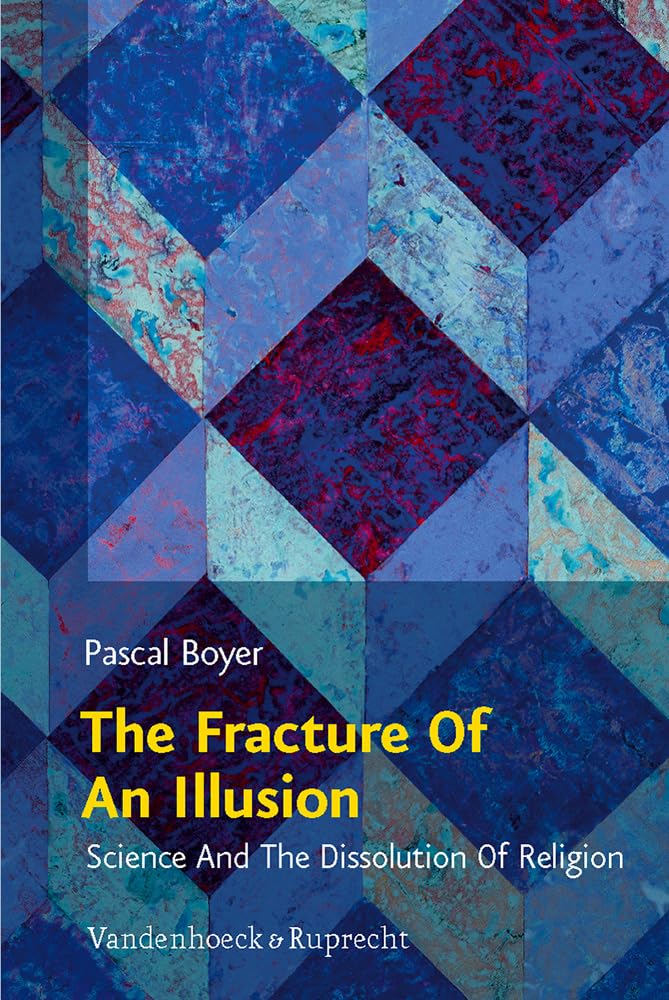
Title
The Fracture Of An Illusion: Science And The Dissolution Of Religion. Frankfurt Templeton Lectures 2008 (Religion, Theologie Und
Sold by Ergodebooks, an authorized reseller.
Returns accepted within 30 days | support@ergodebooks.com
Shipping Information
- Free Standard Shipping — United States only
- Processing Time: 3–5 business days
- Estimated Delivery: 6–10 business days after dispatch
- Double-boxed, fully insured & discreetly packaged
- Tracking number sent via email once dispatched
Returns & Refund
Returns accepted within 30 days of delivery.
Damaged or Defective Item
Free return shipping + replacement or full refund
Wrong Item Received
Free return shipping + replacement or full refund
Change of Mind
Return shipping at customer's expense · 25% restocking fee applies
Payment Option

Pascal Boyer Argues That Religion Is Largely An Illusion. The Anthropologist Traces Religion'S Cognitive And Evolutionary Aspects. By Religion He Means A Kind Of Existential And Cognitive Package That Includes Views About Supernatural Agency (Gods), Notions Of Morality, Particular Rituals And Sometimes Particular Experiences, As Well As Membership In A Particular Community Of Believers. The Package, However, Does Not Really Exist As Such. Notions Of Supernatural Agents, Of Morality, Of Ethnic Identity, Or Ritual Requirements And Other Experience, All Appear In Human Minds Independently. This Implies That There Is No Such Thing As A Conflict Between Science And Religion. Boyer Takes The Reader Onto A Journey Through Science And The Dissolution Of Religion.
⚠️ WARNING (California Proposition 65):
This product may contain chemicals known to the State of California to cause cancer, birth defects, or other reproductive harm.
For more information, please visit www.P65Warnings.ca.gov.
- Q: How many pages does the book have? A: The book has one hundred twelve pages. This length provides a concise exploration of the themes discussed by the author.
- Q: What is the binding type of this book? A: The binding type is paperback. This makes it lightweight and flexible for easy reading.
- Q: What are the dimensions of the book? A: The book measures six point eighteen inches in length, zero point fifty-one inches in width, and nine point twenty-five inches in height. These dimensions make it a portable choice for readers.
- Q: Is this book suitable for all readers? A: Yes, this book is suitable for anyone interested in philosophy and religion. It offers insights into the cognitive aspects of religion, making it accessible to a wide audience.
- Q: Who is the author of this book? A: The author is Pascal Boyer. He is an anthropologist known for his work on the cognitive aspects of culture and religion.
- Q: What themes does the book cover? A: The book covers themes of religion, cognitive science, and the conflict between science and religion. It explores how these elements interact in human thought.
- Q: How should I care for this paperback book? A: To care for this paperback book, store it in a dry place and avoid exposing it to direct sunlight. This will help maintain its condition over time.
- Q: Can I read this book while traveling? A: Yes, this book is travel-friendly due to its lightweight and compact size. It's a great companion for journeys.
- Q: Is there any specific audience this book targets? A: The book is primarily targeted toward readers interested in the intersection of philosophy, science, and religion. It’s beneficial for students and enthusiasts alike.
- Q: What if I receive a damaged book? A: If you receive a damaged book, you can typically return it for a replacement or refund. Check the seller's return policy for specific instructions.
- Q: Is this book considered a scholarly work? A: Yes, this book is considered a scholarly work. It is based on cognitive and evolutionary perspectives on religion, appealing to both academics and general readers.
- Q: How does the author view the relationship between science and religion? A: The author argues that there is no inherent conflict between science and religion. He suggests that they address different aspects of human experience.
- Q: Is this book recommended for beginners in philosophy? A: Yes, this book is recommended for beginners in philosophy. Its clear language and engaging content make it accessible to new learners.
- Q: What edition of the book is this? A: This is the Frankfurt Templeton Lectures edition from two thousand eight. It reflects contemporary discussions in philosophy and theology.
- Q: Does this book include any illustrations or graphics? A: No, this book does not include illustrations or graphics. It focuses on text to convey its arguments and insights.