
Title
The Framed Houses of Massachusetts Bay, 16251725 (Belknap Press),Used
Sold by Ergodebooks, an authorized reseller.
Returns accepted within 30 days | support@ergodebooks.com
Shipping Information
- Free Standard Shipping — United States only
- Processing Time: 3–5 business days
- Estimated Delivery: 6–10 business days after dispatch
- Double-boxed, fully insured & discreetly packaged
- Tracking number sent via email once dispatched
Returns & Refund
Returns accepted within 30 days of delivery.
Damaged or Defective Item
Free return shipping + replacement or full refund
Wrong Item Received
Free return shipping + replacement or full refund
Change of Mind
Return shipping at customer's expense · 25% restocking fee applies
Payment Option

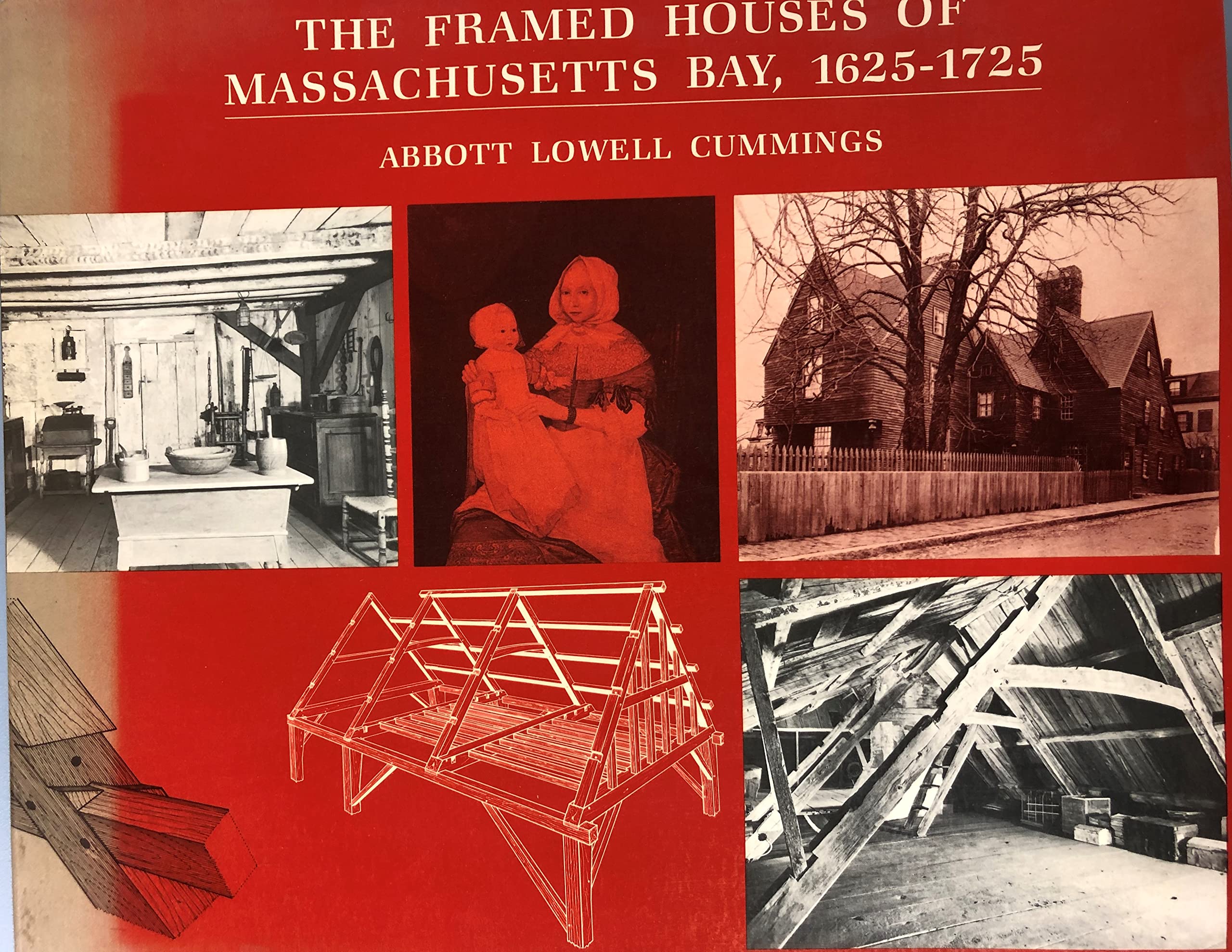
A nation's buildings are a record of the character and aspirations of its people. In a rich blend of social and architectural history, Abbott Lowell Cummings reconstructs, through text and pictures, the framed houses of Massachusetts Bay that reflect the straightforward honesty of our earliest northern settlers and their profound love of craftsmanship.A substantial number of the nation's seventeenthcentury houses have been preserved in Massachusetts, and Cummings provides illustrations for a majority of them. He describes the dwellings in detail, and includes architectural drawings that were especially commissioned for this book. He demonstrates that the builders were far more sophisticated than previously imagined and that, while maintaining their English timberbuilding traditions, they were astonishingly adaptable to their new environment.Beyond the houses themselves, Cummings discusses evolutions in pioneer life. The most simple kinds of changes in architecture, Cummings shows, indicated singular changes in family living. Such additions as kitchens and parlors, or the moving of the master bedroom to a second floor, suggest shifts in the private and social lives of families.The Framed Houses of Massachusetts Bay is a splendid story of innovations of restless, migratory people and their architectural and social responses to the heavily forested New World. It is the first chapter in the long saga of America's preoccupation with technology as it affected the early American home.
⚠️ WARNING (California Proposition 65):
This product may contain chemicals known to the State of California to cause cancer, birth defects, or other reproductive harm.
For more information, please visit www.P65Warnings.ca.gov.
- Q: What is the main theme of 'The Framed Houses of Massachusetts Bay, 1625–1725'? A: The book explores how the framed houses of Massachusetts Bay reflect the character and aspirations of early settlers, showcasing their craftsmanship and adaptability to a new environment.
- Q: Who is the author of this book? A: The author of 'The Framed Houses of Massachusetts Bay, 1625–1725' is Abbott Lowell Cummings.
- Q: What type of binding does this book have? A: This book is available in hardcover binding.
- Q: How many pages are in 'The Framed Houses of Massachusetts Bay'? A: The book contains 280 pages.
- Q: When was 'The Framed Houses of Massachusetts Bay' published? A: The book was published on June 21, 1979.
- Q: Is 'The Framed Houses of Massachusetts Bay' suitable for academic study? A: Yes, the book combines social and architectural history, making it suitable for academic study and research in American architecture and history.
- Q: Does the book include illustrations or photographs? A: Yes, 'The Framed Houses of Massachusetts Bay' includes numerous illustrations and architectural drawings specifically commissioned for the book.
- Q: What architectural styles are discussed in the book? A: The book discusses the evolution of architectural styles from English timber-building traditions to adaptations made by early settlers in Massachusetts.
- Q: Is this book a first edition? A: Yes, 'The Framed Houses of Massachusetts Bay, 1625–1725' is a first edition.
- Q: What can readers learn about early American life from this book? A: Readers can learn about the relationship between architecture and family living, including how changes in housing designs reflected shifts in social and private lives of early American families.