
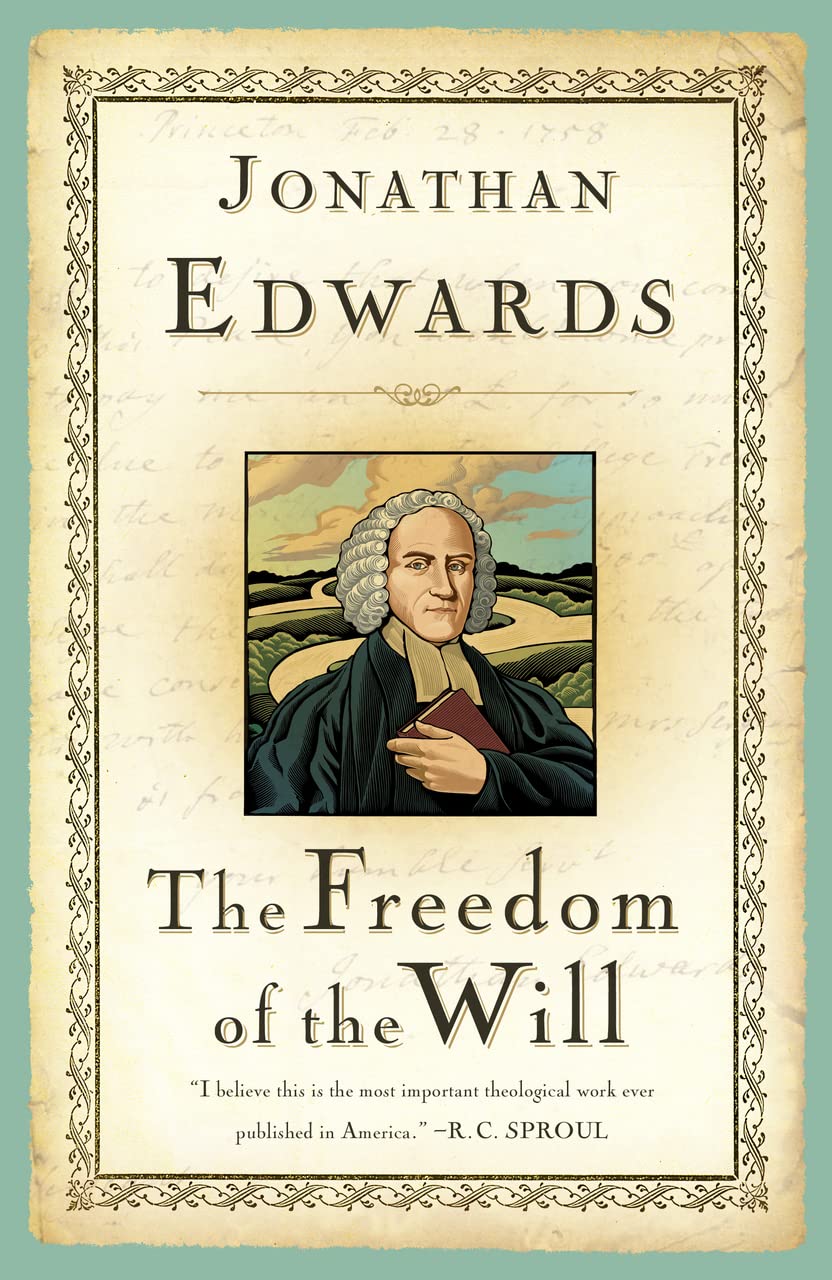
Title
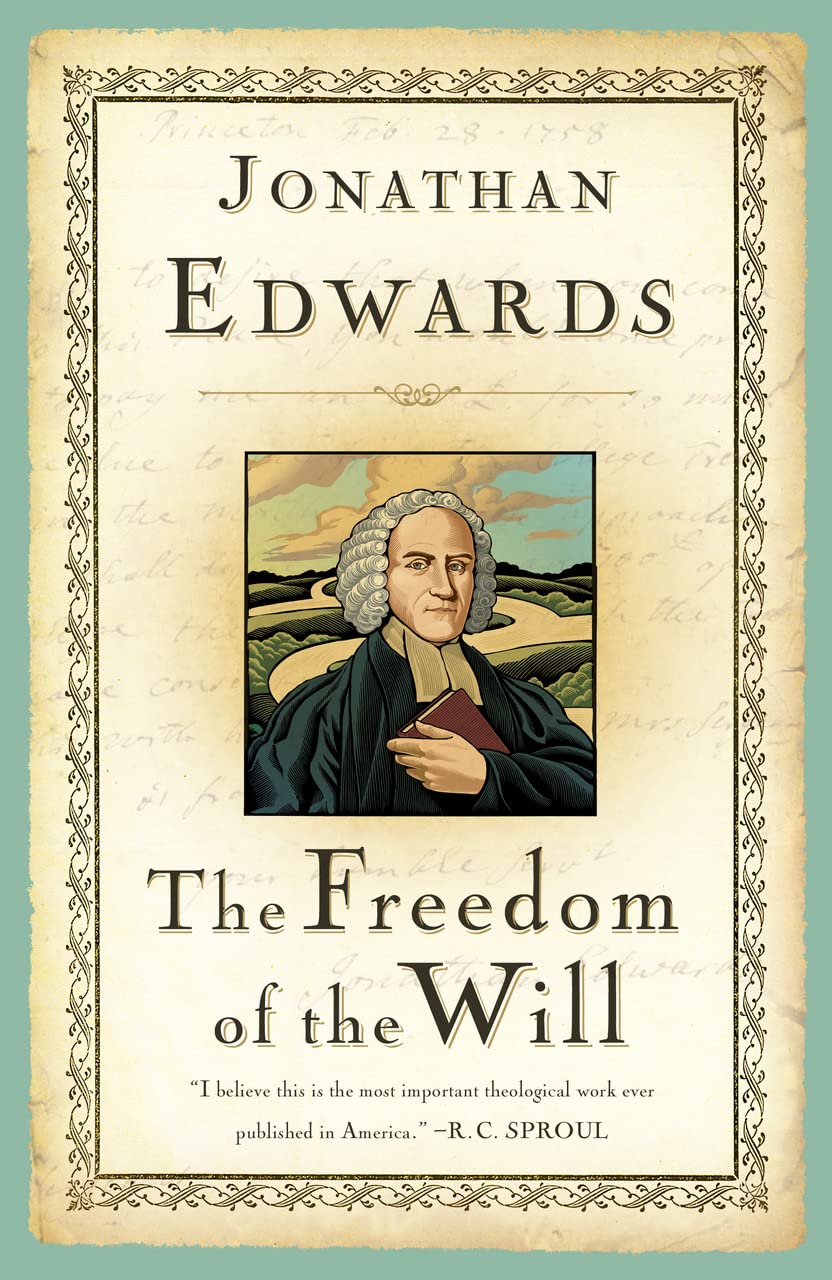
The Freedom of the Will,Used
Sold by Ergodebooks, an authorized reseller.
Returns accepted within 30 days | support@ergodebooks.com
Shipping Information
- Free Standard Shipping — United States only
- Processing Time: 3–5 business days
- Estimated Delivery: 6–10 business days after dispatch
- Double-boxed, fully insured & discreetly packaged
- Tracking number sent via email once dispatched
Returns & Refund
Returns accepted within 30 days of delivery.
Damaged or Defective Item
Free return shipping + replacement or full refund
Wrong Item Received
Free return shipping + replacement or full refund
Change of Mind
Return shipping at customer's expense · 25% restocking fee applies
Payment Option

Many scholars believe this work, published in 1754, is the most important argument against Arminianism published in America. Freedom of the Will is divided into four parts. The first deals with terminology; the nature and determination of the will; the meaning of necessity, impossibility, and contingency; the distinction between natural and moral necessity; and the nature of moral agency and liberty. The second considers the possibility of selfdetermination. The third analyzes divine agency regarding human beings and the world. In the conclusion, Edwards anticipates the reception the work will receive.
⚠️ WARNING (California Proposition 65):
This product may contain chemicals known to the State of California to cause cancer, birth defects, or other reproductive harm.
For more information, please visit www.P65Warnings.ca.gov.
- Q: How many pages does 'The Freedom of the Will' have? A: This book has three hundred sixty-eight pages. It provides an in-depth analysis of free will and moral agency.
- Q: What is the binding type of 'The Freedom of the Will'? A: The binding type is hardcover. This ensures durability and a premium feel for readers.
- Q: What are the dimensions of 'The Freedom of the Will'? A: The dimensions are five point seventy-five inches in length, one inch in width, and eight point five inches in height. This size makes it convenient for both reading and display.
- Q: What themes does 'The Freedom of the Will' explore? A: This book explores themes of moral agency and the nature of the will. It critically examines self-determination and divine agency.
- Q: Is 'The Freedom of the Will' suitable for all readers? A: Yes, this book is suitable for readers interested in philosophy and theology. However, its academic nature may be challenging for casual readers.
- Q: How should I read 'The Freedom of the Will' for better understanding? A: To grasp the concepts thoroughly, take notes while reading and reflect on the discussions of free will and moral necessity.
- Q: Can I read 'The Freedom of the Will' if I'm new to philosophy? A: Yes, but prior knowledge of basic philosophical concepts may enhance your understanding. The book is dense and may require careful reading.
- Q: What is the best way to care for 'The Freedom of the Will'? A: Store it in a cool, dry place and avoid direct sunlight. Clean the cover with a dry cloth to maintain its appearance.
- Q: Is 'The Freedom of the Will' considered a classic? A: Yes, it is regarded as a classic in American philosophy. Its arguments continue to influence discussions on free will today.
- Q: What should I do if I receive a damaged copy of 'The Freedom of the Will'? A: Contact the seller immediately for a return or exchange. Keep the original packaging for the return process.
- Q: What is the return policy for 'The Freedom of the Will'? A: Return policies may vary by retailer. Typically, you can return it within a specified period if it's in its original condition.
- Q: Can I find a digital version of 'The Freedom of the Will'? A: Yes, digital versions are available. Check online retailers or e-book platforms for options.
- Q: Is there a study guide available for 'The Freedom of the Will'? A: Yes, various study guides and resources are available online to help readers understand its complex themes.
- Q: Who is the author of 'The Freedom of the Will'? A: The author is Jonathan Edwards, a prominent theologian and philosopher known for his work in the 18th century.
- Q: What is the main argument of 'The Freedom of the Will'? A: The main argument asserts that human will and moral agency are essential to understanding divine agency and human responsibility.