If you have any questions, you are always welcome to contact us. We'll get back to you as soon as possible, withing 24 hours on weekdays.
Customer service
All questions about your order, return and delivery must be sent to our customer service team by e-mail at yourstore@yourdomain.com
Sale & Press
If you are interested in selling our products, need more information about our brand or wish to make a collaboration, please contact us at press@yourdomain.com
Help
If you have any questions, you are always welcome to contact us. We'll get back to you as soon as possible, withing 24 hours on weekdays.
Customer service
All questions about your order, return and delivery must be sent to our customer service team by e-mail at yourstore@yourdomain.com
Sale & Press
If you are interested in selling our products, need more information about our brand or wish to make a collaboration, please contact us at press@yourdomain.com
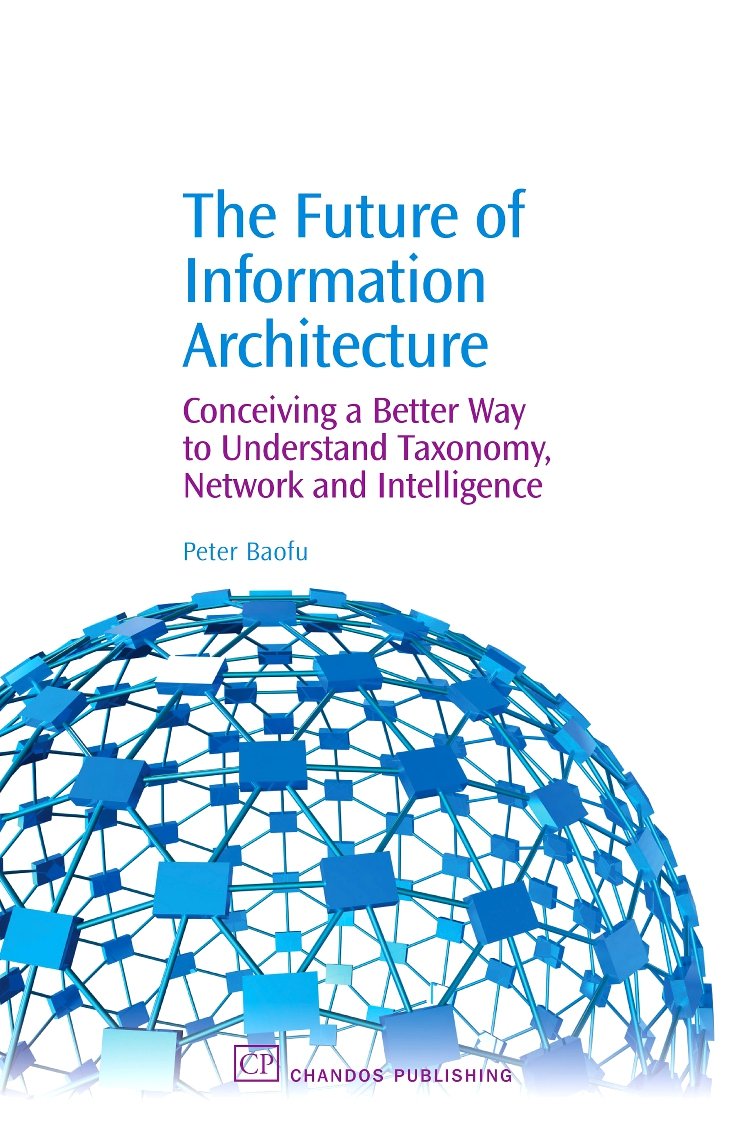
The Future of Information Architecture examines issues surrounding why information is processed, stored and applied in the way that it has, since time immemorial. Contrary to the conventional wisdom held by many scholars in human history, the recurrent debate on the explanation of the most basic categories of information (eg space, time causation, quality, quantity) has been misconstrued, to the effect that there exists some deeper categories and principles behind these categories of information with enormous implications for our understanding of reality in general. To understand this, the book is organised in to four main parts: Part I begins with the vital question concerning the role of information within the context of the larger theoretical debate in the literature. Part II provides a critical examination of the nature of data taxonomy from the main perspectives of culture, society, nature and the mind. Part III constructively invesitgates the world of information network from the main perspectives of culture, society, nature and the mind. Part IV proposes six main theses in the authors synthetic theory of information architecture, namely, (a) the first thesis on the simplenesscomplicatedness principle, (b) the second thesis on the exactnessvagueness principle (c) the third thesis on the slownessquickness principle (d) the fourth thesis on the orderchaos principle, (e) the fifth thesis on the symmetryasymmetry principle, and (f) the sixth thesis on the posthuman stage.
⚠️ WARNING (California Proposition 65):
This product may contain chemicals known to the State of California to cause cancer,
birth defects, or other reproductive harm.
For MAP (Minimum Advertised Price) violations and Intellectual Property (IP) or Trademark concerns, please contact:
support@ergodebooks.com
⚠️ California Proposition 65 Warning: Some products sold on this website may expose you to chemicals known to the State of California to cause cancer, birth defects, or other reproductive harm. For more information, visit www.P65Warnings.ca.gov.