
Title
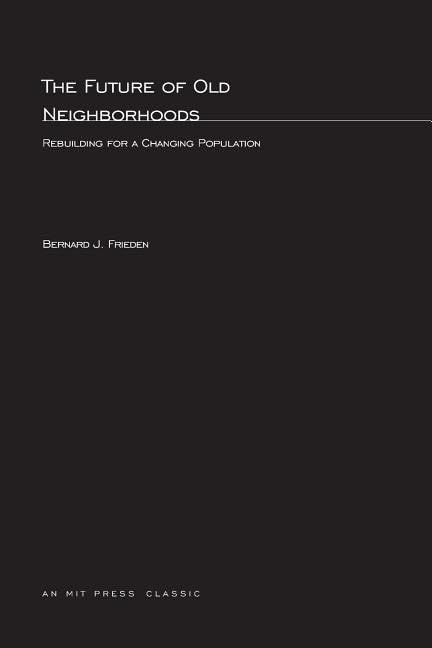
The Future of Old Neighborhoods: Rebuilding for a Changing Population (MIT Press Classics),Used
Sold by Ergodebooks, an authorized reseller.
Returns accepted within 30 days | support@ergodebooks.com
Shipping Information
- Free Standard Shipping — United States only
- Processing Time: 3–5 business days
- Estimated Delivery: 6–10 business days after dispatch
- Double-boxed, fully insured & discreetly packaged
- Tracking number sent via email once dispatched
Returns & Refund
Returns accepted within 30 days of delivery.
Damaged or Defective Item
Free return shipping + replacement or full refund
Wrong Item Received
Free return shipping + replacement or full refund
Change of Mind
Return shipping at customer's expense · 25% restocking fee applies
Payment Option

The rebuilding of cities is now a matter of national concern. Both the federal government and the cities are heavily involved in problems of housing and the future of declining neighborhoods, but the development of public policies that link housing concerns with rebuilding programs is a difficult task. Results of this study provide a sharp definition of the social and economic constraints influencing renewal programs and suggest a number of guidelines for achieving housing goals while rebuilding the city.Bigcity experience in the 1950's has demonstrated both the social and economic value of the old neighborhoods, which serve as zones of passage for lowincome groups new to urban life. The housing available in these areas has made possible improved living conditions for many people, and it is still well utilized. The great migration of ethnic and minority groups into the cities suggests a continuing heavy demand for these homes during at least the next decade or two.If public policies are to serve broad social goals, there can be little justification for clearing away neighborhoods prematurely. Under present conditions, largescale clearance programs deprive people of valuable housing resources and in many cases bring on further hardships by uprooting people who have strong ties to a local community.This book proposes a policy of gradual and continuous rebuilding of the old areas, keeping pace with the abandonment of housing and replacing only surplus houses. Detailed studies of New York, Los Angeles, and Hartford indicate that under a wide variety of local conditions this policy is economically feasible. Recent experience in these cities suggests a number of ways in which public action can create suitable conditions for a gradual rebuilding of the old neighborhoods.The findings pf this study will be of special interest to public officials and citizens concerned with housing and urban renewal, and to city planners, political scientists, land economists, and urban sociologists.
⚠️ WARNING (California Proposition 65):
This product may contain chemicals known to the State of California to cause cancer, birth defects, or other reproductive harm.
For more information, please visit www.P65Warnings.ca.gov.