
Title
The Future of Religion,New
Sold by Ergodebooks, an authorized reseller.
Returns accepted within 30 days | support@ergodebooks.com
Shipping Information
- Free Standard Shipping — United States only
- Processing Time: 3–5 business days
- Estimated Delivery: 6–10 business days after dispatch
- Double-boxed, fully insured & discreetly packaged
- Tracking number sent via email once dispatched
Returns & Refund
Returns accepted within 30 days of delivery.
Damaged or Defective Item
Free return shipping + replacement or full refund
Wrong Item Received
Free return shipping + replacement or full refund
Change of Mind
Return shipping at customer's expense · 25% restocking fee applies
Payment Option

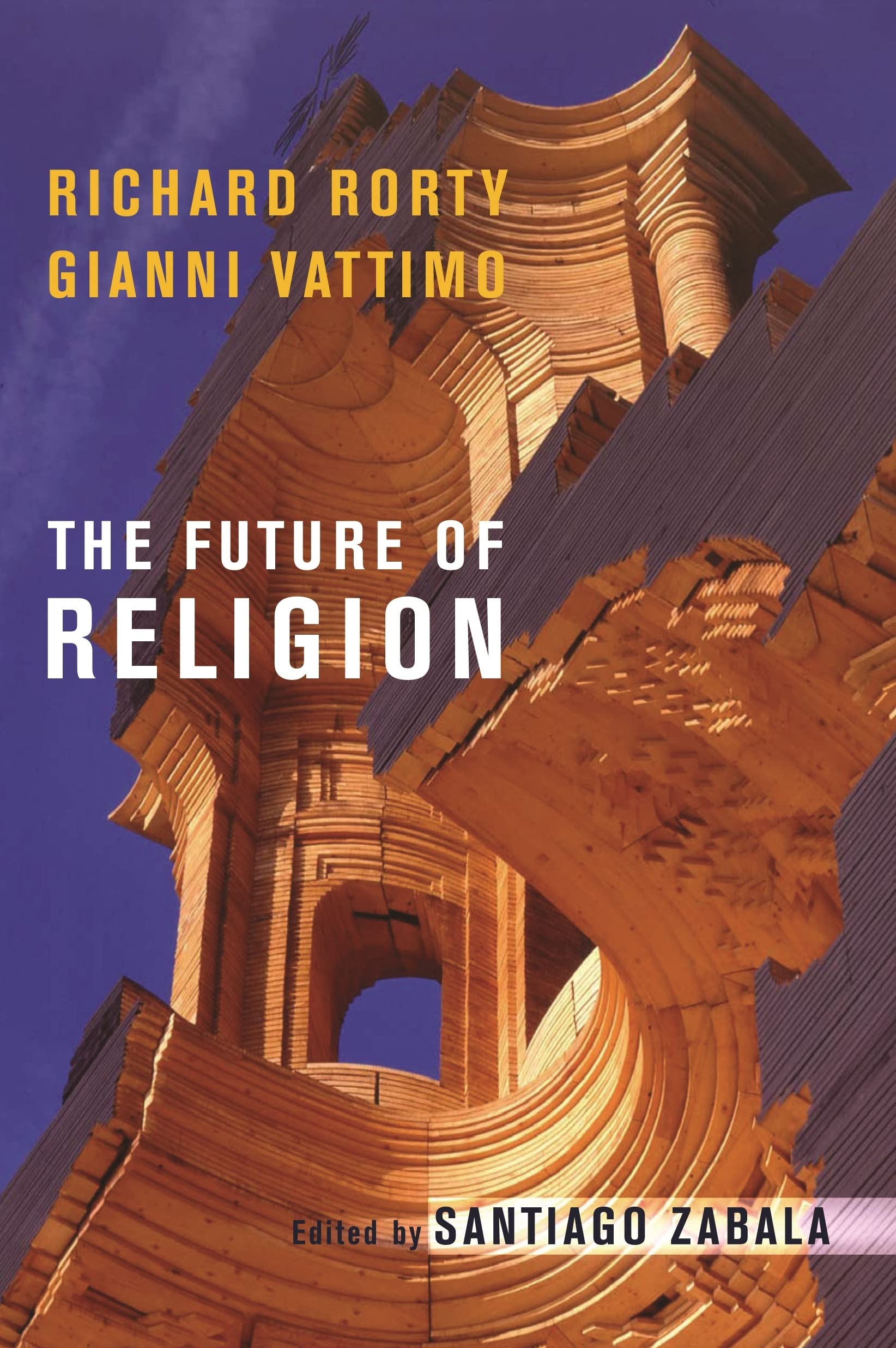
Though coming from different and distinct intellectual traditions, Richard Rorty and Gianni Vattimo are united in their criticism of the metaphysical tradition. The challenges they put forward extend beyond philosophy and entail a reconsideration of the foundations of belief in God and the religious life. They urge that the rejection of metaphysical truth does not necessitate the death of religion; instead it opens new ways of imagining what it is to be religiousways that emphasize charity, solidarity, and irony. This unique collaboration, which includes a dialogue between the two philosophers, is notable not only for its fusion of pragmatism (Rorty) and hermeneutics (Vattimo) but also for its recognition of the limits of both traditional religious belief and modern secularism.In 'Anticlericalism and Atheism' Rorty discusses Vattimo's work Belief and argues that the end of metaphysics paves the way for an antiessentialist religion. Rorty's conception of religion, determined by private motives, is designed to produce the gospel's promise that henceforth God will not consider humanity as a servant but as a friend. In 'The Age of Interpretation,' Vattimo, who is both a devout Catholic and a frequent critic of the church, explores the surprising congruence between Christianity and hermeneutics in light of the dissolution of metaphysical truth. As in hermeneutics, interpretation is central to Christianity, which introduced the world to the principle of interiority, dissolving the experience of objective reality into 'listening to and interpreting messages.'The lively dialogue that concludes this volume, moderated and edited by Santiago Zabala, analyzes the future of religion together with the political, social, and historical aspects that characterize our contemporary postmodern, postmetaphysical, and postChristian world.
⚠️ WARNING (California Proposition 65):
This product may contain chemicals known to the State of California to cause cancer, birth defects, or other reproductive harm.
For more information, please visit www.P65Warnings.ca.gov.