
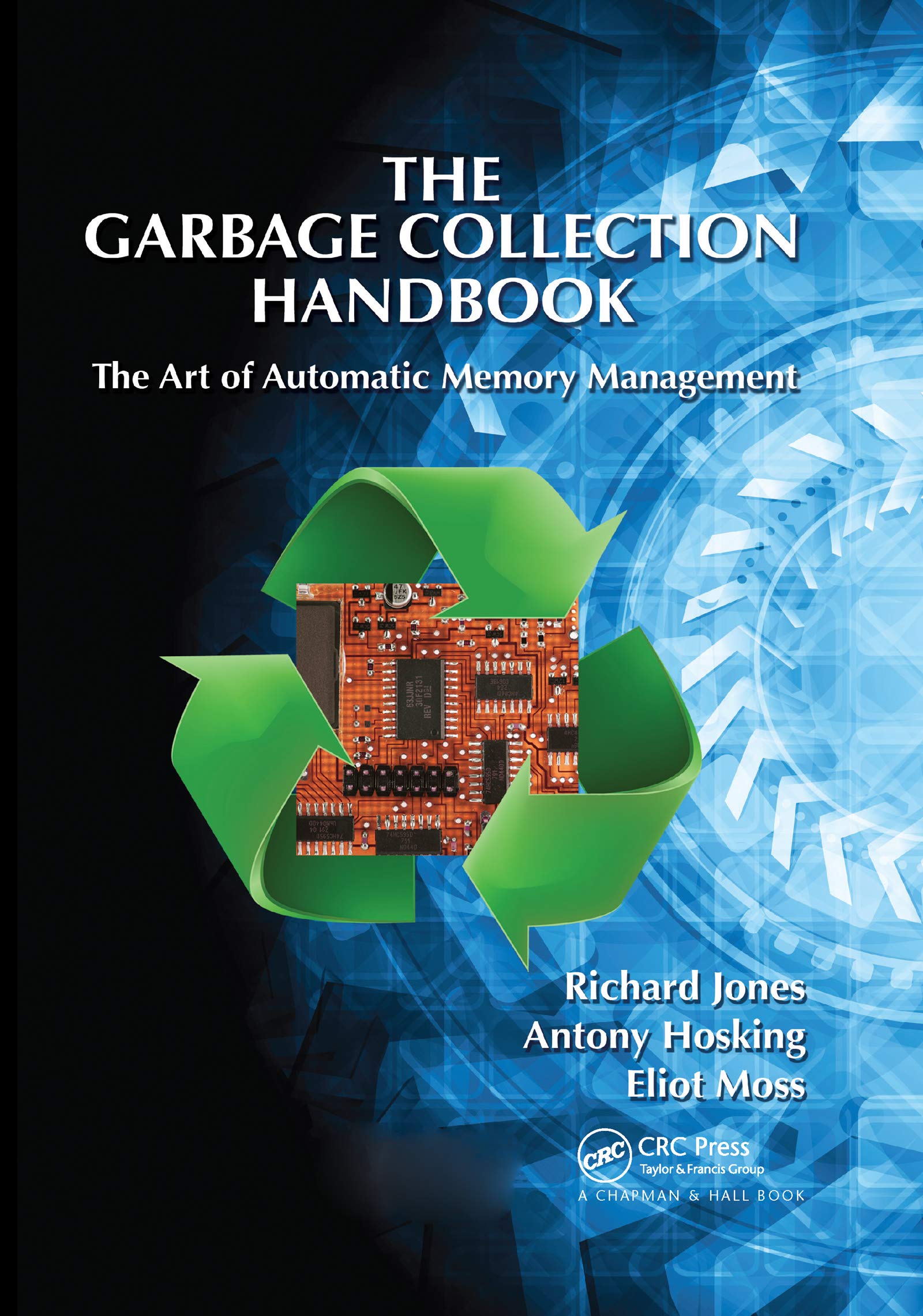
Title
The Garbage Collection Handbook (International Perspectives On Science, Culture And Society)
Processing time: 1-3 days
US Orders Ships in: 3-5 days
International Orders Ships in: 8-12 days
Return Policy: 15-days return on defective items
Payment Option

Published In 1996, Richard Joness Garbage Collection Was A Milestone In The Area Of Automatic Memory Management. The Field Has Grown Considerably Since Then, Sparking A Need For An Updated Look At The Latest Stateoftheart Developments. The Garbage Collection Handbook: The Art Of Automatic Memory Management Brings Together A Wealth Of Knowledge Gathered By Automatic Memory Management Researchers And Developers Over The Past Fifty Years. The Authors Compare The Most Important Approaches And Stateoftheart Techniques In A Single, Accessible Framework.The Book Addresses New Challenges To Garbage Collection Made By Recent Advances In Hardware And Software. It Explores The Consequences Of These Changes For Designers And Implementers Of High Performance Garbage Collectors. Along With Simple And Traditional Algorithms, The Book Covers Parallel, Incremental, Concurrent, And Realtime Garbage Collection. Algorithms And Concepts Are Often Described With Pseudocode And Illustrations.The Nearly Universal Adoption Of Garbage Collection By Modern Programming Languages Makes A Thorough Understanding Of This Topic Essential For Any Programmer. This Authoritative Handbook Gives Expert Insight On How Different Collectors Work As Well As The Various Issues Currently Facing Garbage Collectors. Armed With This Knowledge, Programmers Can Confidently Select And Configure The Many Choices Of Garbage Collectors.Web Resourcethe Books Online Bibliographic Database At Www.Gchandbook.Org Includes Over 2,500 Garbage Collectionrelated Publications. Continually Updated, It Contains Abstracts For Some Entries And Urls Or Dois For Most Of The Electronically Available Ones. The Database Can Be Searched Online Or Downloaded As Bibtex, Postscript, Or Pdf.Ebookthis Edition Enhances The Print Version With Copious Clickable Links To Algorithms, Figures, Original Papers And Definitions Of Technical Terms. In Addition, Each Index Entry Links Back To Where It Was Mentioned In The Text, And Each Entry In The Bibliography Includes Links Back To Where It Was Cited.
⚠️ WARNING (California Proposition 65):
This product may contain chemicals known to the State of California to cause cancer, birth defects, or other reproductive harm.
For more information, please visit www.P65Warnings.ca.gov.
- Q: What is 'The Garbage Collection Handbook' about? A: The Garbage Collection Handbook provides a comprehensive overview of automatic memory management, discussing recent developments and challenges in garbage collection techniques.
- Q: Who is the author of this handbook? A: The handbook is authored by Richard Jones, a notable figure in the field of automatic memory management.
- Q: What topics are covered in the book? A: The book covers various garbage collection methods, including traditional, parallel, incremental, concurrent, and real-time algorithms, along with their implications for high-performance implementations.
- Q: When was 'The Garbage Collection Handbook' published? A: This edition of the handbook was published on September 30, 2020.
- Q: How many pages does the handbook have? A: The Garbage Collection Handbook contains a total of 520 pages.
- Q: Is this handbook suitable for beginners? A: While the book is comprehensive and insightful, it is best suited for programmers with some prior knowledge of garbage collection and memory management concepts.
- Q: Does the book include practical examples or illustrations? A: Yes, the handbook includes pseudocode and illustrations to help explain algorithms and concepts related to garbage collection.
- Q: Is there an online resource associated with this book? A: Yes, the book has an online bibliographic database at www.gchandbook.org, which includes over 2,500 publications related to garbage collection.
- Q: What is unique about the e-book edition of this handbook? A: The e-book edition features clickable links to algorithms, figures, and definitions, enhancing the reader's experience compared to the print version.
- Q: Can this handbook help in selecting garbage collectors for programming? A: Absolutely, the handbook provides insights into different garbage collectors, helping programmers understand how to select and configure them effectively.