
Title
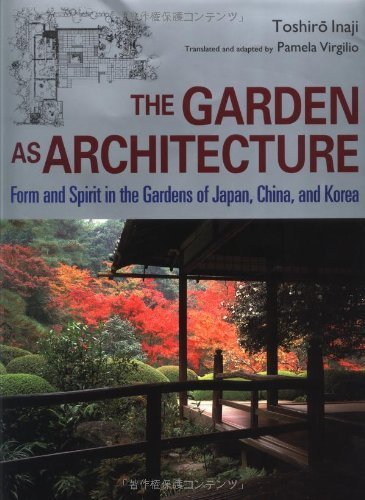
The Garden As Architecture: Form and Spirit in the Gardens of Japan, China, and Korea,Used
Sold by Ergodebooks, an authorized reseller.
Returns accepted within 30 days | support@ergodebooks.com
Shipping Information
- Free Standard Shipping — United States only
- Processing Time: 3–5 business days
- Estimated Delivery: 6–10 business days after dispatch
- Double-boxed, fully insured & discreetly packaged
- Tracking number sent via email once dispatched
Returns & Refund
Returns accepted within 30 days of delivery.
Damaged or Defective Item
Free return shipping + replacement or full refund
Wrong Item Received
Free return shipping + replacement or full refund
Change of Mind
Return shipping at customer's expense · 25% restocking fee applies
Payment Option

Gardens and their related architecture have always been designed in Japan, China, and Korea as a single, cohesive environment. The particular forms that these environments took over the centuries naturally reflect each country's differing aesthetic principles, but were also governed by other concernsfrom religious beliefs and social structure to simple spatial or climatic constraints. In his exploration of the history of garden design in the Far East, Toshiro Inaji offers a fascinating study of changing cultural and aesthetic values.The Garden as Architecture is the first book published in English to focus on the strikingly different interpretations made by these three countriesin their gardens and architectureof the Buddhist, Confucianist, Taoist, and geomantic principles that have informed their cultures since ancient times. This pioneering study makes clear just how and why the approaches taken by neighboring countries were so different.Inaji begins by looking at extant gardens in Japan, China, and Korea, and then traces back over the broad social, philosophical, and cultural circumstances that gave rise to period forms, in an effort to uncover what residential gardens and architecture were understood to mean at significant turning points in their development. He defines the prototype of gardenandresidential environments in each country, and considers the ways in which specific design solutions express the prototype while also meeting the functional criteria of a site. This approach gives readers the deep background they need to view gardens of the Far East with a more informed eye. It revealsand demystifiesthe genius of these gardenandarchitectural environments.This heavily illustrated, comprehensive volume contains more than 150 photographs of the most significant gardens and related architecture in the Far East. Additional information is provided by nearly 200 schematic line drawings. The Garden as Architecture is a milestone in Western access to the traditions of Far Eastern garden design, architecture, and thought.FeaturesMore than 150 photographsNearly 200 schematic line drawings
⚠️ WARNING (California Proposition 65):
This product may contain chemicals known to the State of California to cause cancer, birth defects, or other reproductive harm.
For more information, please visit www.P65Warnings.ca.gov.
- Q: What is the main focus of 'The Garden As Architecture'? A: This book explores the integration of gardens and architecture in Japan, China, and Korea, emphasizing their cultural and aesthetic values.
- Q: How many pages does 'The Garden As Architecture' have? A: The book contains 204 pages.
- Q: Who is the author of 'The Garden As Architecture'? A: The author is Toshiro Inaji.
- Q: When was 'The Garden As Architecture' published? A: It was published on January 1, 1998.
- Q: What type of illustrations are included in the book? A: The book features more than 150 photographs and nearly 200 schematic line drawings.
- Q: What condition is the used copy of the book in? A: The used book is in good condition.
- Q: What are the key themes discussed in this book? A: The book discusses the differing interpretations of Buddhist, Confucianist, Taoist, and geomantic principles in garden design across the three countries.
- Q: Is 'The Garden As Architecture' suitable for beginners in landscape design? A: Yes, the book provides a comprehensive overview that can help beginners understand the historical and cultural context of Far Eastern gardens.
- Q: What type of binding does the book have? A: The book is bound in hardcover.
- Q: Can this book be useful for garden designers? A: Absolutely, it offers insights into cultural and aesthetic values, which can inform modern garden design practices.