
Title
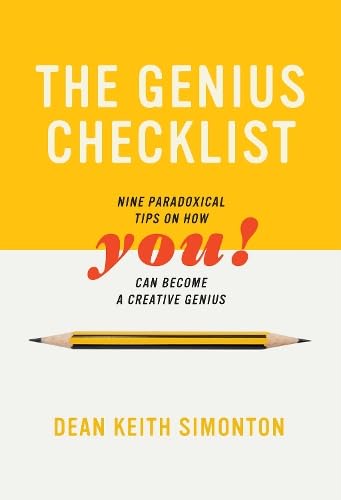
The Genius Checklist: Nine Paradoxical Tips on How You Can Become a Creative Genius (Mit Press),Used
Sold by Ergodebooks, an authorized reseller.
Returns accepted within 30 days | support@ergodebooks.com
Shipping Information
- Free Standard Shipping — United States only
- Processing Time: 3–5 business days
- Estimated Delivery: 6–10 business days after dispatch
- Double-boxed, fully insured & discreetly packaged
- Tracking number sent via email once dispatched
Returns & Refund
Returns accepted within 30 days of delivery.
Damaged or Defective Item
Free return shipping + replacement or full refund
Wrong Item Received
Free return shipping + replacement or full refund
Change of Mind
Return shipping at customer's expense · 25% restocking fee applies
Payment Option

What it takes to be a genius: nine essential and contradictory ingredients.What does it take to be a genius? A high score on an IQ test? Brilliant physicist Richard Feynman's IQ was too low for membership in Mensa. Suffering from varying degrees of mental illness? Creativity is often considered a marker of mental health. Be a child prodigy like Mozart, or a later bloomer like Beethoven? Die tragically young, like Keats, or live to a ripe old age like Goethe? In The Genius Checklist, Dean Keith Simonton examines the key factors in creative genius and finds that they are more than a little contradictory.Simonton, who has studied creativity and genius for more than four decades, draws on both scientific research and stories from the lives of famous creative geniuses that range from Isaac Newton to Vincent van Gogh to Virginia Woolf. He explains the origin of IQ tests and the art of estimating the IQ of longdead historical figures (John Stuart Mill: 200; Charles Darwin: 160). He compares IQ scores with achieved eminence as measures of genius, and he draws a distinction between artistic and scientific genius. He rules out birth order as a determining factor (in the James family alone, three geniuses at three different birthorder positions: William James, firstborn; Henry James, second born; Alice James, born fifth and last); considers Malcolm Gladwell's 10,000 hour rule; and describes how the lone genius gets enmeshed in social networks.Genius, Simonton explains, operates in ways so subtle that they seem contradictory. Genius is born and made, the domain of child prodigies and their elders. Simonton's checklist gives us a new, integrative way to understand geniusesand perhaps even to nurture your own genius!
⚠️ WARNING (California Proposition 65):
This product may contain chemicals known to the State of California to cause cancer, birth defects, or other reproductive harm.
For more information, please visit www.P65Warnings.ca.gov.