
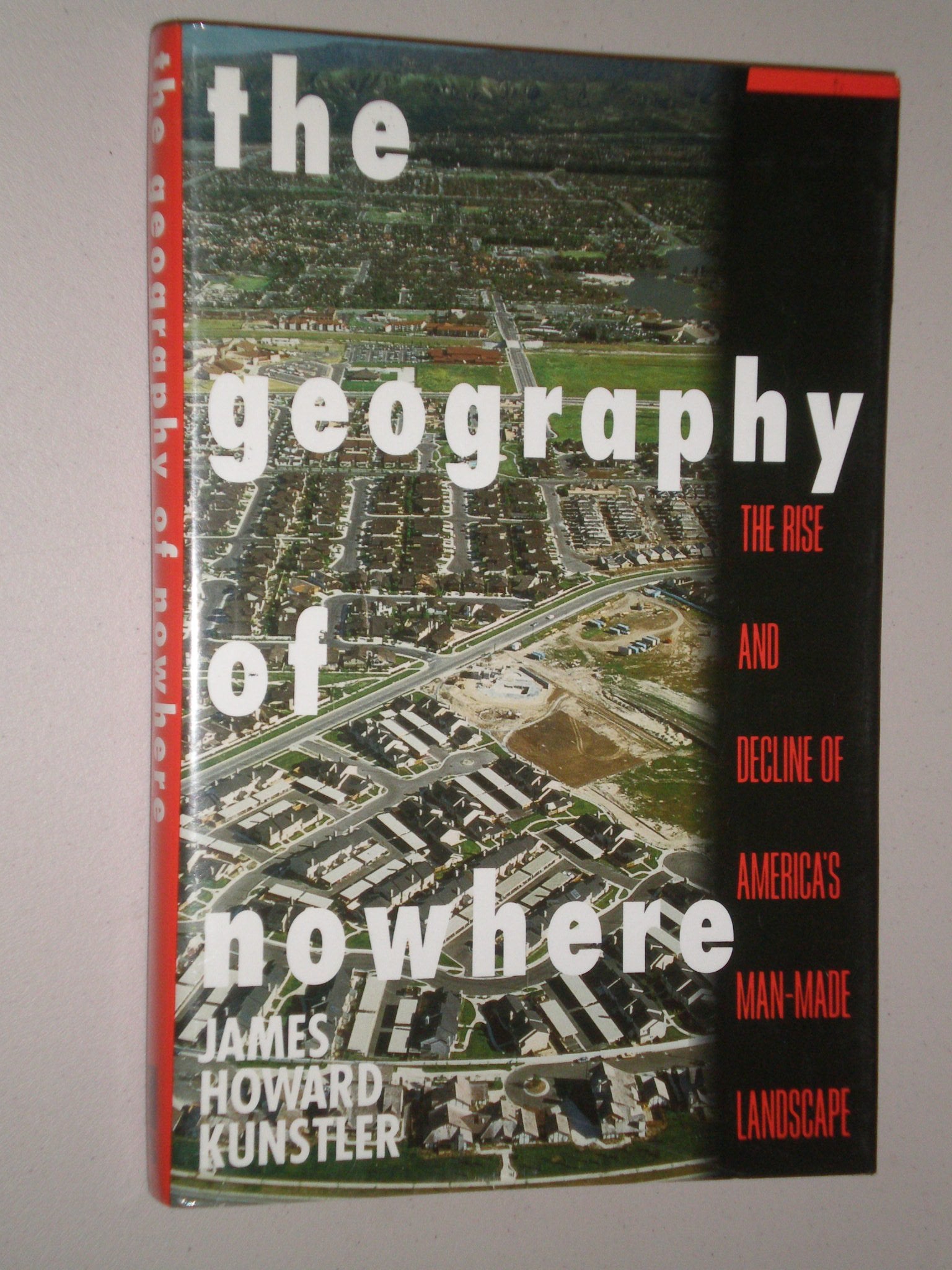
Title
The Geography Of Nowhere: The Rise And Decline Of America'S Manmade Landscape,New
Sold by Ergodebooks, an authorized reseller.
Returns accepted within 30 days | support@ergodebooks.com
Shipping Information
- Free Standard Shipping — United States only
- Processing Time: 3–5 business days
- Estimated Delivery: 6–10 business days after dispatch
- Double-boxed, fully insured & discreetly packaged
- Tracking number sent via email once dispatched
Returns & Refund
Returns accepted within 30 days of delivery.
Damaged or Defective Item
Free return shipping + replacement or full refund
Wrong Item Received
Free return shipping + replacement or full refund
Change of Mind
Return shipping at customer's expense · 25% restocking fee applies
Payment Option

Eighty Percent Of Everything Ever Built In America Has Been Built Since The End Of World War Ii. This Tragic Landscape Of Highway Strips, Parking Lots, Housing Tracts, Megamalls, Junked Cities, And Ravaged Countryside Is Not Simply An Expression Of Our Economic Predicament, But In Large Part A Cause. It Is The Everyday Environment Where Most Americans Live And Work, And It Represents A Gathering Calamity Whose Effects We Have Hardly Begun To Measure.In The Geography Of Nowhere, James Howard Kunstler Traces America'S Evolution From A Nation Of Main Streets And Coherent Communities To A Land Where Everyplace Is Like Noplace In Particular, Where The City Is A Dead Zone And The Countryside A Wasteland Of Cars And Blacktop. Now That The Great Suburban Buildout Is Over, Kunstler Argues, We Are Stuck With The Consequences: A National Living Arrangement That Destroys Civic Life While Imposing Enormous Social Costs And Economic Burdens. Kunstler Explains How Our Present Zoning Laws Impoverish The Life Of Our Communities, And How All Our Efforts To Make Automobiles Happy Have Resulted In Making Human Beings Miserable. He Shows How Common Building Regulations Have Led To A Crisis In Affordable Housing, And Why Street Crime Is Directly Related To Our Traditional Disregard For The Public Realm.Kunstler Takes The Reader On A Historical Journey To Understand How Americans Came To View Their Landscape As A Commodity For Exploitation Rather Than A Social Resource. He Explains Why Our Towns And Cities Came To Be Wounded By The Abstract Dogmas Of Modernism, And Reveals The Paradox Of A People Who Yearn For Places Worthy Of Their Affection, Yet Bend Their Efforts In An Economic Enterprise Of Destruction That Degrades And Defaces What They Most Deeply Desire.Kunstler Proposes Sensible Remedies For This American Crisis Of Landscape And Townscape: A Return To Sound Principles Of Planning And The Lost Art Of Good Placemaking, An End To The Tyranny Of Compulsive Commuting, The Unreality Of The Suburb, The Alienation And Violence Of Downtown, The Vulgarity Of The Highway Strip, And The Destruction Of Our Countryside. The Geography Of Nowhere Puts The Issue Of How We Actually Live Squarely At The Center Of Our Ongoing Debate About The Nation'S Economy And America'S Future.
⚠️ WARNING (California Proposition 65):
This product may contain chemicals known to the State of California to cause cancer, birth defects, or other reproductive harm.
For more information, please visit www.P65Warnings.ca.gov.
- Q: How many pages does the book have? A: The book has three hundred three pages. It provides a comprehensive exploration of America's man-made landscape.
- Q: What is the binding type of this book? A: The book is bound in hardcover. This type of binding offers durability and a premium feel.
- Q: What are the dimensions of the book? A: The book measures six point two six inches by nine point five inches. These dimensions make it a standard size for easy handling.
- Q: What is the primary focus of the book? A: The primary focus is on the decline of America's landscape post-World War II. It discusses urban planning and community deterioration.
- Q: Who is the author of this book? A: The author is James Howard Kunstler. He is known for his critique of suburban sprawl and urban design.
- Q: Is this book suitable for all ages? A: While the book does not have an age restriction, it is more suitable for adults and older teens. Its themes are complex and may require mature understanding.
- Q: What are some key themes discussed in the book? A: Key themes include urban sprawl, community disintegration, and the impact of zoning laws. Kunstler also addresses societal costs related to these issues.
- Q: How does this book propose to improve urban landscapes? A: The book suggests a return to sound planning principles and better place-making. Kunstler advocates for changes that enhance community life and reduce commuting.
- Q: What type of condition is this used book in? A: This is a used book in good condition. It may show some signs of wear but remains fully readable.
- Q: What genre does this book fall under? A: The book falls under the Criticism genre. It critically examines societal and environmental issues.
- Q: Can this book help with understanding urban planning? A: Yes, the book provides insights into urban planning and the consequences of poor design choices. It serves as a significant resource for those interested in the topic.
- Q: What are the notable critiques made by the author? A: Kunstler critiques modernist design and zoning laws. He emphasizes how these have led to urban decay and loss of community.
- Q: How should I handle or store this book? A: Store the book in a cool, dry place away from direct sunlight. This will help maintain its condition over time.
- Q: What if I receive a damaged copy of the book? A: If you receive a damaged copy, you should contact customer support for return or exchange options. Most retailers have a policy for damaged goods.
- Q: Is there a warranty or return policy for this book? A: Typically, used books have a limited return policy. Check with the seller for specific details regarding returns or exchanges.
- Q: How can I contact support if I have issues? A: You can contact customer support through the retailer's website or by phone. Look for a 'Contact Us' section for assistance.