
Title
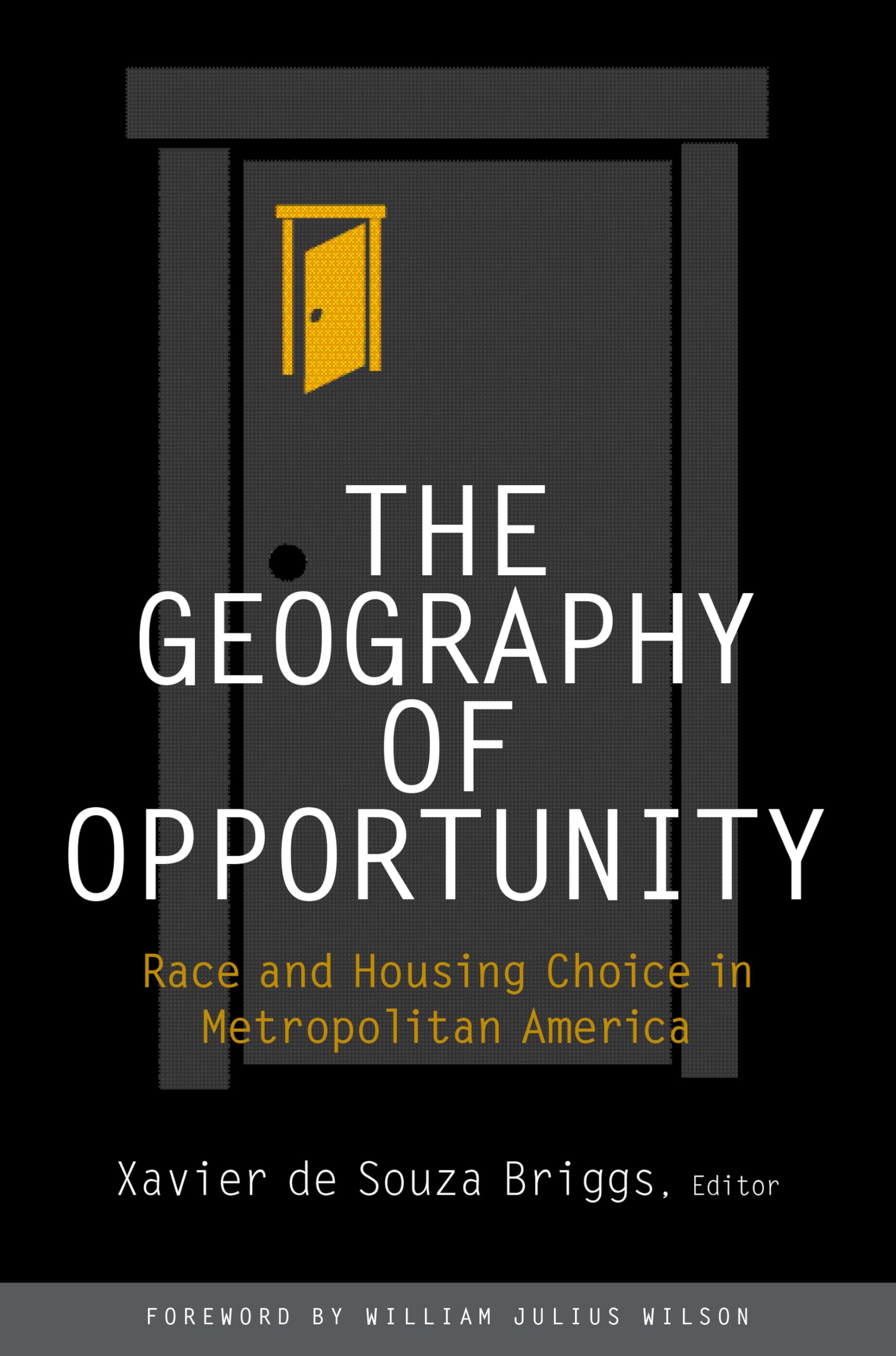
The Geography Of Opportunity: Race And Housing Choice In Metropolitan America (James A. Johnson Metro Series),New
Sold by Ergodebooks, an authorized reseller.
Returns accepted within 30 days | support@ergodebooks.com
Shipping Information
- Free Standard Shipping — United States only
- Processing Time: 3–5 business days
- Estimated Delivery: 6–10 business days after dispatch
- Double-boxed, fully insured & discreetly packaged
- Tracking number sent via email once dispatched
Returns & Refund
Returns accepted within 30 days of delivery.
Damaged or Defective Item
Free return shipping + replacement or full refund
Wrong Item Received
Free return shipping + replacement or full refund
Change of Mind
Return shipping at customer's expense · 25% restocking fee applies
Payment Option

A Popular Version Of History Trumpets The United States As A Diverse ''Nation Of Immigrants,'' Welcome To All. The Truth, However, Is That Local Communities Have A Long History Of Ambivalence Toward New Arrivals And Minorities. Persistent Patterns Of Segregation By Race And Income Still Exist In Housing And Schools, Along With A Growing Emphasis On Rapid Metropolitan Development (Sprawl) That Encourages Upwardly Mobile Families To Abandon Older Communities And Their Problems. This Dual Pattern Is Becoming Increasingly Important As America Grows More Diverse Than Ever And Economic Inequality Increases. Two Recent Trends Compel New Attention To These Issues. First, The Geography Of Race And Class Represents A Crucial Litmus Test For The New ''Regionalism''The Political Movement To Address The Linked Fortunes Of Cities And Suburbs. Second, Housing Has All But Disappeared As A Major Social Policy Issue Over The Past Two Decades. This Timely Book Shows How Unequal Housing Choices And Sprawling Development Create An Unequal Geography Of Opportunity. It Emerges From A Project Sponsored By The Civil Rights Project At Harvard University In Collaboration With The Joint Center For Housing Studies And The Brookings Institution. The Contributorspolicy Analysts, Political Observers, Social Scientists, And Urban Plannersdocument Key Patterns, Their Consequences, And How We Can Respond, Taking A Hard Look At Both Successes And Failures Of The Past. Place Still Matters, Perhaps More Than Ever. High Levels Of Segregation Shape Education And Job Opportunity, Crime And Insecurity, And Longterm Economic Prospects. These Problems Cannot Be Addressed Effectively If Society Assumes That Segregation Will Take Care Of Itself. Contributors Include William Apgar (Harvard University), Judith Bell (Policylink), Angela Glover Blackwell (Policylink), Allegra Calder (Harvard), Karen Chapple (Calberkeley), Camille Charles (Penn), Mary Cunningham (Urban Institute), Casey Dawkins (Virginia Tech), Stephanie Deluca (Johns Hopkins), John Goering (Cuny), Edward Goetz (U. Of Minnesota), Bruce Katz (Brookings), Barbara Lukermann (U. Of Minnesota), Gerrit Knaap (U. Of Maryland), Arthur Nelson (Virginia Tech), Rolf Pendall (Cornell), Susan J. Popkin (Urban Institute), James Rosenbaum (Northwestern), Stephen L. Ross (U. Of Connecticut), Mara Sidney (Rutgers), Phillip Tegeler (Poverty And Race Research Action Council), Tammy Tuck (Northwestern), Margery Austin Turner (Urban Institute), William Julius Wilson (Harvard).'
⚠️ WARNING (California Proposition 65):
This product may contain chemicals known to the State of California to cause cancer, birth defects, or other reproductive harm.
For more information, please visit www.P65Warnings.ca.gov.