If you have any questions, you are always welcome to contact us. We'll get back to you as soon as possible, withing 24 hours on weekdays.
Customer service
All questions about your order, return and delivery must be sent to our customer service team by e-mail at yourstore@yourdomain.com
Sale & Press
If you are interested in selling our products, need more information about our brand or wish to make a collaboration, please contact us at press@yourdomain.com
Help
If you have any questions, you are always welcome to contact us. We'll get back to you as soon as possible, withing 24 hours on weekdays.
Customer service
All questions about your order, return and delivery must be sent to our customer service team by e-mail at yourstore@yourdomain.com
Sale & Press
If you are interested in selling our products, need more information about our brand or wish to make a collaboration, please contact us at press@yourdomain.com
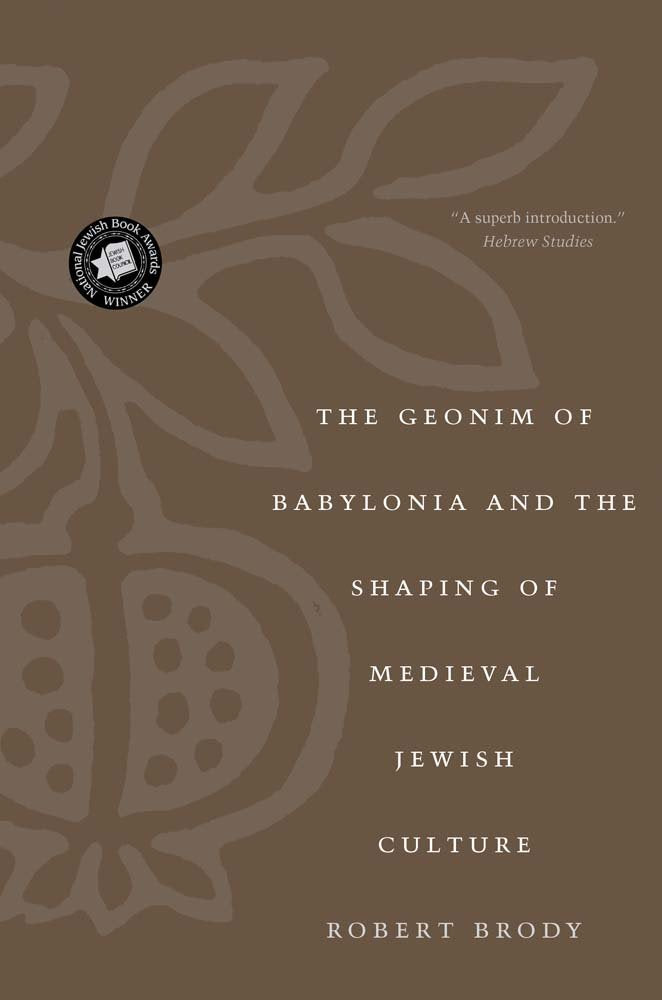
The Geonic period from about the late sixth to mideleventh centuries is of crucial importance in the history of Judaism. The Geonim, for whom this era is named, were the heads of the ancient talmudic academies of Babylonia. They gained ascendancy over the older Palestinian center of Judaism and were recognized as the leading religious and spiritual authorities by most of the worlds Jewish population. The Geonim and their circles enshrined the Babylonian Talmud as the central canonical work of rabbinic literature and the leading guide to religious practice, and it was a predominantly Babylonian version of Judaism that was transplanted to newer centers of Judaism in North Africa and Europe. Robert Brodys bookthe first survey in English of the Geonic period in almost a centuryfocuses on the cultural milieu of the Geonim and on their intellectual and literary creativity.Brody describes the cultural spheres in which the Geonim were active and the historical and cultural settings within which they functioned. He emphasizes the challenges presented by other Jewish institutions and individuals, ranging from those within the Babylonian Jewish settingespecially the political leadership represented by the Exilarchto the competing Palestinian Jewish center and to sectarian movements and freethinkers who rejected rabbinic authority altogether. He also describes the variety of ways in which the development of Geonic tradition was affected by the surrounding nonJewish cultures, both Muslim and Christian.
⚠️ WARNING (California Proposition 65):
This product may contain chemicals known to the State of California to cause cancer,
birth defects, or other reproductive harm.
For MAP (Minimum Advertised Price) violations and Intellectual Property (IP) or Trademark concerns, please contact:
support@ergodebooks.com
⚠️ California Proposition 65 Warning: Some products sold on this website may expose you to chemicals known to the State of California to cause cancer, birth defects, or other reproductive harm. For more information, visit www.P65Warnings.ca.gov.