
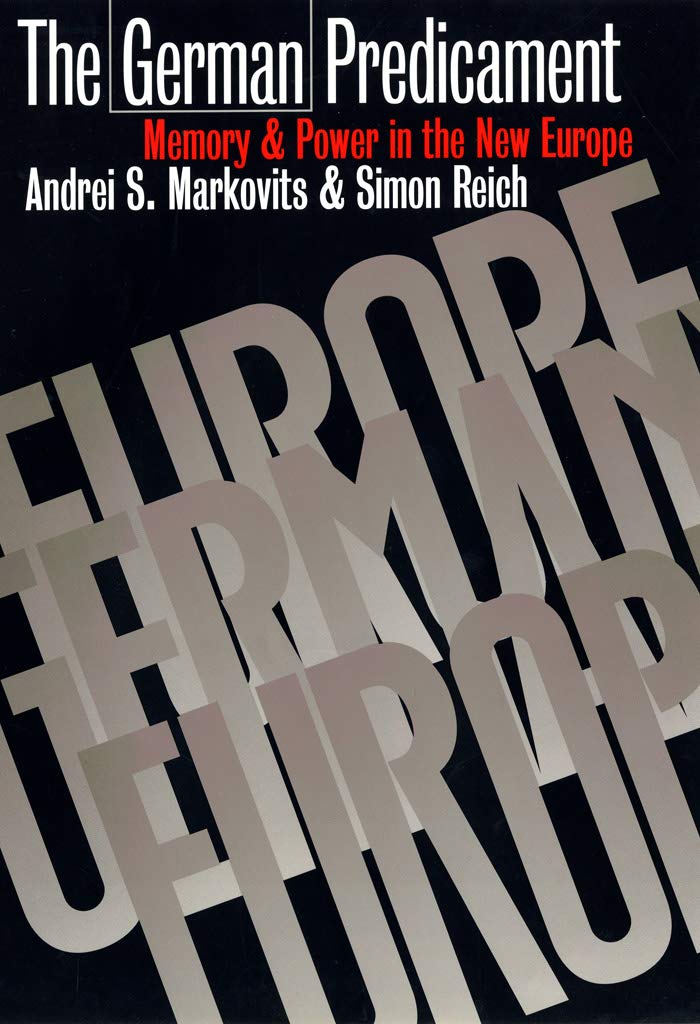
Title
The German Predicament: Memory and Power in the New Europe,Used
Sold by Ergodebooks, an authorized reseller.
Returns accepted within 30 days | support@ergodebooks.com
Shipping Information
- Free Standard Shipping — United States only
- Processing Time: 3–5 business days
- Estimated Delivery: 6–10 business days after dispatch
- Double-boxed, fully insured & discreetly packaged
- Tracking number sent via email once dispatched
Returns & Refund
Returns accepted within 30 days of delivery.
Damaged or Defective Item
Free return shipping + replacement or full refund
Wrong Item Received
Free return shipping + replacement or full refund
Change of Mind
Return shipping at customer's expense · 25% restocking fee applies
Payment Option

What does the unification of Germany really mean? In their stimulating exploration of that question, Andrei S. Markovits and Simon Reich sketch diametrically different interpretations than are frequently offered by commentators. One is that Germany, well aware of the Holocaust, has been 'Europeanized' and is now prepared to serve as the capitalist and democratic locomotive that powers Europe. The other is that the proclivities behind Auschwitz have been suppressed rather than obliterated from the German psyche. Germany's liberal democracy was imposed by the allied victors, according to this view, and will one day dissolve, revealing the old expansionist tendencies to try to 'Germanize' all of Europe.Markovits and Reich argue that benign contemporary assessments of Germany's postwar democracy, combined with admiration for the country's economic achievements, contribute to German influence far greater than military might was able to achieve. Yet, at the same time, some Germans have internalized liberal and pacifist principles and now see their nation as powerless, simply a larger Switzerland. As a result, while the Germans have enormous influence and latitude, they have not taken responsibility for leadership. The prime reason for this gap beween ideology and structure, Markovits and Reich suggest, lies in the politics of collective memory.
⚠️ WARNING (California Proposition 65):
This product may contain chemicals known to the State of California to cause cancer, birth defects, or other reproductive harm.
For more information, please visit www.P65Warnings.ca.gov.