If you have any questions, you are always welcome to contact us. We'll get back to you as soon as possible, withing 24 hours on weekdays.
Customer service
All questions about your order, return and delivery must be sent to our customer service team by e-mail at yourstore@yourdomain.com
Sale & Press
If you are interested in selling our products, need more information about our brand or wish to make a collaboration, please contact us at press@yourdomain.com
Help
If you have any questions, you are always welcome to contact us. We'll get back to you as soon as possible, withing 24 hours on weekdays.
Customer service
All questions about your order, return and delivery must be sent to our customer service team by e-mail at yourstore@yourdomain.com
Sale & Press
If you are interested in selling our products, need more information about our brand or wish to make a collaboration, please contact us at press@yourdomain.com
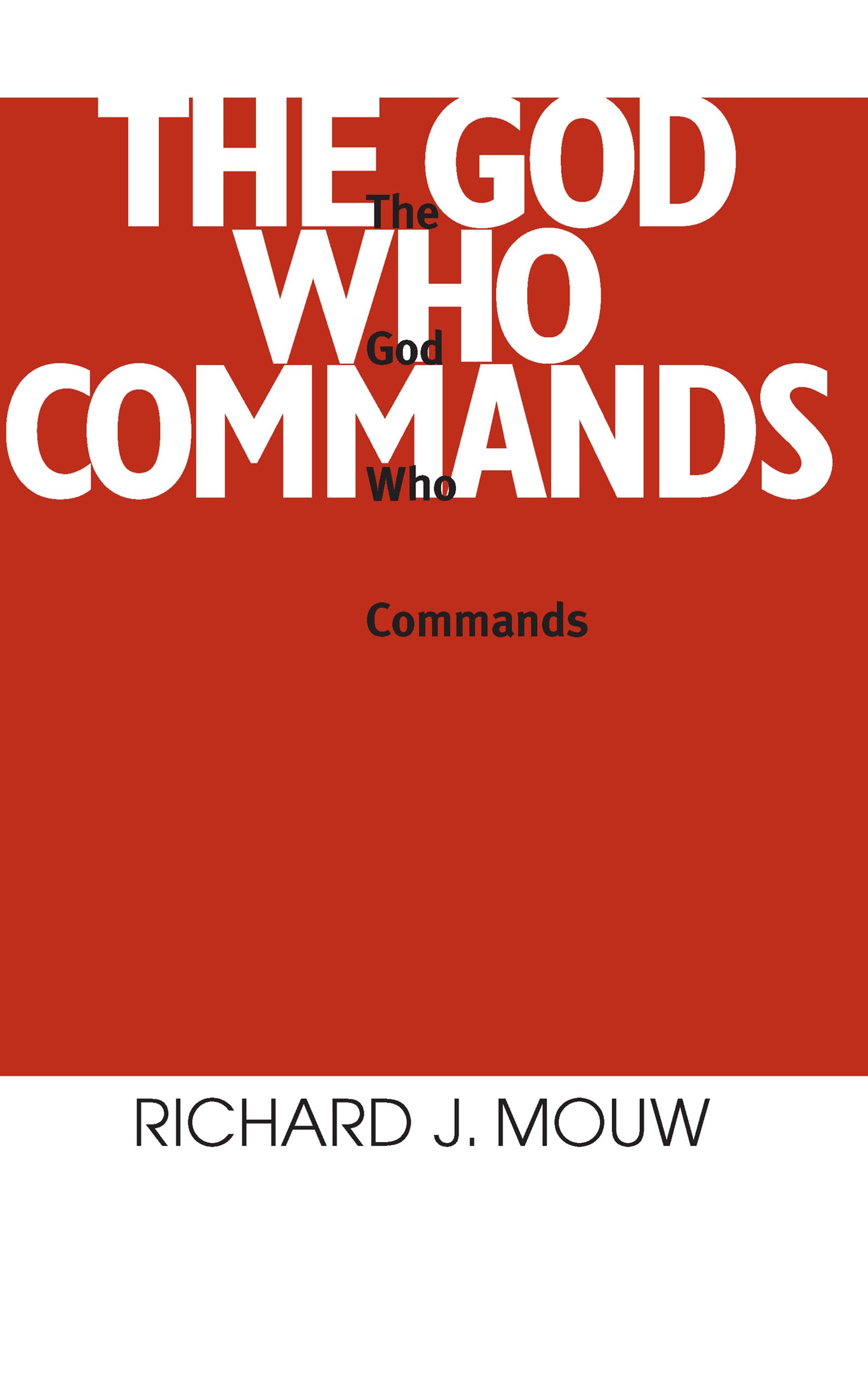
In this book Richard J. Mouw, one of the foremost thinkers in the field of Christian ethics, develops a constructive theological ethic, employing primarily Calvinist themes. Exploring issues that are at the intersection of philosophical and theological discussions, he sets forth an ethical perspective in which obedience to divine commands occupies a central place.After responding to some secularist objections to divine command theory, Mouw looks at the ways in which treatments of divine authority relate to contemporary philosophical discussions of moral justification. He then discusses the divine command perspective, turning to a specific examination of the Reformation emphasis on naked selfhood. He defends Reformational selfhood against critiques of Protestantism and explores the differences and similarities between the conceptions of moral selfhood portrayed in classical Calvinism and recent existentialism.Examining Protestant, and especially Calvinist, emphases on divine command, Mouw argues that a divine command perspective need not be viewed as antithetical to the claims made by recent defenders of narrativist ethics. He explores the ways in which differing intratrinitarian emphases influence Christian moral experience, and he argues that a strong GodtheFather emphasis needs to be supplemented by perspectives that attend more to divine nearness, as in contemporary feminism and Pentecostalism. He concludes with some reflections on the way in which a divine command ethical perspective speaks in positive ways to the contemporary moral quest.
⚠️ WARNING (California Proposition 65):
This product may contain chemicals known to the State of California to cause cancer,
birth defects, or other reproductive harm.
For MAP (Minimum Advertised Price) violations and Intellectual Property (IP) or Trademark concerns, please contact:
support@ergodebooks.com
⚠️ California Proposition 65 Warning: Some products sold on this website may expose you to chemicals known to the State of California to cause cancer, birth defects, or other reproductive harm. For more information, visit www.P65Warnings.ca.gov.