
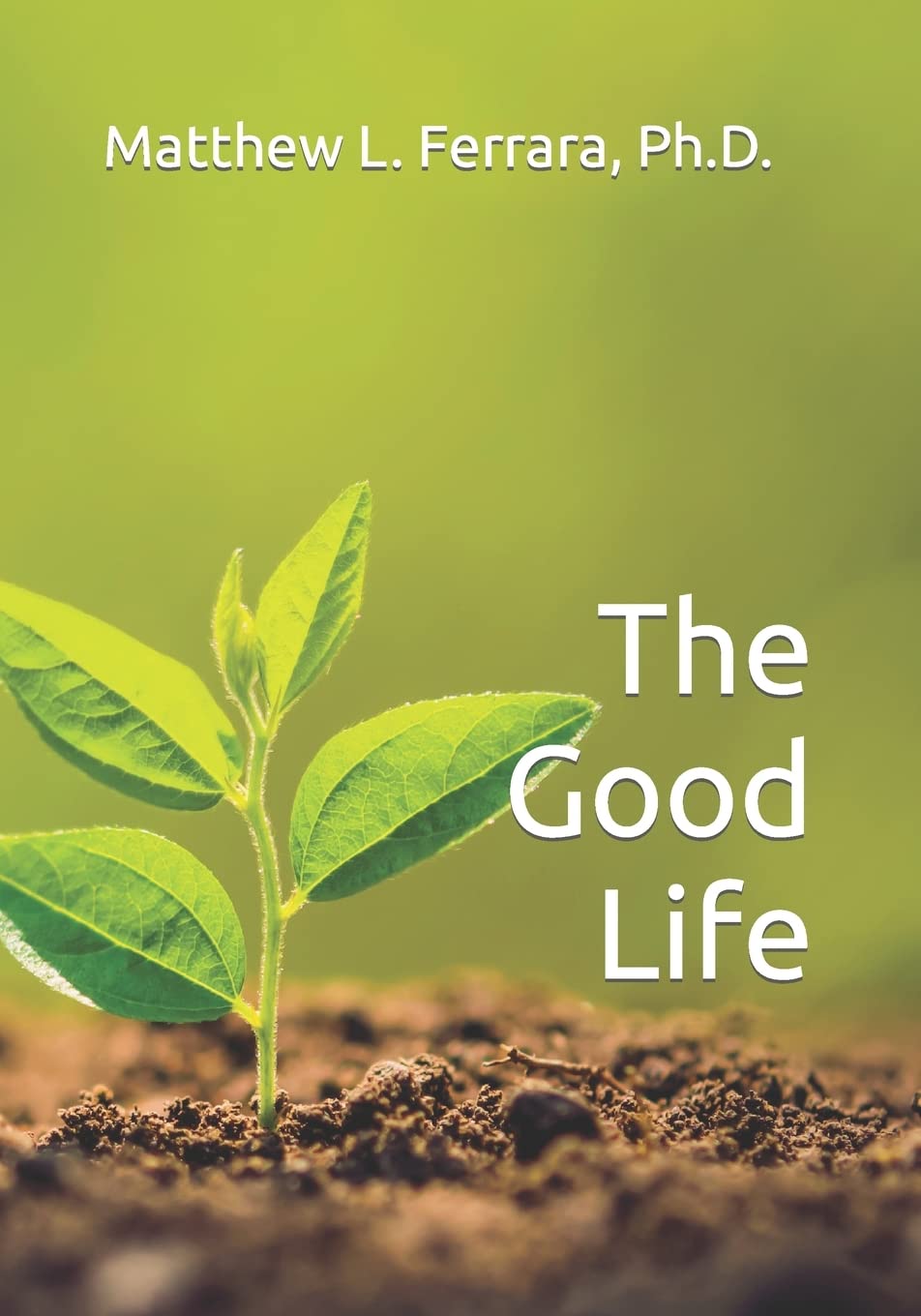
Title
The Good Life,New
Sold by Ergodebooks, an authorized reseller.
Returns accepted within 30 days | support@ergodebooks.com
Shipping Information
- Free Standard Shipping — United States only
- Processing Time: 3–5 business days
- Estimated Delivery: 6–10 business days after dispatch
- Double-boxed, fully insured & discreetly packaged
- Tracking number sent via email once dispatched
Returns & Refund
Returns accepted within 30 days of delivery.
Damaged or Defective Item
Free return shipping + replacement or full refund
Wrong Item Received
Free return shipping + replacement or full refund
Change of Mind
Return shipping at customer's expense · 25% restocking fee applies
Payment Option

What is your purpose in life? Do you have a dream about how your life should be? How do you make that dream come true? Have you read books, attended lectures, or listened to podcasts, with the goal of figuring out how to make your dream come true?Hopefully, this is not just another selfhelp workbook. There are already so many selfhelp workbooks. You dont have to spend much time reviewing them to discover all the contradictions. How do you know which workbook got it right?Do you put stock in the workbook by a famous author or an author you have read before? If you take this approach, you are taking the great person approach. You believe what you believe because a great person told you what to believe. In case you are wondering, the great person approach to knowledge is called faith.It is nice to have faith in someone or something but that is not the way to build knowledge, especially about complex topics like emotions, relationships, thinking and selfmanagement. The best way to build knowledge is to use the scientific method. There is a better chance that facts produced by the scientific method are more accurate than the opinions offered by a great person.In this selfhelp workbook, the scientific method was the basis for lessons that address four important topics: emotional functioning, thinking, relationships and selfmanagement. For example, research by Paul Ekman, PhD. and his colleagues provided the foundation for many lessons on emotions. Martin Seligman, PhD. and other positive psychologists provided the scientific foundation for the lessons on happiness and optimism. John Gottman, PhD. and his colleagues research was used for many of the lessons on relationships. Check the Endnotes in this workbook for a listing of authors and researchers whose finings provide the basis for this workbook.The goal of this workbook is to help you improve the quality of your life. Many people have already used this workbook and have said, I wish I knew this information when I was growingup. Whether you are fixing a personal problem or just trying to maximize your life, I hope this workbook can help you. Above all, enjoy your life.
⚠️ WARNING (California Proposition 65):
This product may contain chemicals known to the State of California to cause cancer, birth defects, or other reproductive harm.
For more information, please visit www.P65Warnings.ca.gov.
- Q: What is the primary focus of 'The Good Life' workbook? A: The primary focus of 'The Good Life' workbook is to help readers discover their purpose in life and how to achieve their dreams using scientific methods related to emotional functioning, thinking, relationships, and self-management.
- Q: Who is the author of 'The Good Life'? A: The author of 'The Good Life' is Dr. Matthew Ferrara.
- Q: How many pages does 'The Good Life' contain? A: 'The Good Life' contains 508 pages.
- Q: What type of binding does 'The Good Life' have? A: 'The Good Life' is available in paperback binding.
- Q: When was 'The Good Life' first published? A: 'The Good Life' was first published on December 21, 2009.
- Q: Is 'The Good Life' suitable for all readers? A: 'The Good Life' is suitable for anyone looking to improve their life quality, whether they are facing personal challenges or simply seeking to maximize their potential.
- Q: Does 'The Good Life' include scientific research references? A: Yes, 'The Good Life' includes references to scientific research and findings from experts in psychology and emotional studies, which form the basis for the workbook's lessons.
- Q: What topics are covered in 'The Good Life' workbook? A: 'The Good Life' covers topics such as emotional functioning, positive psychology, relationships, and self-management.
- Q: Can 'The Good Life' help with personal problems? A: 'The Good Life' is designed to provide insights and strategies that can help readers address personal issues and enhance their overall life satisfaction.
- Q: What makes 'The Good Life' different from other self-help workbooks? A: 'The Good Life' distinguishes itself by using the scientific method as a foundation for its lessons, aiming to provide more accurate and effective guidance compared to traditional self-help approaches.