
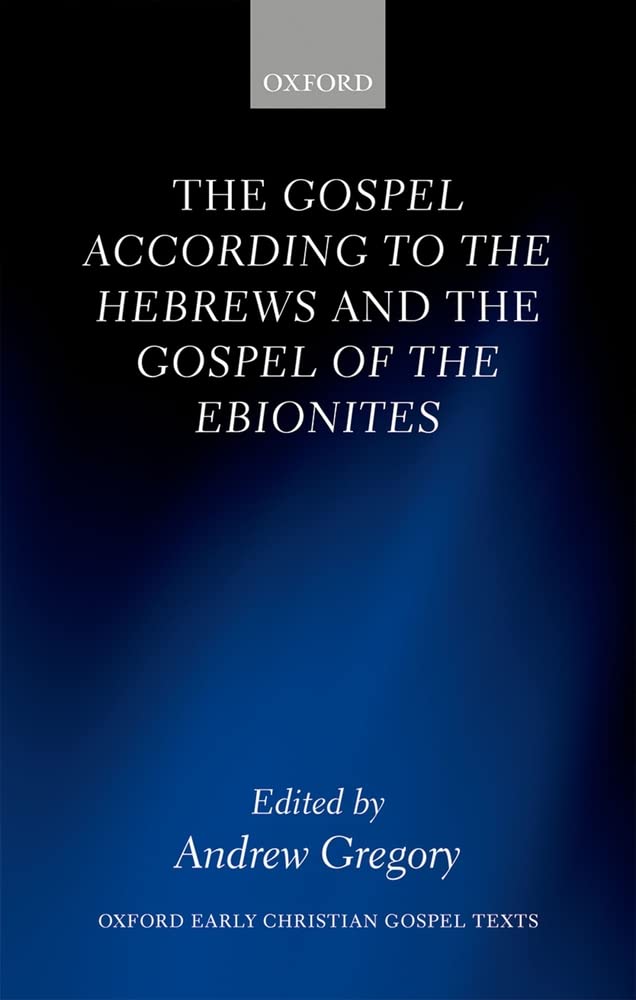
Title
The Gospel according to the Hebrews and the Gospel of the Ebionites (Oxford Early Christian Gospel Texts),New
Sold by Ergodebooks, an authorized reseller.
Returns accepted within 30 days | support@ergodebooks.com
Shipping Information
- Free Standard Shipping — United States only
- Processing Time: 3–5 business days
- Estimated Delivery: 6–10 business days after dispatch
- Double-boxed, fully insured & discreetly packaged
- Tracking number sent via email once dispatched
Returns & Refund
Returns accepted within 30 days of delivery.
Damaged or Defective Item
Free return shipping + replacement or full refund
Wrong Item Received
Free return shipping + replacement or full refund
Change of Mind
Return shipping at customer's expense · 25% restocking fee applies
Payment Option

Scholars are divided on the number of gospels to which fragmentary JewishChristian gospel traditions should be attributed. In this book Gregory attributes them to two gospels: the Gospel according to the Hebrews and the Gospel of the Ebionites, with no need for any postulated Gospel of the Nazoraeans. As two distinct texts, each gospel is treated on its own terms, with its own introduction, followed by a text, translation and commentary on each fragment, and further discussion about what we may conclude about the overall character of the text on the basis of the fragments that survive. Yet they share certain common features that warrant them being treated together in one volume with an introduction that discusses certain critical issues that are relevant to them both. One common factor is the partial and indirect way in which these texts have been preserved. No independent manuscript tradition survives for either text, so they have been transmitted only to the extent that they were quoted or discussed by a number of early Christian authors, none of whom claims to be the author of the text from which he appears to quote or to which he appears to refer. This raises a number of questions of a literary nature about how excerpts from these texts may be interpreted. Another common factor is that these gospel traditions are usually referred to as JewishChristian, which may raise questions about their historical origins and theological outlook. Any judgment about the historical origins or theological nature of these gospels must rest upon prior examination of what may be reconstructed of their texts, and Gregory is careful to distinguish between what we may conclude from these gospels as texts and how they might contribute to our knowledge of early Christian history. The book also includes a number of appendices in which he discusses issues that have been prominent in the history of scholarship on these texts, but which he argues are not relevant to these two gospels as he presents them. These include claims about an original Hebrew gospel of Matthew, the postulated Gospel of the Nazoraeans and the socalled 'Jewish gospel', as well as what may be known about the Nazoraeans and the Ebionites.
⚠️ WARNING (California Proposition 65):
This product may contain chemicals known to the State of California to cause cancer, birth defects, or other reproductive harm.
For more information, please visit www.P65Warnings.ca.gov.