
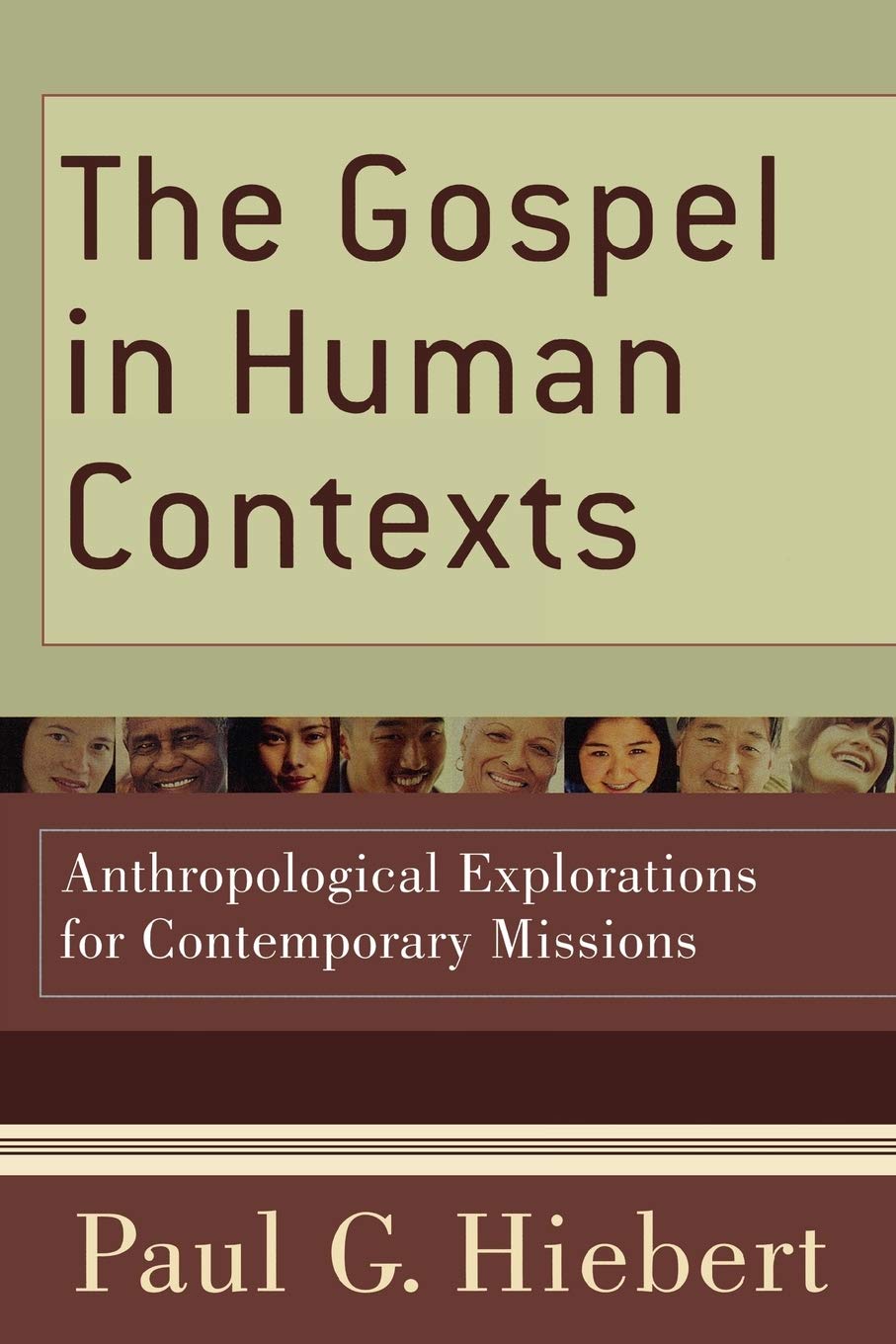
Title
The Gospel in Human Contexts: Anthropological Explorations for Contemporary Missions,Used
Sold by Ergodebooks, an authorized reseller.
Returns accepted within 30 days | support@ergodebooks.com
Shipping Information
- Free Standard Shipping — United States only
- Processing Time: 3–5 business days
- Estimated Delivery: 6–10 business days after dispatch
- Double-boxed, fully insured & discreetly packaged
- Tracking number sent via email once dispatched
Returns & Refund
Returns accepted within 30 days of delivery.
Damaged or Defective Item
Free return shipping + replacement or full refund
Wrong Item Received
Free return shipping + replacement or full refund
Change of Mind
Return shipping at customer's expense · 25% restocking fee applies
Payment Option

While the gospel is timeless truth, it enters into everchanging and widely varied human contexts. In order to meaningfully communicate the gospel to particular humans, those involved in crosscultural ministry need to understand people and the particular influencessocial, cultural, psychological, and ecologicalthat shape them. Further, we must understand ourselves and the influences that have shaped us, since our own contexts influence how we understand and transmit the gospel message. Therefore, we must master not only the skill of biblical interpretation but also the skill of human interpretation. That task is the topic of this book, the summation of a lifetime of experience and thinking by a worldrenowned missiologist and anthropologist, the late Paul Hiebert.
⚠️ WARNING (California Proposition 65):
This product may contain chemicals known to the State of California to cause cancer, birth defects, or other reproductive harm.
For more information, please visit www.P65Warnings.ca.gov.
- Q: How many pages does the book have? A: The book contains two hundred eighteen pages. This length allows for in-depth exploration of its themes and topics.
- Q: What are the dimensions of the book? A: The book measures six inches in length, zero point five one inches in width, and nine point zero two inches in height. These dimensions make it a convenient size for reading.
- Q: What is the binding type of this book? A: The book is paperback bound. This binding type is flexible and lightweight, making it easy to carry.
- Q: Who is the author of this book? A: The author is Paul G. Hiebert. He was a renowned missiologist and anthropologist, bringing valuable insights to missions.
- Q: What category does this book fall under? A: The book is categorized under Missions and Missionary Work. It focuses on the application of the gospel in various cultural contexts.
- Q: Is this book suitable for beginners in missions? A: Yes, this book is suitable for beginners. It provides foundational insights into understanding human contexts in missions.
- Q: What themes are explored in this book? A: The book explores themes of cultural context, social influences, and effective gospel communication. It emphasizes human interpretation alongside biblical interpretation.
- Q: How can this book be applied in a ministry setting? A: This book can be used to enhance cross-cultural communication skills in ministry. It helps readers understand the complexities of different human contexts.
- Q: Is this book appropriate for advanced readers? A: Yes, advanced readers will find value in its depth. It challenges experienced practitioners to reflect on their own cultural influences.
- Q: What should I do to care for this book? A: To care for this book, keep it in a dry place and avoid exposure to direct sunlight. This will help preserve its condition.
- Q: Can this book be shared among study groups? A: Yes, this book is ideal for study groups. Its insights foster discussions on cultural contexts in missions.
- Q: What if I receive a damaged copy of the book? A: If you receive a damaged copy, contact the seller for a return or exchange. It's important to address any issues promptly.
- Q: What kind of reader will benefit from this book? A: Readers interested in anthropology and missions will benefit greatly. It provides practical insights for effective ministry.
- Q: Where can I purchase this book? A: You can purchase this book from major online retailers or bookstores specializing in religious literature. It's widely available.
- Q: Does this book include references to other works? A: Yes, the book includes references to other works in the field. This enhances its credibility and provides further reading options.
- Q: Is this book based on personal experiences? A: Yes, the book is based on Paul Hiebert's lifetime of experiences. His insights stem from extensive fieldwork and study.