
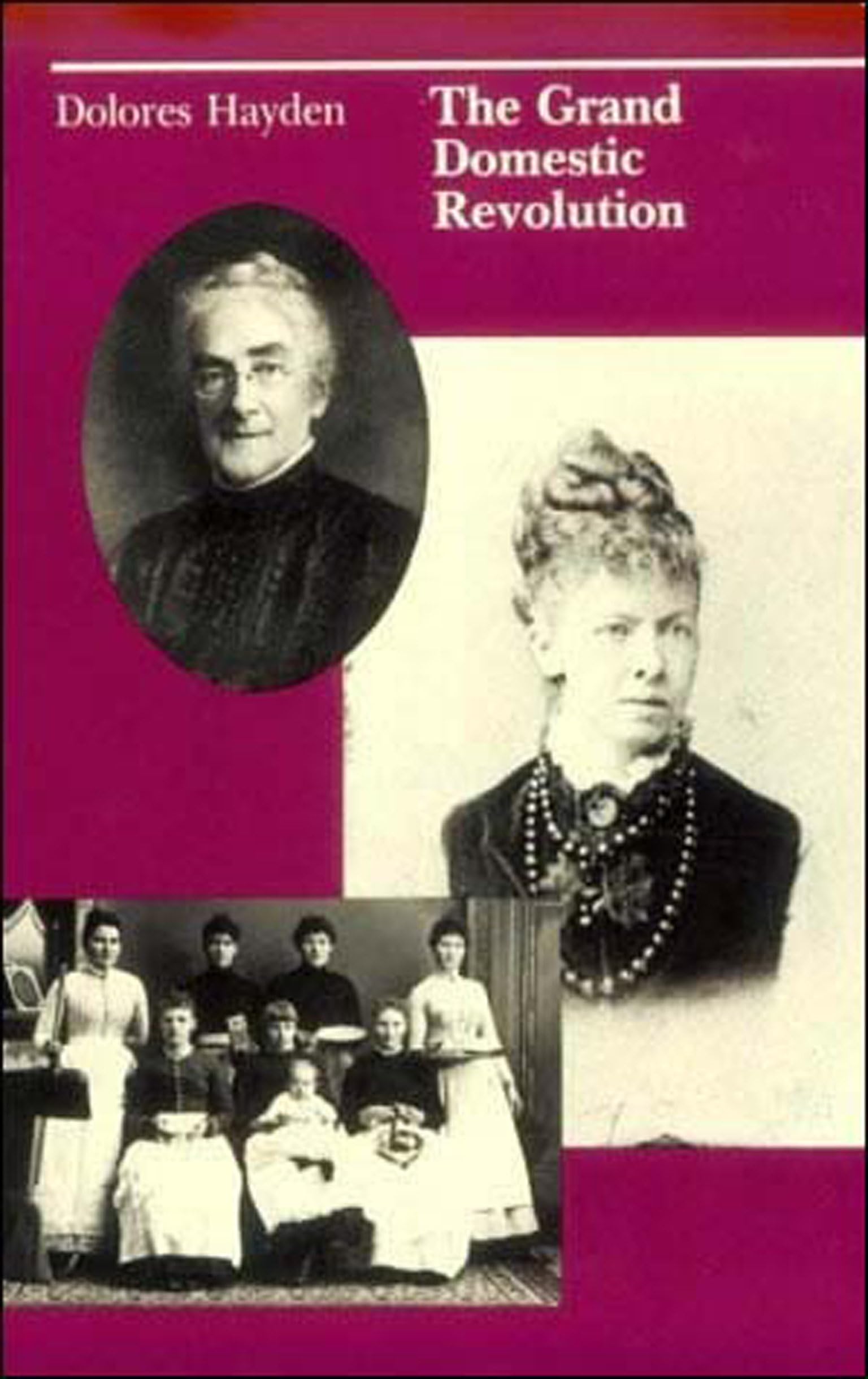
Title
The Grand Domestic Revolution: A History of Feminist Designs for American Homes, Neighborhoods and Cities,Used
Sold by Ergodebooks, an authorized reseller.
Returns accepted within 30 days | support@ergodebooks.com
Shipping Information
- Free Standard Shipping — United States only
- Processing Time: 3–5 business days
- Estimated Delivery: 6–10 business days after dispatch
- Double-boxed, fully insured & discreetly packaged
- Tracking number sent via email once dispatched
Returns & Refund
Returns accepted within 30 days of delivery.
Damaged or Defective Item
Free return shipping + replacement or full refund
Wrong Item Received
Free return shipping + replacement or full refund
Change of Mind
Return shipping at customer's expense · 25% restocking fee applies
Payment Option

This is a book that is full of things I have never seen before, and full of new things to say about things I thought I knew well. It is a book about houses and about culture and about how each affects the other, and it must stand as one of the major works on the history of modern housing.' Paul Goldberger, The New York Times Book ReviewLong before Betty Friedan wrote about 'the problem that had no name' in The Feminine Mystique, a group of American feminists whose leaders included Melusina Fay Peirce, Mary Livermore, and Charlotte Perkins Gilman campaigned against women's isolation in the home and confinement to domestic life as the basic cause of their unequal position in society.The Grand Domestic Revolution reveals the innovative plans and visionary strategies of these persistent women, who developed the theory and practice of what Hayden calls 'material feminism' in pursuit of economic independence and social equality. The material feminists' ambitious goals of socialized housework and child care meant revolutionizing the American home and creating community services. They raised fundamental questions about the relationship of men, women, and children in industrial society. Hayden analyzes the utopian and pragmatic sources of the feminists' programs for domestic reorganization and the conflicts over class, race, and gender they encountered. This history of a littleknown intellectual tradition challenging patriarchal notions of 'women's place' and 'women's work' offers a new interpretation of the history of American feminism and a new interpretation of the history of American housing and urban design. Hayden shows how the material feminists' political ideology led them to design physical space to create housewives' cooperatives, kitchenless houses, daycare centers, public kitchens, and community dining halls. In their insistence that women be paid for domestic labor, the material feminists won the support of many suffragists and of novelists such as Edward Bellamy and William Dean Howells, who helped popularize their cause. Ebenezer Howard, Rudolph Schindler, and Lewis Mumford were among the many progressive architects and planners who promoted the reorganization of housing and neighborhoods around the needs of employed women. In reevaluating these early feminist plans for the environmental and economic transformation of American society and in recording the vigorous and manysided arguments that evolved around the issues they raised, Hayden brings to light basic economic and spacial contradictions which outdated forms of housing and inadequate community services still create for American women and for their families.
⚠️ WARNING (California Proposition 65):
This product may contain chemicals known to the State of California to cause cancer, birth defects, or other reproductive harm.
For more information, please visit www.P65Warnings.ca.gov.
- Q: What is the main theme of 'The Grand Domestic Revolution'? A: The main theme of 'The Grand Domestic Revolution' is the exploration of how early American feminists sought to challenge women's domestic roles and promote social equality through innovative housing designs and community services.
- Q: Who is the author of the book? A: 'The Grand Domestic Revolution' is authored by Dolores Hayden, who is known for her contributions to feminist theory and urban planning.
- Q: What historical context does the book cover? A: The book covers the historical context of feminist movements in America prior to the publication of 'The Feminine Mystique,' focusing on the efforts of women in the late 19th and early 20th centuries to redefine domestic life.
- Q: What are some key concepts discussed in the book? A: Key concepts in the book include 'material feminism,' socialized housework, community services, and the relationship between domestic spaces and women's roles in society.
- Q: How does the author approach the topic of housing and urban design? A: The author analyzes how material feminists influenced housing and urban design by proposing innovative solutions like kitchenless houses and community dining halls to better accommodate working women.
- Q: Is there a specific audience for this book? A: Yes, the book is targeted towards readers interested in feminist history, urban studies, and social reform, as well as those exploring the intersections of gender and architecture.
- Q: What is the significance of the feminist plans discussed in the book? A: The feminist plans discussed are significant as they highlight early efforts to transform domestic environments and advocate for economic independence and social equality for women.
- Q: How many pages does the book have? A: 'The Grand Domestic Revolution' has a total of 384 pages.
- Q: When was the book published? A: 'The Grand Domestic Revolution' was published on June 7, 1982.
- Q: What edition of the book is available? A: The available edition of the book is a revised edition.