
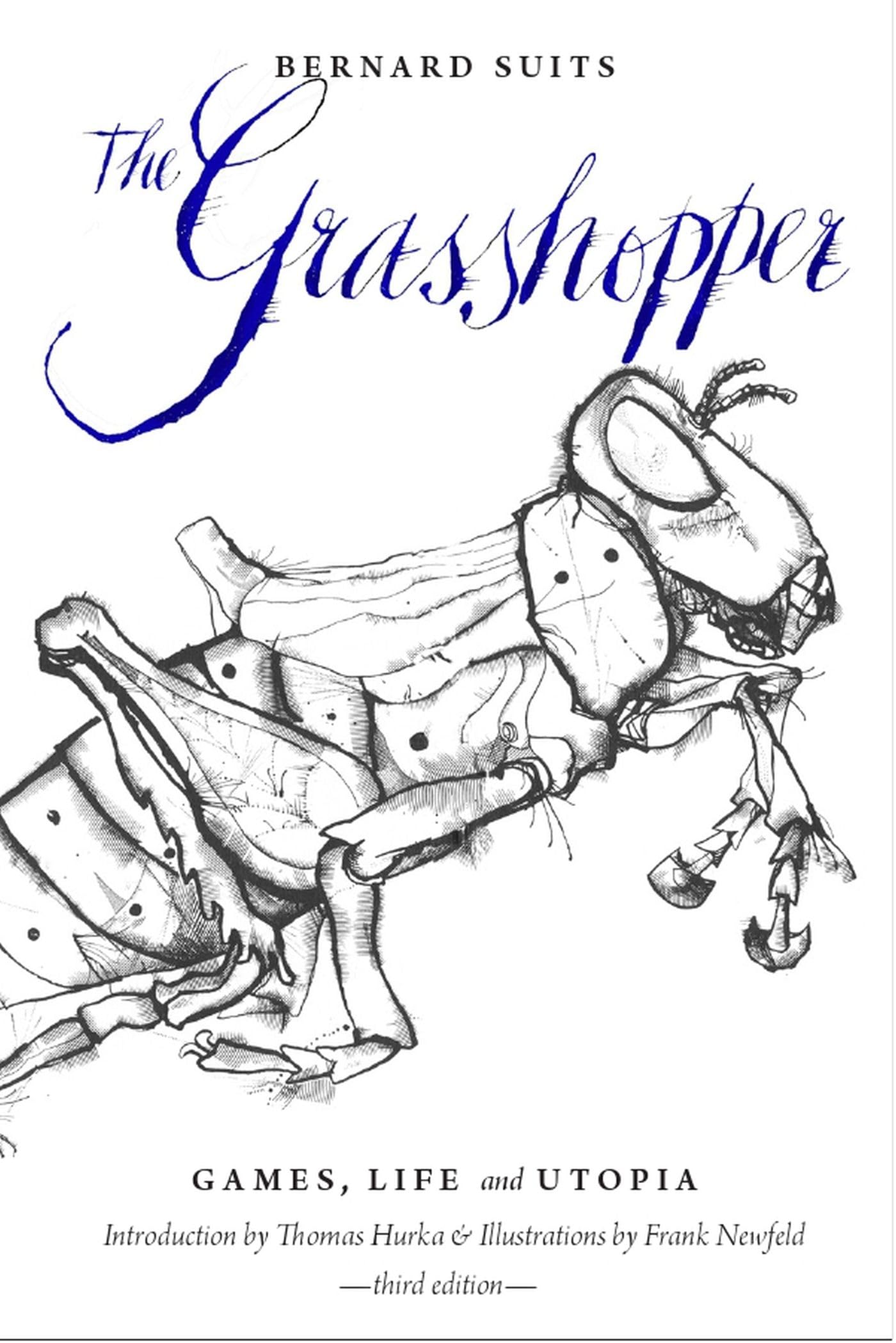
Title
The Grasshopper Third Edition: Games, Life And Utopia,Used
Sold by Ergodebooks, an authorized reseller.
Returns accepted within 30 days | support@ergodebooks.com
Shipping Information
- Free Standard Shipping — United States only
- Processing Time: 3–5 business days
- Estimated Delivery: 6–10 business days after dispatch
- Double-boxed, fully insured & discreetly packaged
- Tracking number sent via email once dispatched
Returns & Refund
Returns accepted within 30 days of delivery.
Damaged or Defective Item
Free return shipping + replacement or full refund
Wrong Item Received
Free return shipping + replacement or full refund
Change of Mind
Return shipping at customer's expense · 25% restocking fee applies
Payment Option

In the mid twentieth century the philosopher Ludwig Wittgenstein famously asserted that games are indefinable; there are no common threads that link them all. Nonsense, said the sensible Bernard Suits: playing a game is a voluntary attempt to overcome unnecessary obstacles. The short book Suits wrote demonstrating precisely that is as playful as it is insightful, as stimulating as it is delightful. Through the jocular voice of Aesop's Grasshopper, a shiftless but thoughtful practitioner of applied entomology, Suits not only argues that games can be meaningfully defined; he also suggests that playing games is a central part of the ideal of human existence, and so games belong at the heart of any vision of Utopia.This new edition of The Grasshopper includes illustrations from Frank Newfeld created for the books original publication, as well as an introduction by Thomas Hurka and a new appendix on the meaning of play.
⚠️ WARNING (California Proposition 65):
This product may contain chemicals known to the State of California to cause cancer, birth defects, or other reproductive harm.
For more information, please visit www.P65Warnings.ca.gov.
- Q: What is the page count of The Grasshopper - Third Edition? A: The book has two hundred sixty-two pages. This length provides a comprehensive exploration of games and philosophy.
- Q: What are the dimensions of this book? A: The dimensions are six inches in length, zero point five one inches in width, and nine point zero two inches in height. These measurements make it a portable read.
- Q: What type of binding does this book have? A: The Grasshopper is published in paperback binding. This makes it lightweight and easy to handle.
- Q: Who is the author of The Grasshopper - Third Edition? A: The author is Bernard Suits. He presents philosophical ideas through a playful narrative.
- Q: Is this book suitable for all ages? A: Yes, it is suitable for a broad audience. Its themes are engaging for both adults and younger readers interested in philosophy and games.
- Q: How do I read and understand the concepts in this book? A: You can start by reading it cover to cover or focusing on chapters that interest you. The playful narrative style makes complex concepts more accessible.
- Q: Is there an introduction in this edition? A: Yes, it includes an introduction by Thomas Hurka. This provides valuable context for understanding Suits' arguments.
- Q: Are there illustrations in The Grasshopper - Third Edition? A: Yes, the book features illustrations from Frank Newfeld. These visuals enhance the reading experience and complement the text.
- Q: How should I store this book to keep it in good condition? A: Store it upright in a cool, dry place away from direct sunlight. This helps preserve the binding and pages.
- Q: Can I clean the book if it gets dirty? A: Yes, you can gently wipe the cover with a damp cloth. Avoid using harsh chemicals to maintain the book's quality.
- Q: What if my copy of The Grasshopper arrives damaged? A: You should contact the seller for a return or exchange. Most sellers offer a satisfaction guarantee for damaged items.
- Q: How does this book compare to other philosophical texts on games? A: The Grasshopper stands out for its playful tone and unique perspective. Unlike many dense philosophical texts, it is accessible and engaging.
- Q: Is this book a good choice for someone new to philosophy? A: Yes, it is an excellent introduction to philosophical ideas about games. Its humorous approach makes it less intimidating for beginners.
- Q: What philosophical themes are explored in this book? A: The book explores themes of play, human existence, and the definition of games. It challenges readers to think critically about these concepts.
- Q: Does this book focus on specific types of games? A: No, it addresses games in a broad sense. Suits emphasizes the essential qualities that define all games rather than focusing on specific types.
- Q: How does the author argue for the importance of games in life? A: Suits argues that playing games is fundamental to the human experience. He posits that they contribute to our understanding of Utopia.