
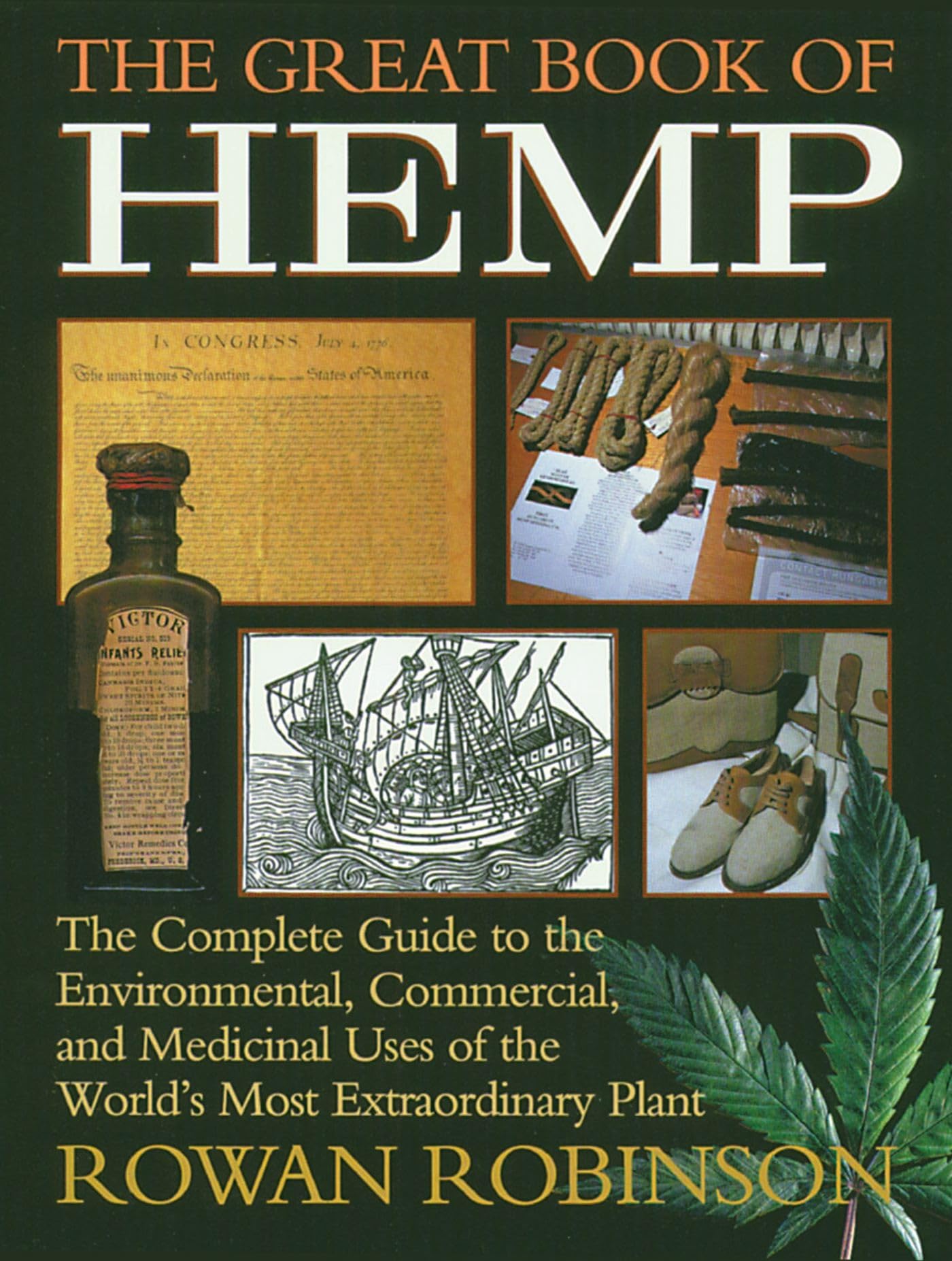
Title
The Great Book of Hemp: The Complete Guide to the Environmental, Commercial, and Medicinal Uses of the World's Most Extraordinar,Used
Sold by Ergodebooks, an authorized reseller.
Returns accepted within 30 days | support@ergodebooks.com
Shipping Information
- Free Standard Shipping — United States only
- Processing Time: 3–5 business days
- Estimated Delivery: 6–10 business days after dispatch
- Double-boxed, fully insured & discreetly packaged
- Tracking number sent via email once dispatched
Returns & Refund
Returns accepted within 30 days of delivery.
Damaged or Defective Item
Free return shipping + replacement or full refund
Wrong Item Received
Free return shipping + replacement or full refund
Change of Mind
Return shipping at customer's expense · 25% restocking fee applies
Payment Option

Hemp, Cannabis sativa, has been called the world's most versatile plant. Materials made from hemp fiber have been discovered in tombs dating back to 7000 B.C. During the Middle Ages hemp was used to treat fevers, insomnia, and malaria. Columbus's ships had sails of hemp, and during colonial times it was universally grown because its strong fibers made superior ropes, sails, cloth, and paper. In fact, hemp was used for money in most of the Americas from 1631 until the early 1800s, and the original drafts of the Declaration of Independence and the Constitution were written on hemp paper.As a food, the oil from hemp seeds has the highest percentage of essential fatty acids and the lowest percentage of saturated fats. Britain and Canada have recently lifted bans on growing industrial hemp and today it is reappearing in the marketplace in an amazing array of products: from lipsalve, jeans, salad oil, and cheese to paper products, composite fiberboard, and biomass fuel.This illustrated, easytoread guide covers all aspects of hemp: The history of its cultivation worldwide Its role as a source of renewable energy and as an alternative for paper manufacturing and fossil fuels Its versatility as a fiber Its many nutritional and medicinal uses Examines the physiological and psychological effects of marijuana use in recreation and therapy A comprehensive resource section includes information on organizations involved in legalizing hemp, product suppliers, and an annotated bibliography.
⚠️ WARNING (California Proposition 65):
This product may contain chemicals known to the State of California to cause cancer, birth defects, or other reproductive harm.
For more information, please visit www.P65Warnings.ca.gov.
- Q: What is the main focus of 'The Great Book of Hemp'? A: 'The Great Book of Hemp' provides a comprehensive guide to the environmental, commercial, and medicinal uses of hemp, showcasing its versatility as a plant throughout history.
- Q: What topics are covered in the book? A: The book covers the history of hemp cultivation, its role in renewable energy, its uses as a fiber, nutritional and medicinal benefits, and the effects of marijuana in recreation and therapy.
- Q: Who is the author of this book? A: The book is authored by Rowan Robinson.
- Q: When was 'The Great Book of Hemp' published? A: 'The Great Book of Hemp' was published on November 1, 1995.
- Q: What is the binding type of this book? A: This book is available in a paperback binding.
- Q: How many pages does the book have? A: 'The Great Book of Hemp' contains 256 pages.
- Q: Is this book suitable for beginners? A: Yes, the book is illustrated and written in an easy-to-read format, making it suitable for beginners interested in learning about hemp.
- Q: What are some practical applications of hemp mentioned in the book? A: The book discusses hemp's applications in products like lip salves, jeans, salad oil, cheese, paper, composite fiberboard, and biomass fuel.
- Q: Does the book include any resources for further information? A: Yes, it includes a comprehensive resource section with information on organizations involved in legalizing hemp and product suppliers.
- Q: What makes hemp an important plant historically? A: Historically, hemp has been used for a variety of purposes, including making ropes, sails, cloth, and even paper, and it was utilized as currency in the Americas from 1631 to the early 1800s.