
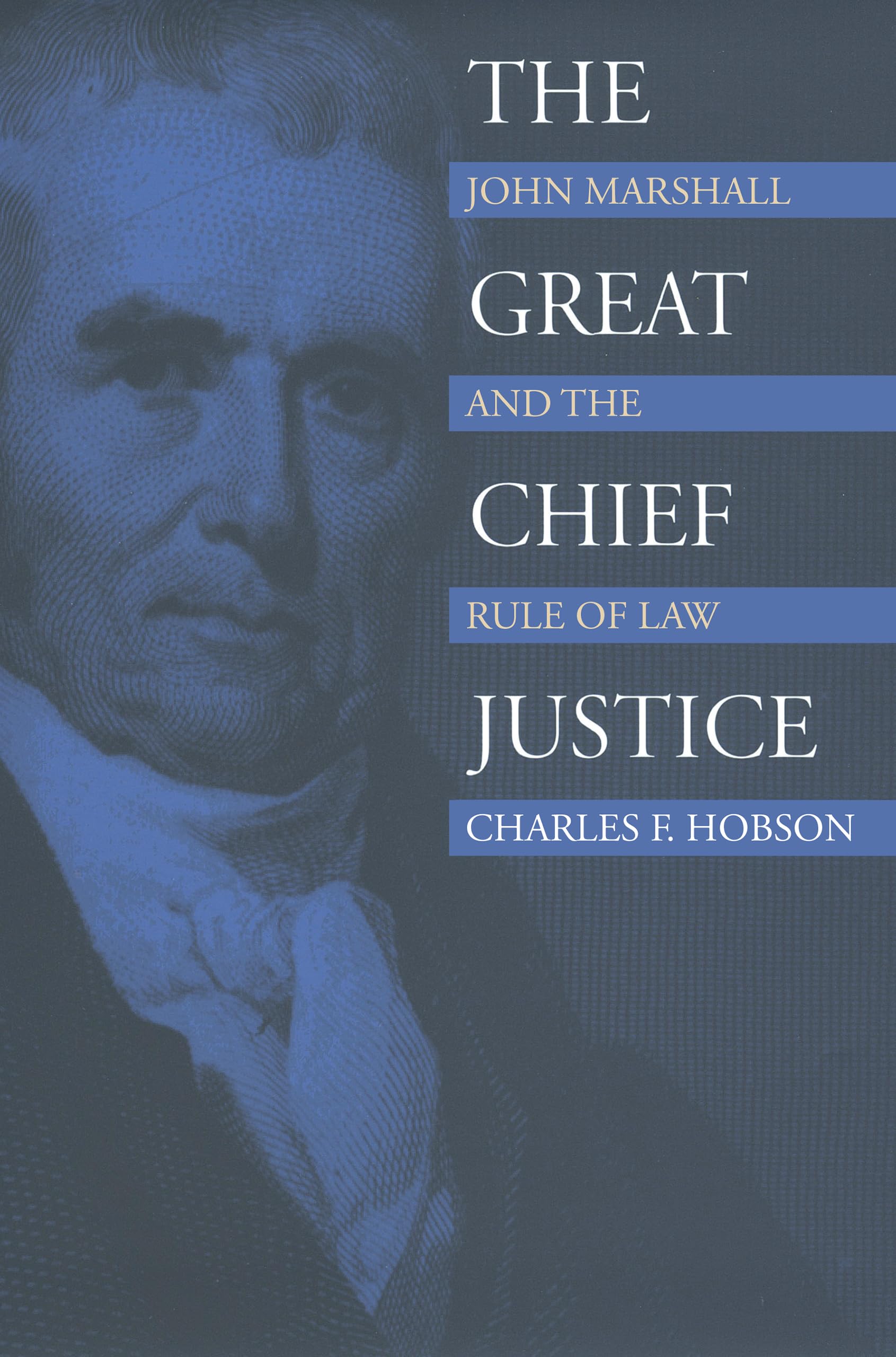
Title
The Great Chief Justice: John Marshall and the Rule of Law (American Political Thought),New
Sold by Ergodebooks, an authorized reseller.
Returns accepted within 30 days | support@ergodebooks.com
Shipping Information
- Free Standard Shipping — United States only
- Processing Time: 3–5 business days
- Estimated Delivery: 6–10 business days after dispatch
- Double-boxed, fully insured & discreetly packaged
- Tracking number sent via email once dispatched
Returns & Refund
Returns accepted within 30 days of delivery.
Damaged or Defective Item
Free return shipping + replacement or full refund
Wrong Item Received
Free return shipping + replacement or full refund
Change of Mind
Return shipping at customer's expense · 25% restocking fee applies
Payment Option

John Marshall remains one of the towering figures in the landscape of American law. From the Revolution to the age of Jackson, he played a critical role in defining the 'province of the judiciary' and the constitutional limits of legislative action. In this masterly study, Charles Hobson clarifies the coherence and thrust of Marshall's jurisprudence while keeping in sight the man as well as the jurist.Hobson argues that contrary to his critics, Marshall was no ideologue intent upon appropriating the lawmaking powers of Congress. Rather, he was deeply committed to a principled jurisprudence that was based on a steadfast devotion to a 'science of law' richly steeped in the common law tradition. As Hobson shows, such jurisprudence governed every aspect of Marshall's legal philosophy and court opinions, including his understanding of judicial review.The chief justice, Hobson contends, did not invent judicial review (as many have claimed) but consolidated its practice by adapting common law methods to the needs of a new nation. In practice, his use of judicial review was restrained, employed almost exclusively against acts of the state legislatures. Ultimately, he wielded judicial review to prevent the states from undermining the power of a national government still struggling to establish sovereignty at home and respect abroad.No chief justice and only one associate justice (William Douglas) served longer on the Supreme Court. But, as Hobson clearly shows, Marshall's deserved place in the pantheon of great American jurists rests far more upon principles than longevity. This book better than any other tells us why that's true and worthy of our attention.
⚠️ WARNING (California Proposition 65):
This product may contain chemicals known to the State of California to cause cancer, birth defects, or other reproductive harm.
For more information, please visit www.P65Warnings.ca.gov.
- Q: How many pages does the book have? A: The book has two hundred seventy-two pages. It's a comprehensive study of John Marshall's impact on American law.
- Q: What is the binding type of the book? A: The book is a paperback edition. This makes it lightweight and easy to handle for reading.
- Q: What are the dimensions of the book? A: The book measures six point twenty-six inches in length, zero point seventy-five inches in width, and nine point twenty-five inches in height. These dimensions make it a convenient size for storage and portability.
- Q: Who is the author of the book? A: The author is Charles F. Hobson. He provides an in-depth analysis of John Marshall's contributions to the judiciary.
- Q: What genre does this book belong to? A: The book falls under the category of American Political Thought. It explores significant themes in law and justice.
- Q: Is this book suitable for beginners in law? A: Yes, the book is suitable for beginners. Hobson's writing makes complex legal concepts accessible to new readers.
- Q: What is the main theme of the book? A: The main theme revolves around John Marshall's role in defining the judiciary's authority. It emphasizes his principled approach to law.
- Q: Can I use this book for academic purposes? A: Yes, this book is ideal for academic use. It provides detailed insights into judicial practices and historical context.
- Q: Is this book appropriate for high school students? A: Yes, it is appropriate for high school students. The content is engaging and informative for those studying American history or government.
- Q: How should I store the book to keep it in good condition? A: Store the book in a cool, dry place away from direct sunlight. This helps preserve its cover and pages.
- Q: Is there a warranty or return policy for the book? A: Typically, there is no warranty for books. However, check the retailer's return policy for details on damaged copies.
- Q: What should I do if the book arrives damaged? A: If the book arrives damaged, contact the retailer immediately. Most offer a return or exchange policy for such issues.
- Q: What type of readers would enjoy this book? A: Readers interested in legal history, politics, and judicial practices would enjoy this book. It caters to both casual and scholarly audiences.
- Q: Is there any adult content in the book? A: No, there is no adult content in the book. It focuses on historical and legal analysis suitable for all audiences.
- Q: Does the book offer any insights on modern law? A: Yes, the book provides insights that are relevant to understanding contemporary legal systems. It discusses foundational principles that still apply today.