
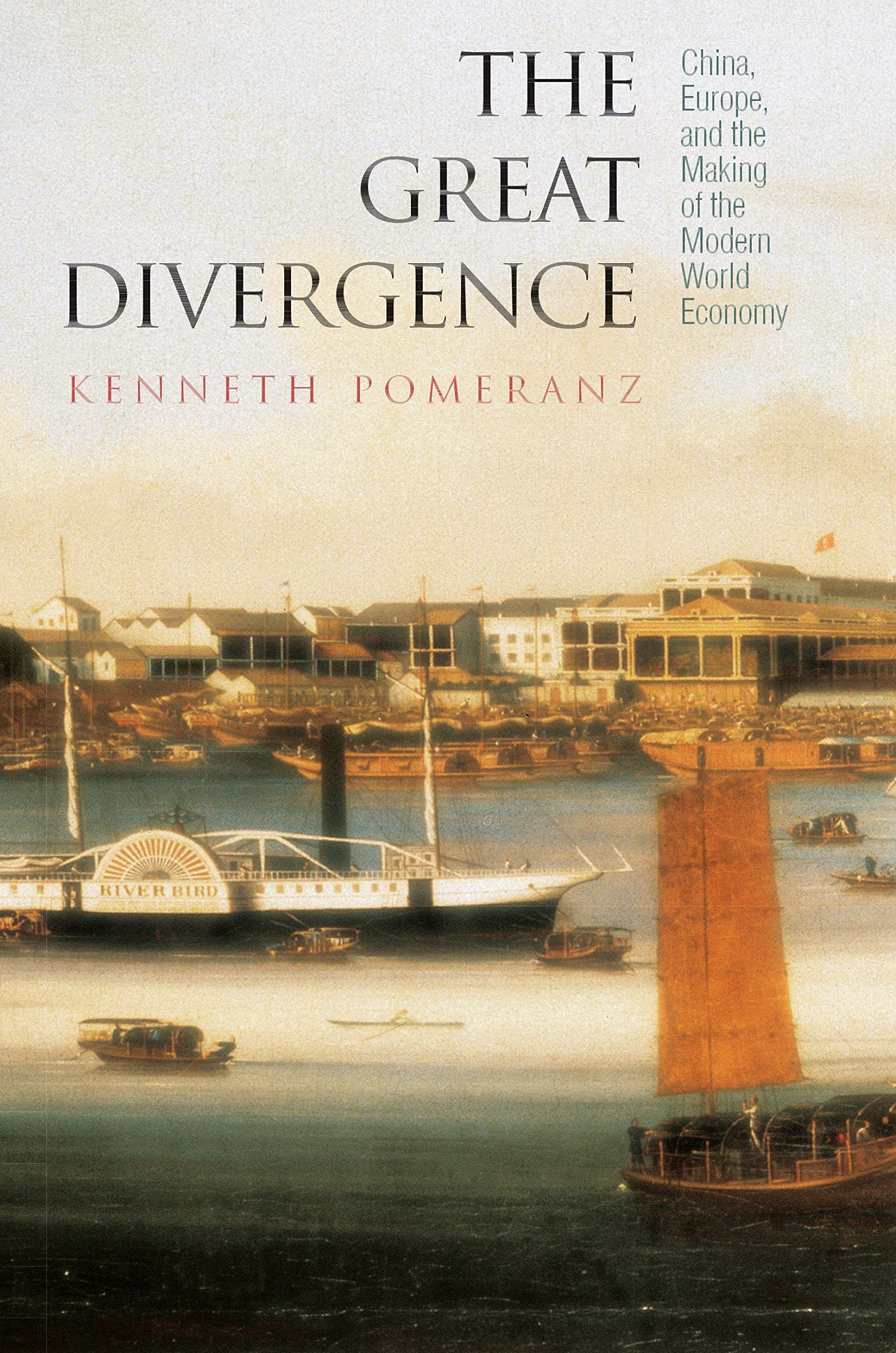
Title
The Great Divergence: China, Europe, And The Making Of The Modern World Economy.,New
Sold by Ergodebooks, an authorized reseller.
Returns accepted within 30 days | support@ergodebooks.com
Shipping Information
- Free Standard Shipping — United States only
- Processing Time: 3–5 business days
- Estimated Delivery: 6–10 business days after dispatch
- Double-boxed, fully insured & discreetly packaged
- Tracking number sent via email once dispatched
Returns & Refund
Returns accepted within 30 days of delivery.
Damaged or Defective Item
Free return shipping + replacement or full refund
Wrong Item Received
Free return shipping + replacement or full refund
Change of Mind
Return shipping at customer's expense · 25% restocking fee applies
Payment Option

The Great Divergence Brings New Insight To One Of The Classic Questions Of History: Why Did Sustained Industrial Growth Begin In Northwest Europe, Despite Surprising Similarities Between Advanced Areas Of Europe And East Asia? As Ken Pomeranz Shows, As Recently As 1750, Parallels Between These Two Parts Of The World Were Very High In Life Expectancy, Consumption, Product And Factor Markets, And The Strategies Of Households. Perhaps Most Surprisingly, Pomeranz Demonstrates That The Chinese And Japanese Cores Were No Worse Off Ecologically Than Western Europe. Core Areas Throughout The Eighteenthcentury Old World Faced Comparable Local Shortages Of Landintensive Products, Shortages That Were Only Partly Resolved By Trade.Pomeranz Argues That Europe'S Nineteenthcentury Divergence From The Old World Owes Much To The Fortunate Location Of Coal, Which Substituted For Timber. This Made Europe'S Failure To Use Its Land Intensively Much Less Of A Problem, While Allowing Growth In Energyintensive Industries. Another Crucial Difference That He Notes Has To Do With Trade. Fortuitous Global Conjunctures Made The Americas A Greater Source Of Needed Primary Products For Europe Than Any Asian Periphery. This Allowed Northwest Europe To Grow Dramatically In Population, Specialize Further In Manufactures, And Remove Labor From The Land, Using Increased Imports Rather Than Maximizing Yields. Together, Coal And The New World Allowed Europe To Grow Along Resourceintensive, Laborsaving Paths.Meanwhile, Asia Hit A Culdesac. Although The East Asian Hinterlands Boomed After 1750, Both In Population And In Manufacturing, This Growth Prevented These Peripheral Regions From Exporting Vital Resources To The Clothproducing Yangzi Delta. As A Result, Growth In The Core Of East Asia'S Economy Essentially Stopped, And What Growth Did Exist Was Forced Along Laborintensive, Resourcesaving Pathspaths Europe Could Have Been Forced Down, Too, Had It Not Been For Favorable Resource Stocks From Underground And Overseas.
⚠️ WARNING (California Proposition 65):
This product may contain chemicals known to the State of California to cause cancer, birth defects, or other reproductive harm.
For more information, please visit www.P65Warnings.ca.gov.
- Q: What is the page count of 'The Great Divergence'? A: This book has three hundred ninety-two pages. It provides a comprehensive exploration of historical economic trends.
- Q: What are the dimensions of 'The Great Divergence'? A: The book measures six point two six inches in length, zero point seven five inches in width, and nine point two five inches in height. It's a standard paperback size.
- Q: What type of binding does 'The Great Divergence' have? A: This book is available in paperback binding. It is designed for easy handling and accessibility.
- Q: Who is the author of 'The Great Divergence'? A: The author is Kenneth Pomeranz. He is known for his research in economic history and historical economic development.
- Q: What is the genre of 'The Great Divergence'? A: The genre is economics. The book delves into the historical economic disparities between Europe and Asia.
- Q: Is 'The Great Divergence' suitable for academic study? A: Yes, it is suitable for academic study. It provides valuable insights into historical economic questions.
- Q: How do I read 'The Great Divergence' effectively? A: To read this book effectively, consider taking notes on key arguments and themes. Focus on the comparisons made between Europe and East Asia.
- Q: Is 'The Great Divergence' appropriate for high school students? A: Yes, it is appropriate for high school students. It can enhance their understanding of global economic history.
- Q: Can beginners in economics understand 'The Great Divergence'? A: Yes, beginners can understand it. The book presents complex ideas in a manner that is accessible to those new to economics.
- Q: How should I store 'The Great Divergence' to keep it in good condition? A: Store the book in a cool, dry place away from direct sunlight. Keep it on a shelf to prevent bending or damage.
- Q: Does 'The Great Divergence' contain any sensitive material? A: No, the book does not contain sensitive material. It focuses on historical economic analysis.
- Q: What if 'The Great Divergence' arrives damaged? A: If it arrives damaged, you should contact the seller for a return or exchange. Ensure to provide evidence of the damage.
- Q: Is there a warranty for 'The Great Divergence'? A: Typically, books do not come with a warranty. However, check the seller's return policy for more details.
- Q: What is the return policy for 'The Great Divergence'? A: The return policy may vary by seller. It's advisable to review the specific seller’s policy before purchase.
- Q: How do I handle 'The Great Divergence' to avoid damage? A: Handle the book gently, avoiding excessive bending of the spine. Use bookmarks instead of folding pages to mark your place.
- Q: What makes 'The Great Divergence' a unique read? A: Its unique approach lies in comparing the economic histories of China and Europe. It challenges conventional views on industrial growth.