
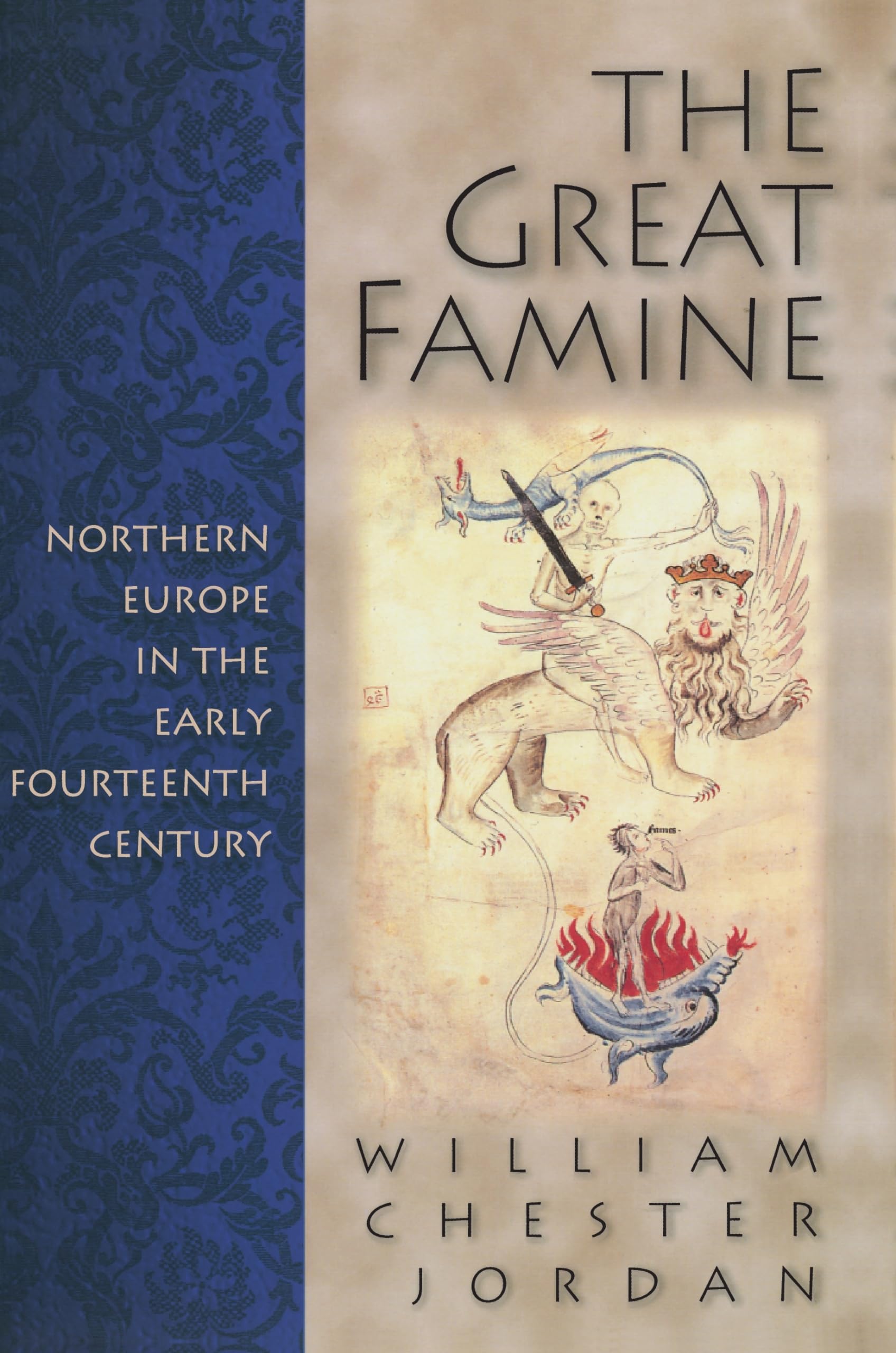
Title
The Great Famine
Sold by Ergodebooks, an authorized reseller.
Returns accepted within 30 days | support@ergodebooks.com
Shipping Information
- Free Standard Shipping — United States only
- Processing Time: 3–5 business days
- Estimated Delivery: 6–10 business days after dispatch
- Double-boxed, fully insured & discreetly packaged
- Tracking number sent via email once dispatched
Returns & Refund
Returns accepted within 30 days of delivery.
Damaged or Defective Item
Free return shipping + replacement or full refund
Wrong Item Received
Free return shipping + replacement or full refund
Change of Mind
Return shipping at customer's expense · 25% restocking fee applies
Payment Option

The Horrors Of The Great Famine (13151322), One Of The Severest Catastrophes Ever To Strike Northern Europe, Lived On For Centuries In The Minds Of Europeans Who Recalled Tales Of Widespread Hunger, Class Warfare, Epidemic Disease, Frighteningly High Mortality, And Unspeakable Crimes. Until Now, No One Has Offered A Perspective Of What Daily Life Was Actually Like Throughout The Entire Region Devastated By This Crisis, Nor Has Anyone Probed Far Into Its Causes. Here, The Distinguished Historian William Jordan Provides The First Comprehensive Inquiry Into The Famine From Ireland To Western Poland, From Scandinavia To Central France And Western Germany. He Produces A Rich Cultural History Of Medieval Community Life, Drawing His Evidence From Such Sources As Meteorological And Agricultural Records, Accounts Kept By Monasteries Providing For The Needy, And Documentation Of Military Campaigns. Whereas There Has Been A Tendency To Describe The Food Shortages As A Result Of Simply Bad Weather Or Else Poor Economic Planning, Jordan Sets The Stage So That We See The Complex Interplay Of Social And Environmental Factors That Caused This Particular Disaster And Allowed It To Continue For So Long.Jordan Begins With A Description Of Medieval Northern Europe At Its Demographic Peak Around 1300, By Which Time The Region Had Achieved A Sophisticated Level Of Economic Integration. He Then Looks At Problems That, When Combined With Years Of Inundating Rains And Brutal Winters, Gnawed Away At Economic Stability. From Animal Diseases And Harvest Failures To Volatile Prices, Class Antagonism, And Distribution Breakdowns Brought On By Constant War, Northern Europeans Felt Helplessly Besieged By Acts Of An Angry Godalthough A Cessation Of War And A More Equitable Distribution Of Resources Might Have Lessened The Severity Of The Food Shortages.Throughout Jordan Interweaves Vivid Historical Detail With A Sharp Analysis Of Why Certain Responses To The Famine Failed. He Ultimately Shows That While The Northern European Economy Did Recover Quickly, The Great Famine Ushered In A Period Of Social Instability That Had Serious Repercussions For Generations To Come.
⚠️ WARNING (California Proposition 65):
This product may contain chemicals known to the State of California to cause cancer, birth defects, or other reproductive harm.
For more information, please visit www.P65Warnings.ca.gov.
- Q: How many pages does 'The Great Famine' have? A: This book has three hundred twenty-eight pages. It provides a comprehensive look at the historical context of the Great Famine.
- Q: What is the binding type of 'The Great Famine'? A: The binding type is paperback. This makes it lightweight and easy to handle for readers.
- Q: Who is the author of 'The Great Famine'? A: The author is William Chester Jordan. He is a distinguished historian specializing in medieval European studies.
- Q: What is the main subject of 'The Great Famine'? A: The main subject is the Great Famine that occurred from 1315 to 1322 in northern Europe. The book explores its causes and impacts on society.
- Q: Is 'The Great Famine' suitable for younger audiences? A: Yes, it is appropriate for older teens and adults. The book contains historical analysis that may be complex for younger readers.
- Q: How should I read 'The Great Famine' for the best understanding? A: It is recommended to read it in a quiet environment. Take notes on key events and themes for better retention.
- Q: What is the best way to store 'The Great Famine'? A: Store it upright on a bookshelf. Keep it in a dry place to prevent moisture damage.
- Q: How do I care for 'The Great Famine' to keep it in good condition? A: Handle it carefully and avoid exposing it to direct sunlight. Keep it away from food and drinks to avoid stains.
- Q: What if 'The Great Famine' arrives damaged? A: You can return it within thirty days for a refund or replacement. Make sure to keep the original packaging.
- Q: Is 'The Great Famine' appropriate for academic studies? A: Yes, it is suitable for academic studies. It offers detailed historical research and insights that are valuable for students.
- Q: How does 'The Great Famine' compare to other historical books? A: It provides a unique perspective on the Great Famine unlike other historical texts. It focuses on daily life and social factors.
- Q: Can 'The Great Famine' be used as a reference for historical research? A: Yes, it is a valuable reference for historical research. The book includes extensive documentation and cultural analysis.
- Q: What kind of historical details are included in 'The Great Famine'? A: It includes meteorological records, agricultural data, and accounts from monasteries. These details enrich the cultural history presented.
- Q: Is there a glossary or index in 'The Great Famine'? A: Yes, the book includes an index. This feature helps locate specific topics and enhances navigation through the content.
- Q: What audience is 'The Great Famine' primarily targeted at? A: It is primarily targeted at historians and students of medieval studies. However, general readers interested in history will also find it engaging.