
Title
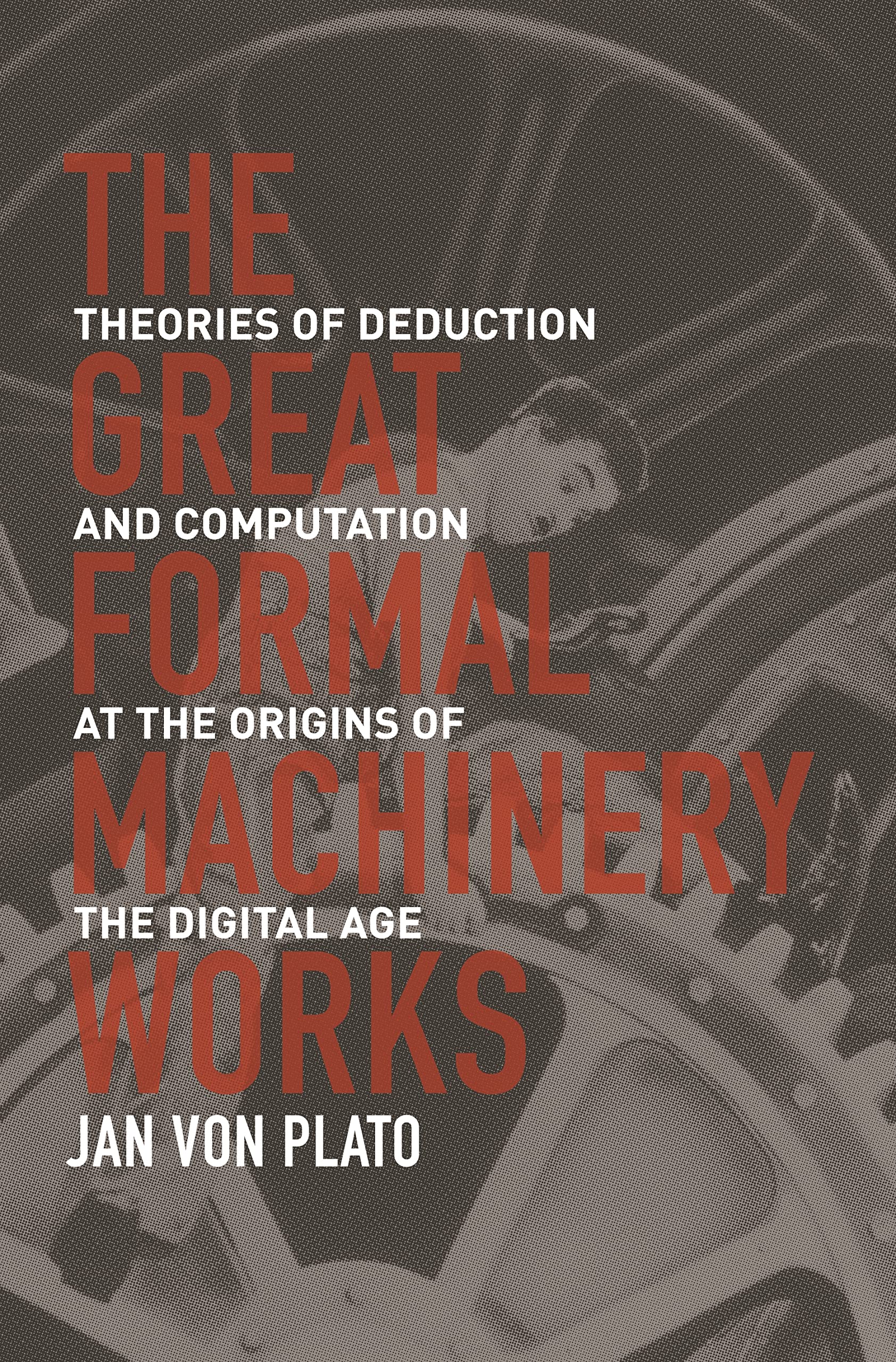
The Great Formal Machinery Works: Theories Of Deduction And Computation At The Origins Of The Digital Age,Used
Sold by Ergodebooks, an authorized reseller.
Returns accepted within 30 days | support@ergodebooks.com
Shipping Information
- Free Standard Shipping — United States only
- Processing Time: 3–5 business days
- Estimated Delivery: 6–10 business days after dispatch
- Double-boxed, fully insured & discreetly packaged
- Tracking number sent via email once dispatched
Returns & Refund
Returns accepted within 30 days of delivery.
Damaged or Defective Item
Free return shipping + replacement or full refund
Wrong Item Received
Free return shipping + replacement or full refund
Change of Mind
Return shipping at customer's expense · 25% restocking fee applies
Payment Option

The information age owes its existence to a littleknown but crucial development, the theoretical study of logic and the foundations of mathematics. The Great Formal Machinery Works draws on original sources and rare archival materials to trace the history of the theories of deduction and computation that laid the logical foundations for the digital revolution.Jan von Plato examines the contributions of figures such as Aristotle; the nineteenthcentury German polymath Hermann Grassmann; George Boole, whose Boolean logic would prove essential to programming languages and computing; Ernst Schrder, best known for his work on algebraic logic; and Giuseppe Peano, cofounder of mathematical logic. Von Plato shows how the idea of a formal proof in mathematics emerged gradually in the second half of the nineteenth century, hand in hand with the notion of a formal process of computation. A turning point was reached by 1930, when Kurt Gdel conceived his celebrated incompleteness theorems. They were an enormous boost to the study of formal languages and computability, which were brought to perfection by the end of the 1930s with precise theories of formal languages and formal deduction and parallel theories of algorithmic computability. Von Plato describes how the first theoretical ideas of a computer soon emerged in the work of Alan Turing in 1936 and John von Neumann some years later.Shedding new light on this crucial chapter in the history of science, The Great Formal Machinery Works is essential reading for students and researchers in logic, mathematics, and computer science.
⚠️ WARNING (California Proposition 65):
This product may contain chemicals known to the State of California to cause cancer, birth defects, or other reproductive harm.
For more information, please visit www.P65Warnings.ca.gov.