
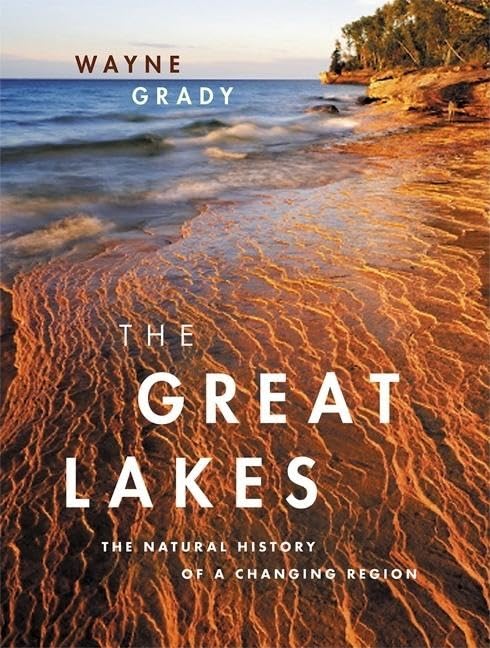
Title
The Great Lakes: The Natural History of a Changing Region (David Suzuki Institute),Used
Sold by Ergodebooks, an authorized reseller.
Returns accepted within 30 days | support@ergodebooks.com
Shipping Information
- Free Standard Shipping — United States only
- Processing Time: 3–5 business days
- Estimated Delivery: 6–10 business days after dispatch
- Double-boxed, fully insured & discreetly packaged
- Tracking number sent via email once dispatched
Returns & Refund
Returns accepted within 30 days of delivery.
Damaged or Defective Item
Free return shipping + replacement or full refund
Wrong Item Received
Free return shipping + replacement or full refund
Change of Mind
Return shipping at customer's expense · 25% restocking fee applies
Payment Option

Ever since French explorer Samuel de Champlains first taste of what he called la mer douce the freshwater sea the Great Lakes have been admired, exploited, and renewed. This vast region is a study in contrasts: a hub of industry thats the resting spot for billions of migrating birds. 40 million residents, immense untamed forests. 95 percent of North Americas fresh water and a dumping ground for poisonous wastes. The Great Lakes is an authoritative, accessible look at an ecosystem in eternal flux. Written by one of North Americas most acclaimed science and nature writers, the book explores the areas geological formation and its role in human history; its diverse plant, bird, and animal species; and its significant physical, climatic, and environmental features. This captivating tribute to the Great Lakes region is also an essential guide to the challenge of preserving the natural world.
⚠️ WARNING (California Proposition 65):
This product may contain chemicals known to the State of California to cause cancer, birth defects, or other reproductive harm.
For more information, please visit www.P65Warnings.ca.gov.
- Q: What are the dimensions of the book? A: The book measures seven point eight eight inches in length, one point zero seven inches in width, and ten point two four inches in height. This size makes it easy to handle and read.
- Q: How many pages does this book have? A: This book contains three hundred twenty pages. This length provides a comprehensive overview of the Great Lakes region.
- Q: What type of binding does the book have? A: The book is bound in hardcover. This durable binding ensures that the book will last through multiple readings.
- Q: Who is the author of this book? A: The author is Wayne Grady, a well-known science and nature writer. His expertise adds depth to the exploration of the Great Lakes.
- Q: What is the main subject of the book? A: The book explores the natural history and ecological significance of the Great Lakes region. It also discusses human interactions with this vast freshwater ecosystem.
- Q: Is this book suitable for all ages? A: Yes, this book is suitable for a wide range of ages. It offers accessible insights into the natural world for both young readers and adults.
- Q: How does this book approach environmental issues? A: The book discusses the challenges of preserving the Great Lakes ecosystem. It highlights both ecological and human factors affecting this vital region.
- Q: Is this book a good resource for students? A: Yes, this book serves as an excellent resource for students studying environmental science or geography. Its detailed analysis is educational and informative.
- Q: What condition is the used book in? A: The book is listed as 'Used Book in Good Condition.' This generally means it is intact and readable, though it may show some signs of wear.
- Q: How should I store this book? A: Store the book in a cool, dry place away from direct sunlight. This will help preserve its condition over time.
- Q: Can I easily read this book outdoors? A: Yes, the book is portable and can be easily read outdoors. Its hardcover protects it from minor environmental factors.
- Q: What makes this book unique? A: The book combines scientific facts with engaging narratives. It offers a unique perspective on the Great Lakes' natural history.
- Q: Does this book contain illustrations or maps? A: The book includes illustrations and maps that enhance understanding of the Great Lakes' geography and ecology. This visual aid complements the text.
- Q: Is there a specific reading level for this book? A: The book is suitable for high school students and above. Its informative content is engaging for general readers as well.
- Q: What topics are covered in the book? A: The book covers geological formation, diverse species, and environmental features of the Great Lakes. It provides a well-rounded view of the region.
- Q: What is the book's publisher? A: The publisher of the book is Greystone Books. They are known for quality publications in nature and environmental literature.