
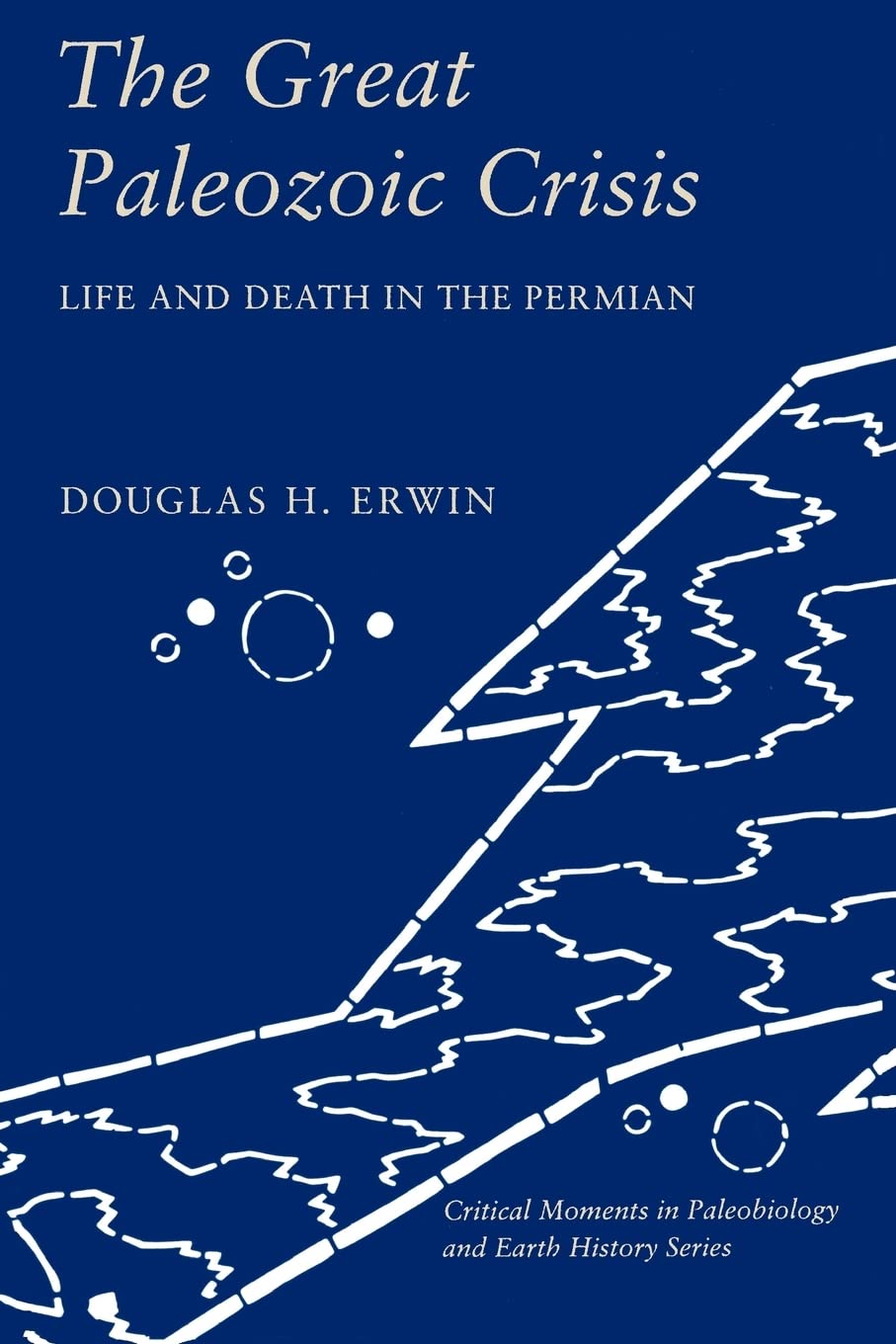
Title
The Great Paleozoic Crisis,New
Sold by Ergodebooks, an authorized reseller.
Returns accepted within 30 days | support@ergodebooks.com
Shipping Information
- Free Standard Shipping — United States only
- Processing Time: 3–5 business days
- Estimated Delivery: 6–10 business days after dispatch
- Double-boxed, fully insured & discreetly packaged
- Tracking number sent via email once dispatched
Returns & Refund
Returns accepted within 30 days of delivery.
Damaged or Defective Item
Free return shipping + replacement or full refund
Wrong Item Received
Free return shipping + replacement or full refund
Change of Mind
Return shipping at customer's expense · 25% restocking fee applies
Payment Option

Carefully Examines The Events Recorded At The Major Permotriassic Boundary Sections And Documents The Patterns Of Extinction And Survival Among The Major Groups Of Marine And Terrestrial Plants And Animals. Erwin Also Provides A Detailed Summary Of The Climatic, Geologic, Geophysical And Geochemical Events Of The Late Permian And Early Triassic.
⚠️ WARNING (California Proposition 65):
This product may contain chemicals known to the State of California to cause cancer, birth defects, or other reproductive harm.
For more information, please visit www.P65Warnings.ca.gov.
- Q: What is the page count of 'The Great Paleozoic Crisis'? A: This book contains three hundred twenty-seven pages. It offers a comprehensive overview of the Permo-Triassic boundary events.
- Q: What are the dimensions of this book? A: The dimensions are five point nine eight inches in length, zero point seven five inches in width, and eight point nine eight inches in height. These dimensions make it a convenient size for reading.
- Q: What type of binding does 'The Great Paleozoic Crisis' have? A: This book is paperback bound. This binding style is lightweight and easy to handle.
- Q: Who is the author of 'The Great Paleozoic Crisis'? A: The author is Douglas Erwin. He is well-regarded in the field of paleontology.
- Q: What category does this book fall under? A: This book is categorized under Paleontology. It explores significant historical geological events.
- Q: Is this book suitable for beginners in paleontology? A: Yes, this book is suitable for beginners. It provides detailed explanations of complex topics in an accessible manner.
- Q: How does this book help understand extinction patterns? A: This book carefully examines extinction and survival patterns among various species. It details the major events at the Permo-Triassic boundary.
- Q: What topics are covered in 'The Great Paleozoic Crisis'? A: The book covers climatic, geologic, geophysical, and geochemical events. It provides a thorough examination of the Late Permian and Early Triassic.
- Q: Can this book be used as a reference for paleontology studies? A: Yes, it serves as an excellent reference for paleontology studies. The detailed summaries and analyses make it valuable for both students and researchers.
- Q: What is the author's expertise in paleontology? A: Douglas Erwin is a prominent paleontologist. He specializes in the patterns of extinction and survival throughout Earth's history.
- Q: How should I store 'The Great Paleozoic Crisis' to keep it in good condition? A: Store the book in a cool, dry place to prevent damage. Avoid exposure to direct sunlight to keep the pages from fading.
- Q: Is there a warranty or return policy for this book? A: Yes, there typically is a return policy for books. Check with the retailer for specific details regarding returns or exchanges.
- Q: What if my copy of 'The Great Paleozoic Crisis' arrives damaged? A: If the book arrives damaged, contact the retailer for a replacement. Most retailers have policies in place for such issues.
- Q: Are there any specific care instructions for maintaining this book? A: Keep the book dry and avoid bending the cover. This will help maintain its condition over time.
- Q: Is this book appropriate for children? A: While the book is educational, it is better suited for older children and adults. The complex topics may be challenging for younger readers.