If you have any questions, you are always welcome to contact us. We'll get back to you as soon as possible, withing 24 hours on weekdays.
Customer service
All questions about your order, return and delivery must be sent to our customer service team by e-mail at yourstore@yourdomain.com
Sale & Press
If you are interested in selling our products, need more information about our brand or wish to make a collaboration, please contact us at press@yourdomain.com
Help
If you have any questions, you are always welcome to contact us. We'll get back to you as soon as possible, withing 24 hours on weekdays.
Customer service
All questions about your order, return and delivery must be sent to our customer service team by e-mail at yourstore@yourdomain.com
Sale & Press
If you are interested in selling our products, need more information about our brand or wish to make a collaboration, please contact us at press@yourdomain.com
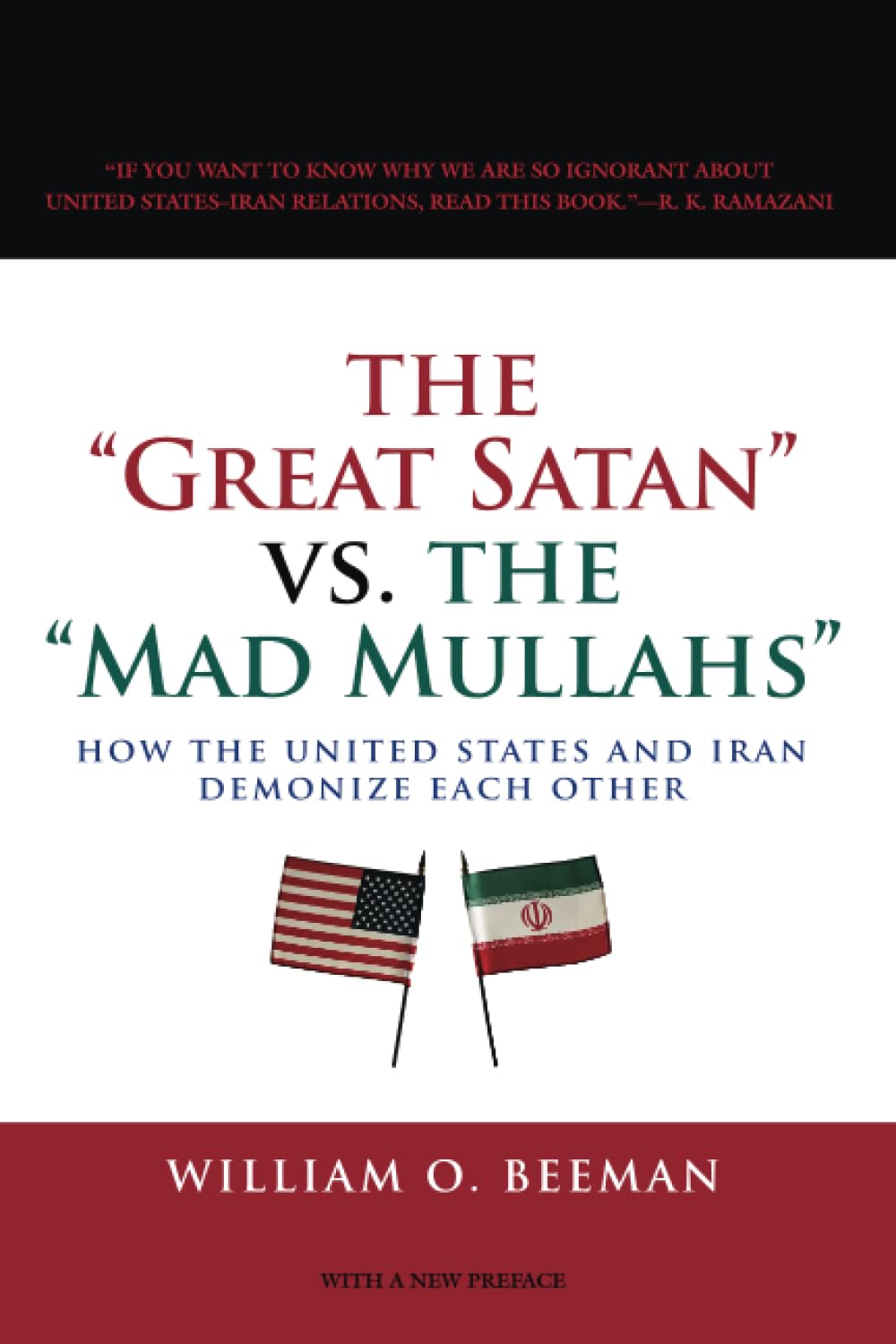
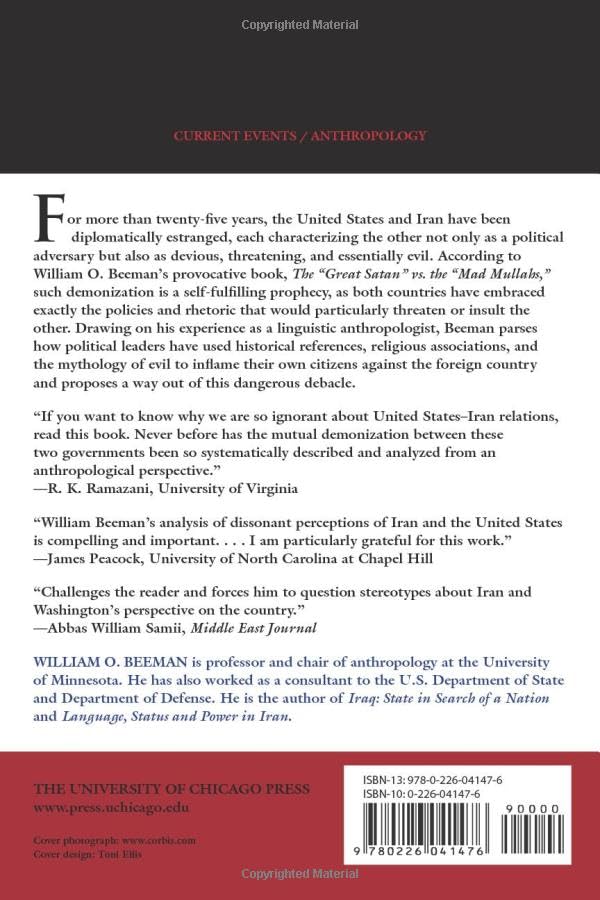
For more than twentyfive years, the United States and Iran have been diplomatically estranged, each characterizing the other not only as a political adversary, but also as devious, threatening, and essentially evil. According to William O. Beemans provocative book, The Great Satan vs. the Mad Mullahs, such demonization is a selffulfilling prophecy, as both countries have embraced exactly the policies and rhetoric that would particularly threaten or insult the other. Drawing on his experience as a linguistic anthropologist, Beeman parses how political leaders have used historical references, religious associations, and the mythology of evil to inflame their own citizens against the foreign country, and proposes a way out of this dangerous debacle.William Beemans analysis of dissonant perceptions of Iran and the USA is compelling and important. . . . I am particularly grateful for this work.James Peacock, University of North Carolina at Chapel Hill[Beeman] is more interested in informing the reader than in impressing his peers. The other strength of the book lies in the authors knowledge of Iranian history and culture. . . . It challenges the reader and forces him to question stereotypes about Iran and Washingtons perspective on the country.Abbas William Samii, Middle East Journal
⚠️ WARNING (California Proposition 65):
This product may contain chemicals known to the State of California to cause cancer,
birth defects, or other reproductive harm.
For MAP (Minimum Advertised Price) violations and Intellectual Property (IP) or Trademark concerns, please contact:
support@ergodebooks.com
⚠️ California Proposition 65 Warning: Some products sold on this website may expose you to chemicals known to the State of California to cause cancer, birth defects, or other reproductive harm. For more information, visit www.P65Warnings.ca.gov.