
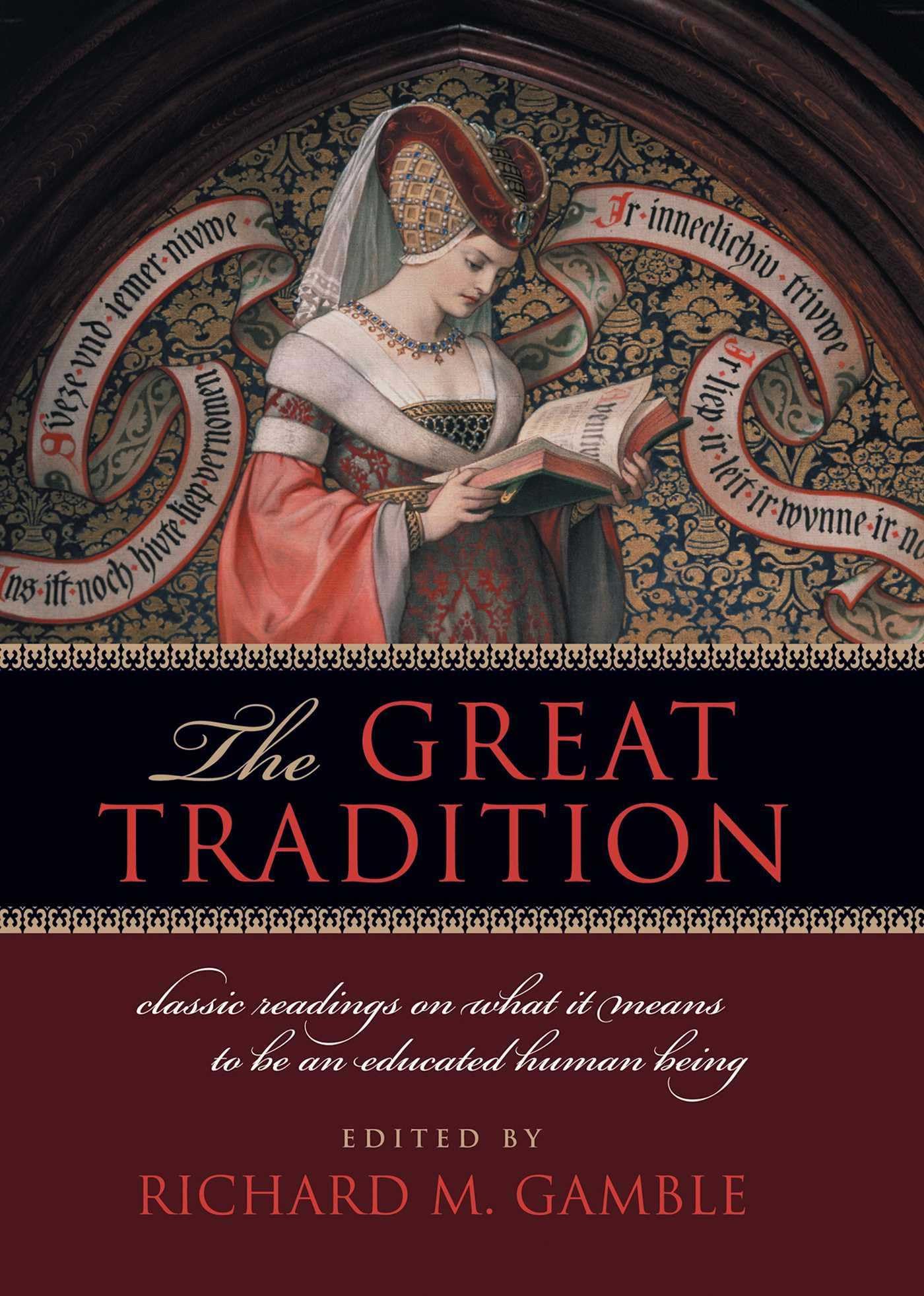
Title
The Great Tradition: Classic Readings on What It Means to Be an Educated Human Being,Used
Sold by Ergodebooks, an authorized reseller.
Returns accepted within 30 days | support@ergodebooks.com
Shipping Information
- Free Standard Shipping — United States only
- Processing Time: 3–5 business days
- Estimated Delivery: 6–10 business days after dispatch
- Double-boxed, fully insured & discreetly packaged
- Tracking number sent via email once dispatched
Returns & Refund
Returns accepted within 30 days of delivery.
Damaged or Defective Item
Free return shipping + replacement or full refund
Wrong Item Received
Free return shipping + replacement or full refund
Change of Mind
Return shipping at customer's expense · 25% restocking fee applies
Payment Option

Frustrated with the continuing educational crisis of our time, concerned parents, teachers, and students sense that true reform requires more than innovative classroom technology, standardized tests, or skills training. An older traditionthe Great Traditionof education in the West is waiting to be heard.Since antiquity, the Great Tradition has defined education first and foremost as the hard work of rightly ordering the human soul, helping it to love what it ought to love, and helping it to know itself and its maker. In the classical and Christian tradition, the formation of the soul in wisdom, virtue, and eloquence took precedence over all else, including instrumental training aimed at the inculcation of 'useful' knowledge.Edited by historian Richard Gamble, this anthology reconstructs a centurieslong conversation about the goals, conditions, and ultimate value of true education. Spanning more than two millennia, from the ancient Greeks to contemporary writers, it includes substantial excerpts from more than sixty seminal writings on education. Represented here are the wisdom and insight of such figures as Xenophon, Plato, Aristotle, Seneca, Cicero, Basil, Augustine, Hugh of St. Victor, Bonaventure, Thomas Aquinas, Martin Luther, John Calvin, Erasmus, Edmund Burke, John Henry Newman, Thomas Arnold, Albert Jay Nock, Dorothy Sayers, C. S. Lewis, and Eric Voegelin.In an unbroken chain of giving and receiving, The Great Tradition embraced the accumulated wisdom of the past and understood education as the initiation of students into a body of truth. This unique collection is designed to help parents, students, and teachers reconnect with this noble legacy, to articulate a coherent defense of the liberal arts tradition, and to do battle with the modern utilitarians and vocationalists who dominate educational theory and practice.
⚠️ WARNING (California Proposition 65):
This product may contain chemicals known to the State of California to cause cancer, birth defects, or other reproductive harm.
For more information, please visit www.P65Warnings.ca.gov.
- Q: What is 'The Great Tradition' about? A: 'The Great Tradition: Classic Readings on What It Means to Be an Educated Human Being' is an anthology edited by Richard Gamble that explores the historical conversation about the nature and value of true education, emphasizing the formation of the human soul and the liberal arts.
- Q: Who is the author of 'The Great Tradition'? A: The anthology is edited by Richard M. Gamble, who is a historian.
- Q: How many pages does 'The Great Tradition' have? A: 'The Great Tradition' comprises 690 pages of substantial excerpts from various seminal writings on education.
- Q: What type of binding does this book have? A: 'The Great Tradition' is available in paperback binding.
- Q: When was 'The Great Tradition' published? A: 'The Great Tradition' was published on January 15, 2009.
- Q: What is the main focus of the excerpts included in this anthology? A: The excerpts included in 'The Great Tradition' focus on the goals, conditions, and ultimate value of education, drawing from influential thinkers throughout history.
- Q: Is 'The Great Tradition' suitable for parents and educators? A: Yes, 'The Great Tradition' is designed to help parents, students, and teachers reconnect with the legacy of liberal arts education.
- Q: What themes are explored in 'The Great Tradition'? A: The anthology explores themes such as wisdom, virtue, eloquence, and the historical significance of liberal arts in education.
- Q: Are there contributions from well-known philosophers in this book? A: Yes, 'The Great Tradition' features writings from notable philosophers such as Plato, Aristotle, Augustine, and more, providing a rich historical context.
- Q: What is the educational approach discussed in 'The Great Tradition'? A: The book advocates for an educational approach that prioritizes the formation of the soul and intellectual virtues over mere vocational training or standardized testing.