
Title
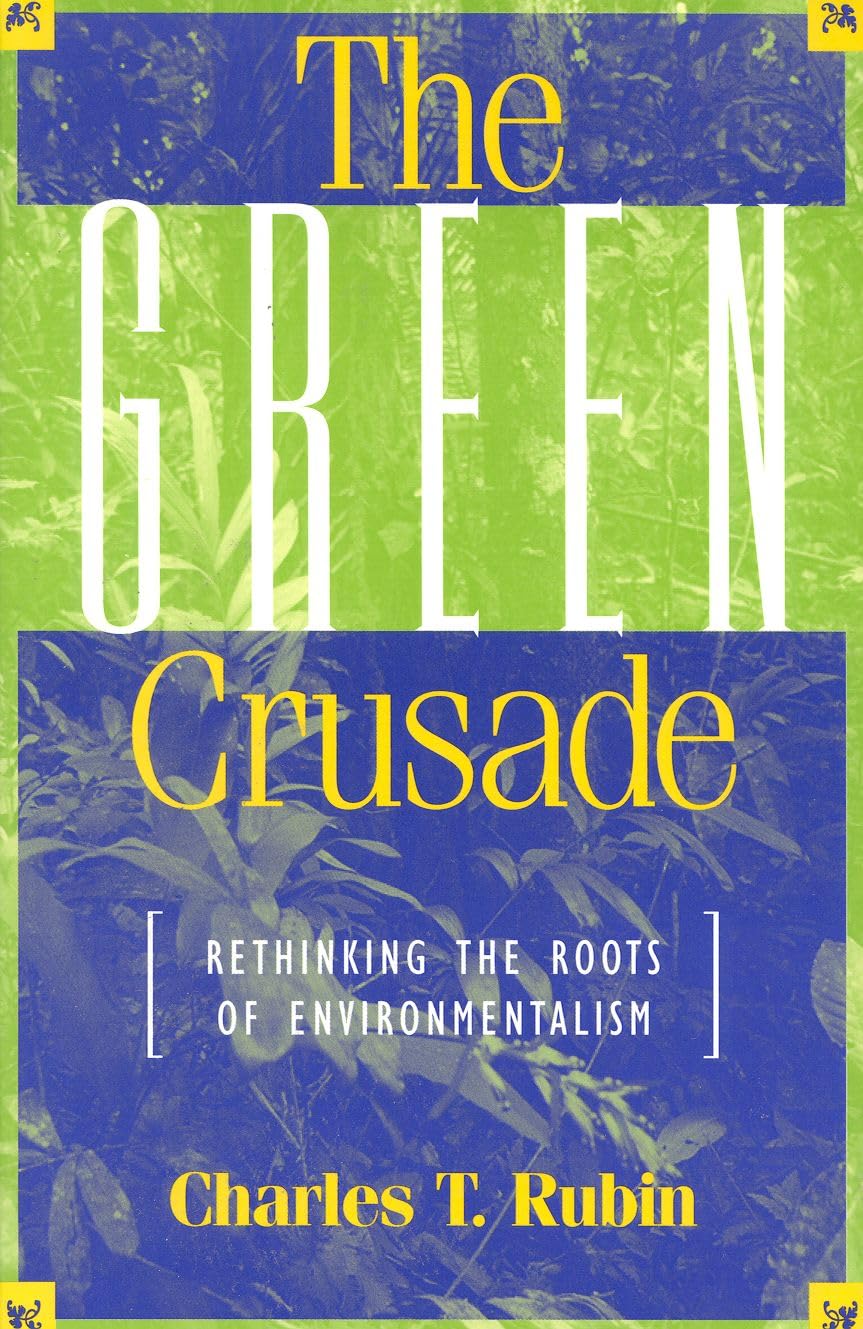
The Green Crusade: Rethinking the Roots of Environmentalism,Used
Sold by Ergodebooks, an authorized reseller.
Returns accepted within 30 days | support@ergodebooks.com
Shipping Information
- Free Standard Shipping — United States only
- Processing Time: 3–5 business days
- Estimated Delivery: 6–10 business days after dispatch
- Double-boxed, fully insured & discreetly packaged
- Tracking number sent via email once dispatched
Returns & Refund
Returns accepted within 30 days of delivery.
Damaged or Defective Item
Free return shipping + replacement or full refund
Wrong Item Received
Free return shipping + replacement or full refund
Change of Mind
Return shipping at customer's expense · 25% restocking fee applies
Payment Option

As recently as fifty years ago, the billowing industrial smokestack was a proud symbol of progress and power; today it is an image of unbridled corporate irresponsibility. This change in public attitudes reflects a shift in social values as rapid and profound as any in American history. Its effects are so farreaching that scarcely anyone imagines there was ever an alternative view of the relationship between human beings and nature. Yet for all the time and energy devoted to discussion of environmentalism as a social and political movement, no one has questioned its existence as a coherent philosophy or given an account of how it first emerged in public consciousness. Most people would assume that the environmental idea, and the powerful political movement it inspired, must have emerged in response to self evident environmental problems such as air and water pollution, acid rain, the human destruction of natural habitats, and the resulting extinction of endangered species. But Charles T. Rubin argues that environmental problems are far from being a matter of common sense. He points out that while such situations almost certainly existed in the past, they were defined in different termsimplying different kinds of social and political solutions. Rubin tells the story of this massive yet strangely unnoticed transformation of public perception and social morality by focusing on the small group of influential writers and thinkersRachel Carson, Barry Commoner, Paul Ehrlich, E. F. Schumacher, and others whose enormously popular writings gave birth to the environmental movement as we know it.
⚠️ WARNING (California Proposition 65):
This product may contain chemicals known to the State of California to cause cancer, birth defects, or other reproductive harm.
For more information, please visit www.P65Warnings.ca.gov.